
I’ve been making beef stroganoff for fifteen years or so, but I hadn’t had any since a consultation with a dietician who suggested that I may be lactose intolerant. It’s been about a year since I started avoiding lactose, and my gut is much happier for it. I’m not touting this as something that everyone should try, since I know that there are a whole lot of people that tolerate lactose just fine — but sadly, I’m no longer one of them.
Lately I’ve been quite happy to discover that, in addition to the vegetarian/vegan options to milk that are out there, a few dairy companies have started to sell lactose-free versions of their products. I’ve found PC lactose-free old and marble cheddars in my local grocery store, and, for the first time just this week, Gay Lea’s lactose-free sour cream. As soon as I saw the sour cream on the shelf, I knew that I had to make some stroganoff this week.
Now, I’m not vouching for the authenticity of my stroganoff or anything. I can’t even remember where I first learned how to make it; it certainly wasn’t from someone who taught me in person. My version is the combination of a number of recipes over the years that have created what I’d consider to be a good meal for when you have a little bit of time to cook, but you still have other plans for the evening. It’s full of mushrooms and onions, but I recommend serving it with steamed veggies or a side salad to round it out. At the very least, this will add a splash of colour, since stroganoff is such a beige dish!
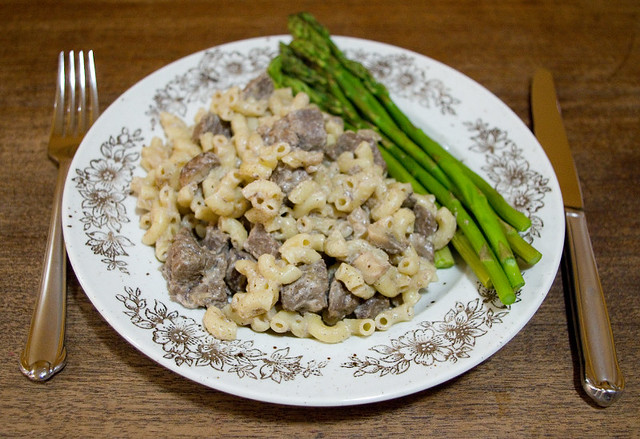
Beef Stroganoff
Serves 4-6 adults
In a large, deep frying pan, heat at medium-high:
– 2 Tbsp canola or sunflower oil
Into the heated oil, place:
– 1 yellow onion, chopped (about 120g before peeling & chopping)
Cook the onion gently until slightly browned, then add:
– 1 package of cremini mushrooms (227g)*
Cook until mushrooms begin to soften, then add:
– 450g steak or chopped roast chopped into bite-sized pieces with the fat trimmed off
Stir it all together, then sprinkle over the mixture:
– 1 tsp garlic powder
– 1 1/2 tsp nutmeg
– 1/4 tsp salt
Cook until the meat is browned on the outside and medium (pink, but not bloody) in the middle. While the meat is cooking, cook according to package directions:
– 2 cups of dried pasta
Traditionally stroganoff is made with broad egg noodles, but in our house we usually use penne. Rotini, fusilli, farfalle, and even elbow macaroni (pictured) also work well. Once the pasta is cooked, drain it and set it aside.
Once the meat is cooked, add to the pan:
– 1 cup sour cream (14% or greater) (regular or lactose-free)
Optionally, you can add:
– 1/4 cup cream cheese (optional)**
Stir the sour cream and cheese in until they are evenly distributed and have created a sauce; the sauce will have picked up some of the browning and spice and will have turned a nice light brown.
Add the drained pasta to the pan, and stir it all together until coated. Serve!
*You can add more mushrooms (up to double as much if you like), but this is the amount that my family prefers.
**I used to make my stroganoff with cream cheese every time, since I find it’s much creamier this way, but I have yet to find a lactose-free version. So for now I make it without.


 Own Two Hands