Harvest

Even though the days have been lovely, it is now the beginning of October, so the nights are getting colder and there is often the threat of frost. This means it’s time to bring in the harvest. I dug up about half of my garden last week, and it wasn’t all mutant carrots!

Please excuse the long grass. My plants were hanging over the sides of the wooden garden border, so I figured I should pull them all up before mowing.

I picked the last of the hot peppers and dug up the few shallots that survived the season. For some reason, most of my shallots didn’t sprout this year. I will freeze the hot peppers with the intention of making hot sauce at a later date.

I tried growing lemongrass this year, which was very pretty but didn’t yield a huge amount of edible parts. It’s supposedly a perennial, but the root ball may not survive the harsh Canadian winter. We shall see if it sprouts in the spring.

I’m still harvesting ripe cherry tomatoes, much to my surprise. Last week’s heat wave meant that the plants haven’t started to die down as much as usual by this time of year.

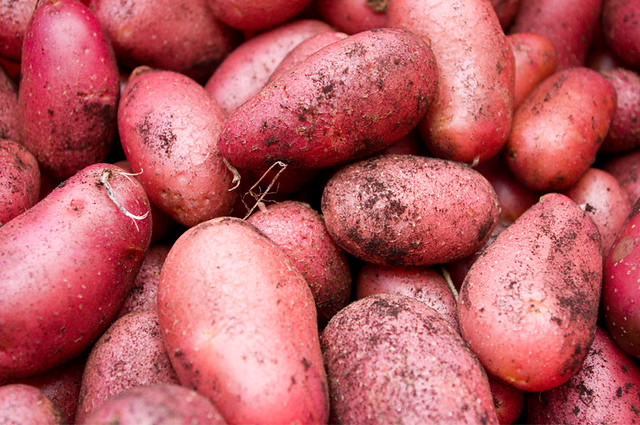
I had a total yield of about 30lbs of Prince of Orange potatoes. These potatoes are apparently a pretty new breed. They have reddish skins and a dark yellow interior (actually pretty close to my Creampak carrots when cooked). They also have a stronger flavour than traditional white-fleshed potatoes, which I really like. I may plant these again next year, or may be I’ll alternate with Violet Queens, which have purple skins and flesh. I figure hey, if I’m going to grow it myself, why be satisfied with the few varieties that are available at the average grocery store?

Autumn Produce & Baked Panko Zucchini Sticks Recipe

A friend came by this past weekend to hang out and chat, and also to gift me with some of the excessive produce from his family’s garden. Apparently zucchini has really liked this year’s rainy summer, and tomatoes weren’t far behind in the production department.


Zucchinis and tomatoes in cardboard boxes from my friend’s garden; tomatoes and cherry tomatoes from my garden in the green bowls.

I didn’t try to grow zucchinis this year, but my tomatoes are ripening up nicely as well, so I ended up with much more fresh garden produce this weekend than we could eat before it went bad. So I’ve found myself spending the majority of the last few days in the kitchen, cooking as much of these fruits and veggies as I can.

Since my freezer is getting pretty full so I wanted something shelf-stable, and my husband (the main salsa consumer in our house) really likes the Blender Salsa from page 92 of Preserving by the Pint: Quick Seasonal Canning for Small Spaces (Marisa McClellan, 2014), making another big batch was a no-brainer. Once my hubby had snacked on some of the lovely cherry tomatoes, I cooked up the remainder into about four liters of salsa. That’s not nearly enough to get us through the winter, but there are still more tomatoes on the vine to ripen, after all.

I baked a loaf of Chocolate Zucchini Bread (page 104 of 125 Best Quick Bread Recipes by Donna Washburn & Heather Butt (2002)). This is a heavy, rich bread that is satisfying either as a dessert or as a snack. I opted for semi-sweet mini chocolate chips, which makes this dish almost bitter, since it doesn’t include all that much added sugar. You can also use dark chocolate chips for an even deeper flavour, or switch it up with butterscotch, raspberry, or white chocolate chips. I was a little worried about the texture that the grated zucchini might have created, so I used the same technique as when I rebaked the chocolate fudge zucchini cookies and precooked the zucchini, then ran it through the blender. This added a bit of extra moisture to the bread, so I omitted the vegetable oil entirely. I was quite happy with how it turned out, both in flavour and in texture.

For dinner yesterday I also made baked chicken with my usual sprinkling of parsley, sage, rosemary, thyme, garlic powder, summer savoury, and salt as topping. As a side I made baked zucchini sticks, which my kids couldn’t get enough of, so I think I’ll be making them a few more times until I use up all of this zucchini (there’s still lots left). Instead of the more common (around here) seasoned bread crumbs, I went with panko, which is a much lighter style of Japanese bread crumb. I also baked the sticks instead of the more traditional deep-frying, for health reasons and because I just don’t particularly enjoy deep-frying. Here’s the very simple recipe that I used:

Baked Panko Zucchini Sticks
Serves 4 as a side dish

Preheat oven to 425°F (220°C).
Wash and slice into thick sticks, leaving peel on:
400g zucchini
In a small mixing bowl, beat:
1 large egg
In a second small mixing bowl, combine:
3/4 cup panko
1/4 tsp salt
1/8 tsp black pepper
1/4 tsp garlic powder
4 Tbsp Kraft 100% Parmesan grated cheese*
Grease a cookie sheet lightly with olive oil or cooking spray.
Dry the zucchini on paper towel, then dip it into the egg until coated, then into the panko mixture until coated. Place the coated zucchini sticks in a single layer on the greased cookie sheet. Sticks will cook most evenly and be most crunchy if they are not touching.
Bake the zucchini sticks for 15-20 minutes, or until topping is golden brown.
Serve plain, or with ranch dressing or marinara sauce as a dipping sauce.

*Parmesan cheese may be omitted, but if so, double the amount of salt.

Blender Salsa

The other day I brought Thing 1 and Thing 2 out to the garden and enlisted their help to find all of the ripe tomatoes. Between us, we picked 10lbs of tomatoes, which seems like a lot for the size of garden that I have, but in the end that only yielded…

…Five 500mL jars of canned salsa, with a bit left over for immediate consumption. It’s always a bit disappointing to see how much ingredients can shrink down when you cook them, especially when you grew said ingredients yourself. However, this time I was much happier with the taste of the end result than I was with my last batch. This time I used the Blender Salsa recipe found on page 92 of Preserving by the Pint: Quick Seasonal Canning for Small Spaces (Marisa McClellan, 2014). Like most salsas, this preserve is both vegan and vegetarian. It’s a really easy recipe, which appeals to me. I liked that it used lime juice and citric acid to increase the acidity, instead of using vinegar. I also liked that the recipe was free of added sugar, which is healthier anyway, but sugar’s unnecessary for flavour when cooking with cherry tomatoes. I did have to boil down the salsa a bit to obtain the desired consistency, but I’m beginning to think that that’s just a consequence of using predominantly cherry tomatoes. I will definitely be using this recipe again.

Healthy Veggie Tomato Sauce Recipe

Back in February I made a massive batch of Kerryann’s hidden vegetable pasta sauce, most of which I stuck in the freezer and thawed periodically to make spaghetti, lasagna, and pizza. We ran out near the start of the summer, at which point I decided to try to perfect my own tomato sauce recipe.

Don’t get me wrong, I adored the flavour of Kerryann’s, but I never got over the weird brownish-green that my attempts at the recipe ended up. I think that my previous suspicious were correct and that’s just because the proportions of fruits and vegetables are different here in Canada than they are in Britain, from whence the recipe originates.


Right now my little garden is yielding about 6lbs of tomatoes (mostly cherry tomatoes) every four or five days, so I need to keep up with the harvest.

For example, Kerryann’s recipe calls for eggplants (or rather, aubergines), among other ingredients. In my local grocery store, which does not specialize in particular kinds of produce, I was able to find four kinds of eggplant, all of which are extremely different sizes. So what is considered a “medium aubergine” in Britain? The video helps narrow the criteria down a bit, but I think that the produce here is just bigger. (I know that our leeks are freaking enormous.) Canada is a country that is very driven by agriculture, after all.


Top left — Indian eggplant (max 3″ long); top right — Thai eggplant (max 2″ long); bottom left — Chinese eggplant (about 12″ long); bottom right — American/globe eggplant (14″+ long, very wide at one end)

There were some other problems with importing this recipe. I’ve never found tomato puree in tubes here, although canned tomato paste is commonplace. I’m not sure if substituting the latter for the former would effect the colour or flavour, as I can’t get my hands on the kind in tubes to compare. I also had a hard time finding sieved tomatoes (passata), although it’s possible to find cans with tomatoes that have been crushed, small cut, diced, diced with herbs, left whole, stewed, or preserved without added salt.

So I’ve made my own tomato sauce recipe with added vegetables. I’ve measured everything out by weight, which should mean that this recipe will come out more or less the same no matter how big your local vegetables grow. I’ve left out the leeks and the celery, as well as peeled the eggplant and the zucchini, which should correct the colour of the sauce. Last but not least, I run my sauce through a blender after it is all cooked so that it is all the same consistency, which is perfect for sneaking veggies into the diets of picky eaters (a lot of people have problems with textures more than they do with flavours).


Tomato sauce simmering on the stove.

Healthy Veggie Tomato Sauce
Yields about 5Kg (11lbs), or about 22 cups sauce

In deep, heavy-bottomed skillet or frying pan, preheat:
4 Tbsp olive oil
Add to pan:
225g yellow onion, diced
8 cloves garlic, chopped fine
Cook on medium heat until onions have started to turn clear. Do not brown.
Add to the pan:
550g cremini mushrooms, sliced
400g zucchini*, peeled & chopped
400g globe eggplant, peeled & chopped
400g orange carrots, peeled & diced
Cover and cook on medium heat until carrots are softened. Stir often to avoid browning.
While this mixture is cooking, prepare tomatoes. If using cherry tomatoes, cut each one in half. If using larger tomatoes, remove the piths and quarter them.
Pour cooked mixture into a deep pot, such as a stock pot. A heavy-bottomed pot is best, but if one isn’t available, any large pot will do. If a thinner-bottomed pot is used, it will have to be stirred more frequently to prevent sticking & scorching.
To the pot, add:
1L low-sodium chicken or vegetable broth
2.75Kg fresh tomatoes, cut as per above instructions
2 cans tomato paste, 156mL each
8 Tbsp fresh oregano (or 2 Tbsp dried oregano)
3 tsp salt
1 tsp ground bay leaves
2 Tbsp sugar
Slowly bring mixture up to a boil, then turn the burner down until it is just simmering. Stir frequently to prevent scorching. Sauce is cooked once all of the ingredients are soft, the last of which should be the tomato skins.
Turn off the heat under the pot. Carefully ladle the hot sauce mixture into a blender to at most 3/4 full, put the lid on the blender, put a towel over the lid, and blend until smooth. Be careful, as the mixture is very hot! Pour the blended sauce into a large bowl or pot, then repeat until all of the sauce is blended.
At this point the sauce may be completely done, or it may be a little bit too liquid, depending on the juiciness of the tomatoes used. If the sauce is watery, return it to the deep pot and simmer gently until it has reached the preferred consistency, stirring often.

*Yellow zucchini is preferred to contribute to the colour of the sauce, but green zucchini will taste the same if that is what’s available.


Tomato sauce with ground beef over penne.

Healthy veggie tomato sauce can be served as-is over pasta; spaghetti is most commonly used, although in our house we prefer penne. If you use vegetable broth instead of chicken broth when you make the sauce, this results in a vegetarian/vegan dish. However, I like to freeze it in dinner-sized portions, then thaw it while I fry up and drain a 500g package of lean ground beef, turkey, meatballs, or sausage. I stir the sauce in with the meat and simmer together while the pasta boils for an easy weeknight dinner. This tomato sauce is also great for making homemade lasagna, pizza, or Sloppy Joes.


Tomato sauce with ground beef over penne, sprinkled with Parmesan cheese.

Cottage Supper

Supper at the cottage is always an informal affair. We often come to the table in bathing suits (if we’re not freezing after coming out of the lake), or wrapped up in sweaters and woolly socks when the evening turns chilly.

Food is often served directly from the stove, but this day we were feeling especially fancy, so we placed on the table in the dishes they were cooked in.

The main part of this dinner was an easy dish that my family has always tongue-in-cheek called “slop”. Basically, you fry up some onions and garlic (or in this case, garlic scapes), add ground beef (or a ground beef/ground chicken/ground turkey mixture, depending on what we have on hand), frying until browned. Drain off the grease, add a can of cream of mushroom soup, and a can of water. Optionally, you may add cooked frozen vegetables to the mixture at this point. Boil down the soup mixture until it has the consistency of a thick gravy. Serve the meat mixture over mashed potatoes or rice.

This time we served slop with a number of vegetables on the side; I had cherry tomatoes with basil, topped with goat cheese, as well as steamed spinach. We also served Brussels sprouts and broccoli, both steamed.

Late Summer Garden

Right now my garden is bursting at the seams — okay, well, all except the peas, which have died back somewhat. My potatoes are starting to pop out of the ground (they don’t grow down very well because of the hard clay under the garden), and I have to keep re-covering them with soil so they are not damaged by the sun. Before I planted the garden this year, I doubled the amount of soil, which seems to have delayed potatoes popping up, but didn’t keep it from happening.

Even tied back, my tomato plants have passed “threatening to take over” and are now simply the rulers of the garden. When I look out the window behind them, it’s like looking through a jungle to the back yard. If you can see me hiding back there, you’ll get an idea of how tall the plants have grown — and they’d be taller if I had taller stakes to support them, but their fruit is weighing them down.

Today’s harvest included a whole lot of cherry tomatoes, banana peppers, jalapeno peppers, and hot peppers — along with handfuls of herbs to use in cooking tonight.

Beginning to Harvest the Garden

I spent some time in the garden yesterday, weeding and harvesting a little bit, but mostly tying up my tomato plants, which have escaped the raised bed and are trying to take over the lawn. Mosquitoes love the shade under these plants, so every time I go out there, I end up with a new handful of bites at the very least. Even so, it was totally worth it because I was happy to discover lots of fruits and veggies that were either growing large and healthy, or that were already ripe and ready for harvesting.

The pears are doing well, although they’re still hard as rocks and not nearly ready to harvest. My research indicates that they should be ready to be picked from August to October in this climate — and mine seem likely to be ripe later in the season.

The tomatoes on the possibly-beefsteak tomato plant (the one that was supposed to be a cherry tomato plant) aren’t ripe yet, but the fruits have almost doubled in size. I have a feeling that spaghetti sauce may be in their future.

My sweet bell peppers are growing well and look like they’ll end up being pretty sizable. This variety is supposed to yield a black (really very dark purple) pepper, so these obviously aren’t ready yet. Well, that’s if they were labeled correctly; I don’t really trust the labels 100% any more.

My pea vines are still yielding nicely, although with being at the cottage off and on, I ended up letting a bunch of pods dry out on the vine. Oops. That’s good for seed saving, I guess, but not what I was trying to do.

Unlike their sweet cousins, my hot peppers are starting to ripen beautifully. The red banana peppers and the green jalapeno peppers are destined for hot sauce once I’ve picked them all, so I wash and freeze the early-ripening ones until I can use them. Freezing peppers makes them mushy upon thawing, but that’s not really an issue when they’re just going to be blended smooth in a sauce anyway.

Last but not least, my cherry tomato plants have started ripening! I believe that what’s coming up at the moment are Pink Ladies, Sweet Millions, and generic yellow cherry tomatoes. I have a personal fondness for the yellow ones, but the Pink Ladies have come up really sweet this year, and I just can’t stop snacking on them. My husband, too, is a huge fan of cherry tomatoes of all varieties, and will go through a large bowl of them when vegging in the evening after the kids have finally been put to bed.

Overgrown?

My garden isn’t just growing, it may be overgrowing. When I plant my garden in the spring, it always looks like I’m leaving too much space between the rows. Then I go out into the garden on days like today, and there’s very little room to walk. I have to gently push plants aside to get at the tomatoes and potatoes.


My garden, with me for scale

I have to be careful with the tomato plants nearest the wall of the house, as they can get caught in the track when I open and close the window to let in fresh air. On the other hand, the plants that are supposed to be there are actually crowding out potential weeds, for the most part. The only exceptions are near the celery and the onions, which I planted late and hence aren’t growing as fast.

And the tomatoes are growing quite large, considering they’re supposed to be cherry tomatoes! I wonder if some of them were cross-pollinated, or probably mis-labelled at the garden center. It has happened before. Or maybe it’s my awesome gardening skills producing abnormally healthy and large fruit? If only.