Cumberland Farmers’ Market — Harvest Market

Not this past Sunday but the Sunday before (October 1st), I headed out to the Cumberland Village Heritage Museum for the Harvest Market. This farmers’ market is usually held on Saturdays from mid-June to mid-September in front of the R.J. Kennedy Community Centre. This was a special, end-of-season event, though, so it was held at a larger, more interesting venue. As a bonus, admission to the museum was free! My kids were thrilled, especially Thing 1, who had visited the museum with her class and was excited to show it all to her little sister. My husband headed with the children toward the heritage and reproduction buildings from the 1920’s and 30’s (with special attention paid by the girls to the farm animals). I, on the other hand, got a chance to enjoy the beautiful weather and peruse the market for a short time on my own, which was lovely.

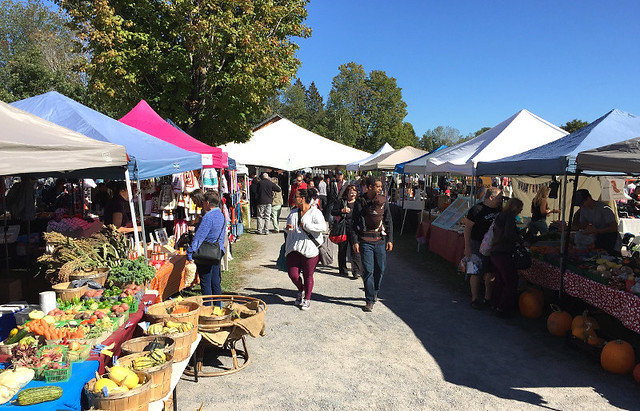
The aisles were teeming with shoppers:

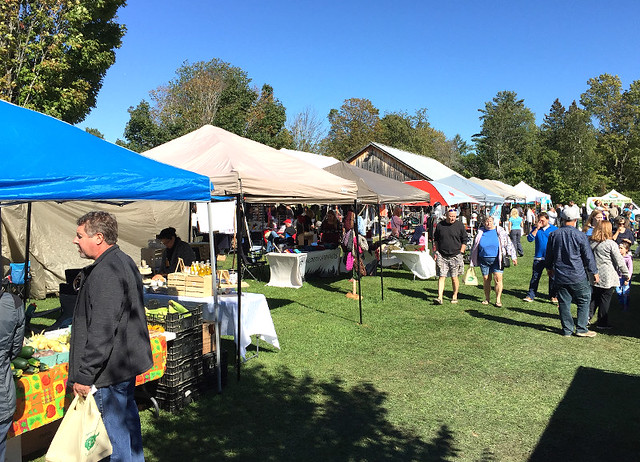
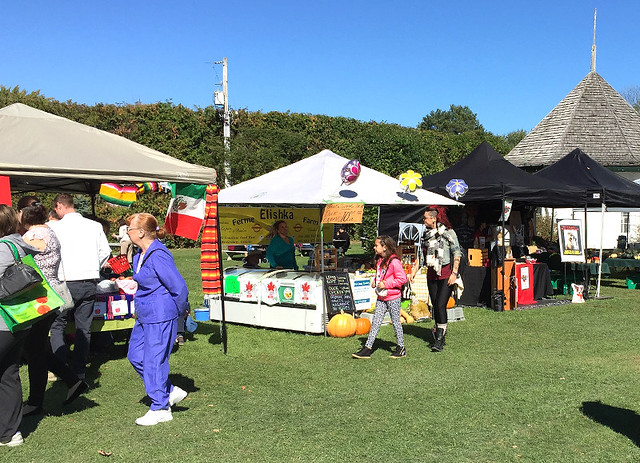
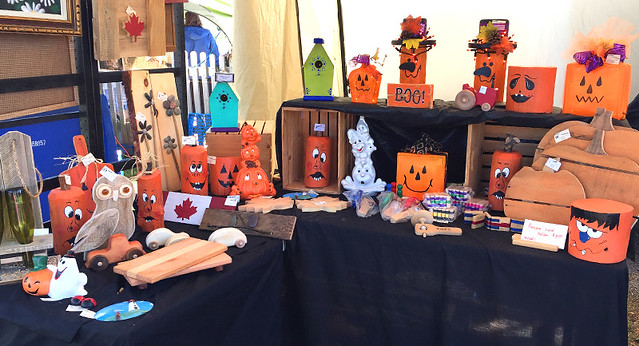
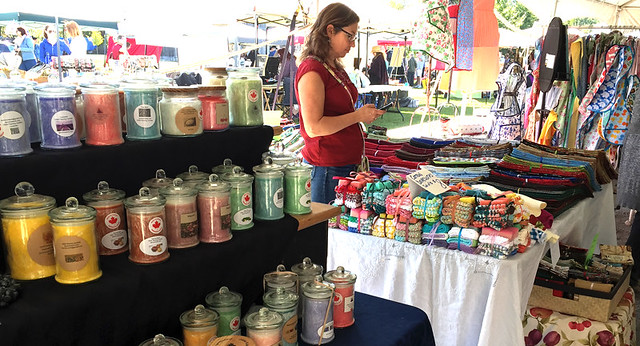
The stalls, as always, featured interesting locally-made seasonal items, arts, crafts, and food:

In the top right background of the photo above, there was a vendor with really fantastic bibbed kitchen aprons made from vintage patterns. Honestly, they looked more like dresses than most of my actual dresses! I really wish I’d picked one up, or at least taken their card so I could find out where they’re going to be for the Christmas season. I’ve actually started using aprons lately to save my clothes, and it would be nice to have a pretty one.

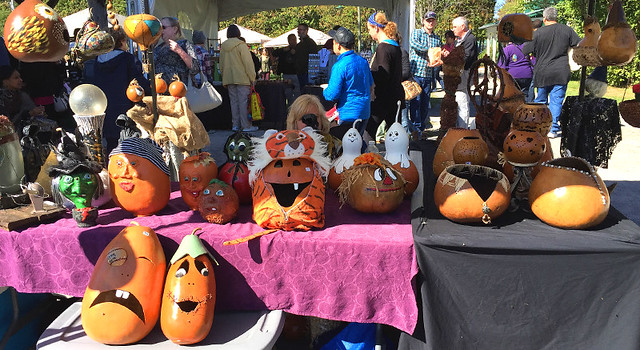
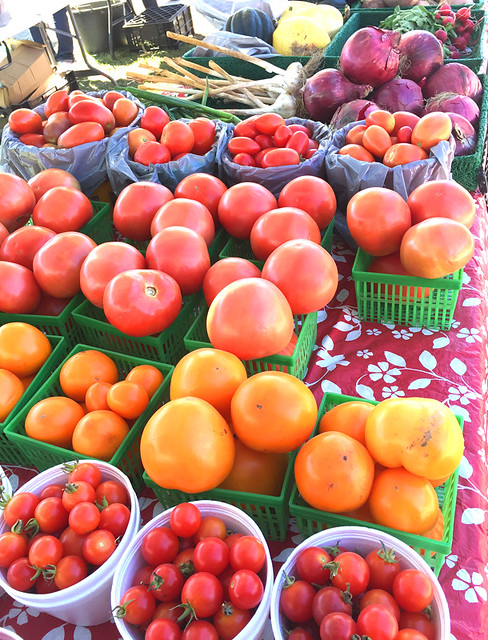
Of course, then there was the produce:


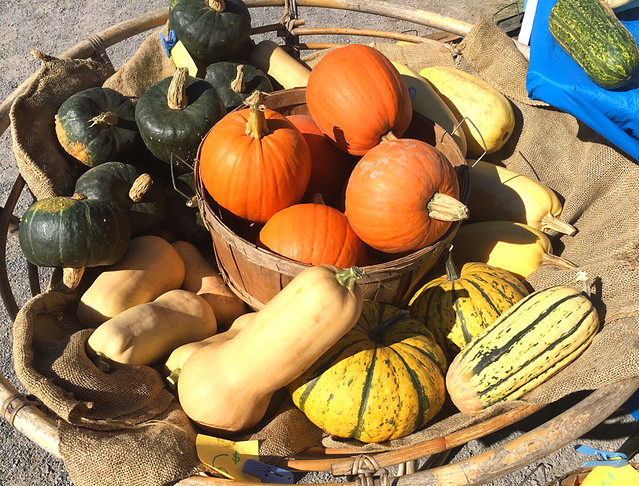
I like the use of an old wicker papasan chair frame as a giant display basket.

I came home with one of the pumpkins from the above display, as well as an ambidextrous bow bread knife for easier slicing of my homemade bread. The pumpkin was turned into pumpkin pie, pumpkin tarts, and pumpkin bread for Thanksgiving this past weekend. I can’t think of a better end for local produce.

The Cumberland Farmers’ Market season is now over, but still to come is the annual Christmas Market on Saturday, December 2nd from 9:00am to 4:00pm. This market will be held at four locations in Cumberland (I’m guessing so that all of the vendors can set up indoors): 1115 Dunning Road, 2620 Market Street, 2557 Old Montreal Road, and 2655 Old Montreal Road. If I’m lucky, maybe the vendor with the lovely vintage-style aprons will be there!

Canadian Thanksgiving

Although today is technically Thanksgiving here in Canada, my family celebrated yesterday. I know that a lot of other people I know hereabouts do the same. Having Thanksgiving dinner on Sunday combines the tradition of a Sunday family dinner with the practical consideration of a stat holiday on the Monday. This means that out-of-town guests can travel in on the Friday night or Saturday, then go back home on the Monday, i.e. no traveling the day of celebrations and no need for most to miss any work.

Here in Canada, Thanksgiving is mostly a secular harvest festival, although some religions do incorporate thanks for a bountiful harvest into their liturgical calendar. Unlike Americans, we don’t have a tradition of the First Thanksgiving (our history is markedly different than our southern neighbours, with our first European settlers being predominantly explorers, hunters, and trappers). We also celebrate this holiday much earlier, i.e. the second Monday in October instead of the fourth Thursday in November. We used to celebrate Thanksgiving later in the season, but the earlier date keeps it from conflicting with Remembrance Day (November 11th) and, on a practical note about climate, is also when the bulk of the harvest has been brought in this far (and farther) north. Heck, the Prairies often see snow as early as September.

I started cooking the dishes that I was going to bring to Thanksgiving dinner on Saturday. I began with pumpkin pie, which was a combination of the Purity Pastry crust from page 73 of the Purity Cookbook (Elizabeth Driver, 2001 edition) and the Pumpkin or Squash Pie filling on page 686 of the Joy of Cooking (Irma S. Rombauer & Marion Rombauer Becker & Ethan Becker, 2006 edition). The filling pulled away from the crust since I had to store the pie in the refrigerator overnight, but it still tasted just fine. Due to food sensitivities in the family, I substituted coconut milk for the heavy cream/evaporated milk specified in the filling recipe. I have done this for years now, and I find that it tastes almost identical to using cow’s milk. That being said, I’ve learned that it takes much longer for the filling to set this way. To compensate, I don’t glaze the crust, as it causes it to burn over the long cooking time. Also, I put the pie plate on a baking sheet when I put it in the oven (something I do when making any type of pie), which both helps protect the bottom crust from burning and keeps any filling overflow from burning onto the bottom of my oven.

I cooked a small pumpkin to make the pumpkin pie instead of using canned (I like the flavour better that way), and I had some leftovers squash puree that needed to be used up, so I made Pumpkin Bread (page 628, Joy of Cooking) as well. I made this quick bread loaf with coarsely chopped pecans and golden raisins, as that’s what I happened to have in the pantry. It’s a rather lovely, dense loaf, as this kind of bread tends to be, and it smells divine. Unfortunately, since there are nuts in it, I won’t be able to send it to school as part of lunch for my girls in the upcoming week.

Since I had the time (which I never seem to when I’m carving Jack-o-lanterns for Halloween), I saved the pumpkin seeds and roasted them in the oven with a bit of olive oil and salt. These are one of my favourite fall snacks, and the smell of them cooking takes me right back to my childhood.

OF course, no family dinner around here would be complete without a batch of Nan’s Pan Rolls. It’s especially fitting this time of year, since Nan passed away four years ago this weekend. Making one of her signature dishes is a fitting way to remember her, I think.

This was Thanksgiving dinner at my parents’ place (bottom to top): Yorkshire pudding, squash & pear casserole, roast turkey, gravy, bread stuffing, pan rolls, Brussels sprouts, mashed potatoes, and steamed asparagus. This may seems like a huge spread, with all of that food for only six of us. However, traditionally you only have a little of each dish at the actual dinner, which is more than enough to feed you to bursting, and then you eat leftovers for the following week. Generally it’s an informal recreation of the dinner on day 2, then (depending on the size of the bird) some kind of casserole on day 3, then hot turkey sandwiches on day 4, then turkey soup or stew on day 5, and so on.

So happy Thanksgiving to all Canadians, and a happy Thanksgiving in advance to our American neighbours!

Carrot Jam

I’ve been looking for creative ways to preserve the carrots from my garden, since there are only so many carrot-based dishes that I can eat in a row. Yes, I could freeze some of them, but my freezer is getting awfully full of soups and sauces and broths (this happens every autumn), so something shelf-stable is what the doctor ordered. I also wanted a recipe that disguised the unusual shapes of my homegrown carrots (which I combined with store-bought orange ones for a bit of visual interest), since I know that ugly food tends to be eaten less enthusiastically than pretty food, even if it tastes identical.

So I browsed through my cookbooks and found a recipe for Carrot Jam on page 206 of Preserving by Pat Crocker (2011). I had never heard of carrot jam before, but there’s a similar recipe for Carrot Orange Marmalade on page 142 of Prizewinning Preserves by Yvonne Tremblay (2001), which apparently earned a red ribbon for best marmalade at the 2000 Royal Agricultural Winter Fair. I guess it can’t be that unheard of. However, the Prizewinning Preserves marmalade was missing the intriguing spices of Preserving‘s carrot jam, which cinched my decision to make the latter recipe.

Preserving suggests letting the jars sit for a few weeks before opening for best flavour, but the cooking jam smelled so darned good that I opened up my first jar the very next day. I am so glad that I did. I baked up a quick batch of Dad’s Biscuits upon which to spread the jam, and then I was in seventh heaven. If these preserves get even better with age, I can’t imagine how delicious they will be. Suggested uses for this jam are as follows (Preserves, page 207):

Carrot jam can be used as any other fruit jam, but I particularly like it on quick bread nut loaves and with savoury meat pies or wraps. Use it as a glaze for cooked vegetables: toss grilled or steamed vegetables in up to 1 cup (250mL) of the jam while hot, just before serving. This is also a flavourful topping for fresh yogurt, or you can add a couple of tablespoons (25mL) to a Vinaigrette Dressing or Salsa Verde.

I can’t wait to try carrot jam in all of these ways! I think it would also make a lovely glaze for roast pork or chicken. I love this recipe so much that I think I will grow carrots again next year specifically to make them into this jam. Maybe I’ll even grow those red and/or purple heirloom carrots just so that the jam is even more visually interesting.

But What Is It? Part 2

A while back I wrote about the interesting handmade tool that I found at the cottage that my parents rented for the summer. I wasn’t sure what it was at the time, and honestly I’m still not a hundred percent sure of its intended purpose. The consensus seems to be that it was made for chopping, which makes sense to me, but further details are elusive. The pictures I took back then were mediocre at best, so I promised that I’d take some better ones. I kept forgetting to post them, but here they (finally) are:

If anyone has any additional knowledge as to what this may be, I have to say that I remain quite curious. However, it has been pointed out to me that one-off handmade tools often have a specific purpose known only to the owner, so this may forever remain a mystery.

Last of the Zucchini

One of the biggest challenges about this time of year, at least to me, is to either eat or preserve all of the fresh produce that comes my way before it goes bad. It seems to me like the utmost example of taking what you have for granted to let food — especially fresh, homegrown, delicious food — go bad. Practically speaking, this does mean freezing, drying, or canning a lot of it to eat over the coming winter. But it also means a lot of meals made with just-picked ingredients.

Over the last few days I’ve finally managed to cook my way through all of the zucchini from my friends’ gardens (although I may end up with more in the next little while, not that I’m complaining). Last night for dinner we dug into another loaf of Harvest Garden Bread (which contains zucchini), Baked Panko Zucchini Sticks, and haddock baked under a generous coating of Blender Salsa (page 92 of Preserving by the Pint: Quick Seasonal Canning for Small Spaces (Marisa McClellan, 2014)), which was made almost entirely from produce grown in my garden.

Then it was Double Chocolate Zucchini Muffins for dessert. I had never tried this recipe before, but it was highly recommended to me by a friend, and now I realize why. These muffins are moist, dark, rich, and chocolatey. They also aren’t as unhealthy as other muffins with similar flavour. I mean, it would be a stretch to actually call them health, what with the chocolate chips and the oil in there, but there is more zucchini in the recipe by volume than flour, and that has to count for something, right? 10/10, will definitely bake this one again.

Harvest Garden Bread Recipe

Last week Thing 1 and I tried our hands at making Confetti Bread (page 67 of The Complete Guide to Bread Machine Baking from Better Homes and Gardens (1999)). While in general I really like this book and I have found its recipes to be quite reliable, this loaf did not turn out as planned. It looked like this:


Failed Confetti Bread

The poor, sad thing just didn’t rise. The loaf was much too dense and wasn’t even baked the whole way through. The cookbook even warns that you might have to add additional flour to the dough after the first knead (which I did), and it still fell flat. I think that this is because a bread machine recipe just can’t predict the moisture content of the vegetables, and bread machines need very precise measurements because they just can’t compensate for change on the fly.

However, the loaf smelled absolutely delicious when it was baking, and the flavour of the bread backed up that smell. Well, except for the red pepper part, but that’s probably just my preference (I’m not a real fan of sweet peppers). I was inspired to try to create a similar loaf by hand to get all of those flavours that I liked, but I wanted it to be a nice fluffy loaf with a crisp crust. As a bonus, this recipe includes both zucchini and carrots, which many gardeners have an overabundance of this time of year. (If you don’t garden, these veggies are also cheap in stores in the fall.) I was very happy with the result.


Successful Harvest Garden Bread

So here’s the recipe:

Harvest Garden Bread
Yields one loaf

Line two small bowls with paper towel or clean dish towels.
Grate separately:
3/4 cups carrots
2/3 cups zucchini
Place the carrots into one bowl and the zucchini into the other. Leave them in the bowls so that the towels absorb excess moisture while you perform the next steps.
In a large bowl, mix together:
1 cup warm water
2 Tbsp olive oil
1 egg yolk
1/4 cup finely sliced green onions OR chives
In another large bowl, mix together:
4 cups all-purpose white flour
1 1/2 tsp white sugar
1 tsp salt
3/4 tsp dried thyme OR 2 1/4 tsp minced fresh thyme
2 tsp quick-rise instant yeast
Squeeze the zucchini and the carrots in their towels to remove excess moisture. Add the vegetables to the bowl containing the liquids and stir.
Gradually mix the dry ingredients into the wet ingredients. When mixture becomes too difficult to stir with a spoon, turn it out onto a lightly floured surface and continue to incorporate the ingredients by kneading.

Once all ingredients have been kneaded in, the dough may be too moist, sticking to both your hands and the kneading surface. If so, you may need to gradually add:
up to 1/2 cup all-purpose white flour
This additional flour will compensate for the moisture of your vegetables. If the dough is still too sticky once the additional flour has been kneaded in, continue to add flour one tablespoonful at a time until the desired consistency is reached.

Oil a large mixing bowl. Form the dough into a ball and place it in the bowl. Cover the bowl with a clean, damp tea towel. Place the bowl in a warm, dry area with no drafts. Allow the dough to rise until double, about 2 hours.

Punch down the dough. Grease a 9.5″ X 5.5″ loaf pan. (A slightly smaller loaf pan may be used, but you will end up with a more mushroom-shaped loaf.) Shape the dough into a loaf to fit the bottom of the pan. Cover the pan with a clean, damp tea towel and allow to rise again until double, about 1 hour.

Preheat your oven to 400ºF (204ºC).
While oven is preheating, mix together:
1 egg white
1 Tbsp cold water
Brush the top of the dough evenly with the egg & water mixture to create a glaze.
Bake loaf for 30 to 40 minutes, until top of loaf is lightly browned and the loaf sounds hollow when removed from the pan and tapped on the bottom.

If you try out this recipe, I’d love it if you’d leave a comment and let me know what you think! And if you make any changes or if you find any errors, I’d love to know that too.

Harvest

Even though the days have been lovely, it is now the beginning of October, so the nights are getting colder and there is often the threat of frost. This means it’s time to bring in the harvest. I dug up about half of my garden last week, and it wasn’t all mutant carrots!

Please excuse the long grass. My plants were hanging over the sides of the wooden garden border, so I figured I should pull them all up before mowing.

I picked the last of the hot peppers and dug up the few shallots that survived the season. For some reason, most of my shallots didn’t sprout this year. I will freeze the hot peppers with the intention of making hot sauce at a later date.

I tried growing lemongrass this year, which was very pretty but didn’t yield a huge amount of edible parts. It’s supposedly a perennial, but the root ball may not survive the harsh Canadian winter. We shall see if it sprouts in the spring.

I’m still harvesting ripe cherry tomatoes, much to my surprise. Last week’s heat wave meant that the plants haven’t started to die down as much as usual by this time of year.

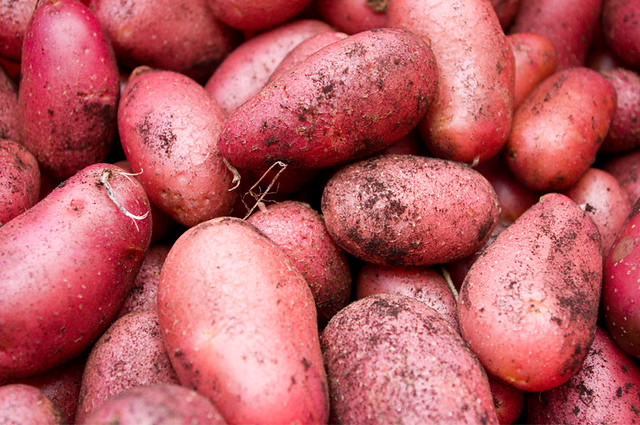
I had a total yield of about 30lbs of Prince of Orange potatoes. These potatoes are apparently a pretty new breed. They have reddish skins and a dark yellow interior (actually pretty close to my Creampak carrots when cooked). They also have a stronger flavour than traditional white-fleshed potatoes, which I really like. I may plant these again next year, or may be I’ll alternate with Violet Queens, which have purple skins and flesh. I figure hey, if I’m going to grow it myself, why be satisfied with the few varieties that are available at the average grocery store?

Carrots

I love both cooking with and eating carrots, so I’ve been planting them in my garden for a couple of years. I haven’t had great success, though. Last year, one of my carrots looked like this:

(That’s a dime for size reference.)

So when I planted my carrots this year, I didn’t have any great expectations. Instead of growing them from seeds like I’d tried in previous years, I bought pre-started seedlings from Laporte Gardens. I hoped I’d get a few decent-sized carrots and probably some finger-sized ones as well. Little did I know that I was growing MONSTERS.


Thing 1 helping me harvest the carrots.

I left lots of space between each planted seedling (so I never had to thin them), made sure they got lots of water (not a problem this year) and that they weren’t being eaten alive by pests or crowded out by weeds. I also fertilized the entire garden with sheep manure compost early in the spring. And that was all I did. I’d learned the hard way that you really just have to leave root vegetables alone for as long as possible so that they develop fully. Um… Mission accomplished, I guess?

(Yes, I know now that I probably should have re-buried the carrots as they began to poke out of the ground so they didn’t discolor, but I didn’t know that back when it mattered. My carrots have never before grown so large.)

So yeah, that’s Thing 1 holding up one of the carrots/carrot clusters that she pulled up for me. It’s almost as big as her head.

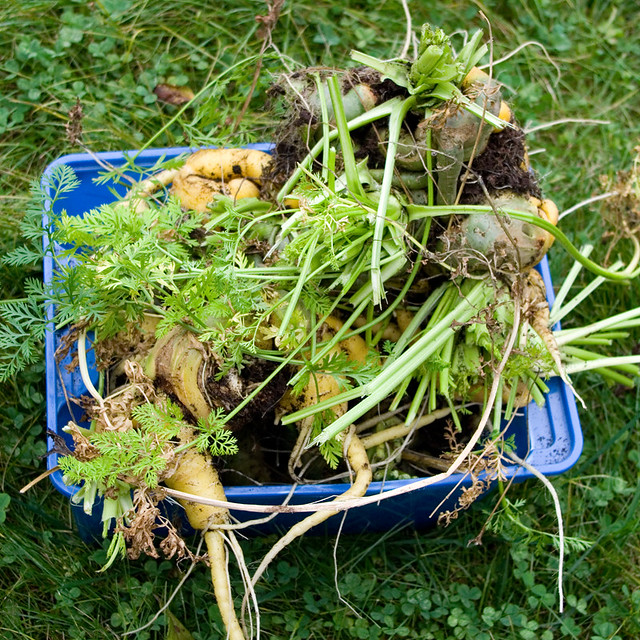
Instead of the roots growing long and straight, they looped back upon themselves multiple times, creating gnarled, mutant bunches. Even in the spots where there was only one top, the roots looked like this.

These are creampak carrots, by the way. They’re supposed to be yellow instead of the more common orange.

All in all, my small planting of carrots yielded a root harvest that overfills a 11″ x 15″ x 7¾” IKEA GLES box.

Washed and untangled, the carrots looked more like the vegetables I’m used to. The photo above is of only one of the root balls. I kept giggling as I washed and separated, since it all seemed so absurd to me. This is honestly the funniest plant I have ever grown… And I have grown some weird-looking plants.

Thing 1 washed and cut up some of the smaller bits, then harvested a few cherry tomatoes from the garden to make her own carrot and tomato salad. I was very proud of her for taking the initiative to make a dish out of the food she’d helped harvest. She insisted that I photograph her creation and put it on “the blog”.

I included part of the harvest in yesterday’s dinner, which was steamed carrots, whipped potatoes (which are Prince of Orange potatoes and almost the same colour as the Creampak carrots when cooked), and maple & cinnamon sausages. After spending the afternoon in the garden, the whole family cleaned their plates.

Rip It, Rip It

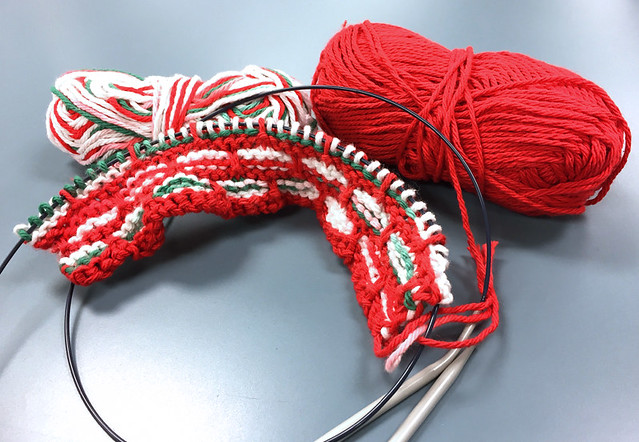
So I started up another Brick Stitch Dishcloth yesterday, this time in Christmas colours instead of Halloween. The variegated yarn contrasted so beautifully with the solid colour in the pattern’s photos that I was inspired to use red yarn alongside red/white/green multicolour yarn.

Well, that didn’t look nearly as nice as the pattern’s photos. It looked a hot mess, really, with the red from the variegated yarn blending into the solid red and confusing the pattern. I think that the operative word for a piece like this is “contrast”, i.e. the two yarns should not contain any of the same colours, although they should be complimentary.

I know a lot of people are probably thinking right now, “Who cares? It’s just a cloth. It will be used for wiping up messes and will probably be stained five minutes after it is first used.” That’s probably true. But I still care, I can’t help it. Perhaps I am too much of a perfectionist when it comes to knitting. I am the kind of knitter who will frog way back to a mistake even if it’s imperceptible to anyone but me — even if it’s “just” a cloth I’m knitting. (One of my absolute favourite bloggers, the Yarn Harlot, is this way, so I do not feel quite so alone.) I figure it could have been much worse, since I decided that I hated the colours/patterns together fairly early on in the project. Ah, well. Lesson learned.

Milkweed

When I was a kid, one of the big things we did as a family was go for nature walks. In the woods, in the wetlands or fields, it didn’t matter, so long as we went and explored. Sometimes my parents would drive us quite some distance to check out the local scenery. Sometimes we stayed within minutes of home. As I grew older, I was allowed to roam with other children or on my own.


Me carrying Bud, my friends’ rescued pigeon, through the woods on a walk near the friends’ parents’ cottage. I was about 11 in this photo.

In retrospect, I never went all that far from wherever my parents were, but I reveled in the freedom of exploring on my own. My favourite time to explore was in the fall when the milkweed pods were dried out and bursting. I loved picking the pods and freeing all of the seeds and the silk. Flinging handfuls of silk into the air was akin to blowing on a giant dandelion.


Milkweed flowers; I’m pretty sure the kind commonly found around here is either common milkweed or prairie milkweed.

I’ve only discovered recently that parts of milkweed are also edible. From page 183-184 of Backyard Foraging: 65 Familiar Plants You Didn’t Know You Could Eat Ellen Zachos, 2013):

There are a lot of misconceptions about milkweed passed around in books and online. Some people claim it’s bitter; others say it’s downright poisonous. Correctly harvested and prepared, it is neither. […] Here’s what you need to know. No milkweed parts should be eaten raw. The shoots, flower buds, and pods of milkweed should be boiled, or blanched and then cooked to completion in a second way. It’s not necessary to boil in three changes of water, as some people believe. However, cooking in water takes away the milky latex (not pleasant to eat), which is why I recommend blanching, even if you choose to cook the milkweed in a different way. […] Also, mature milkweed foliage can indeed be bitter and should be stripped from the young shoots before cooking. If cooked, the large leaves will impart their bitterness and obscure the taste of the milkweed stems, which would be a crying shame.

This book goes on to identify the best practices for collecting and preparing shoots, flower buds, flowers, and young seedpods. There is also a tempting recipe for milkweed flower syrup on page 212.


Immature milkweed seed pods.


Immature milkweed seed pods opened.


Immature milkweed seed pods interior. This pod was over 1.5″ long, so probably too old to eat, but it was still fully white inside.

My copy of The Edible Wild: A complete cookbook and guide to edible wild plants in Canada and North America (Berndt Berglund & Clare E. Bolsby, 1971) also has a section on milkweed starting on page 53:

The young shoots of milkweed may be boiled in the spring. The older stems are too acid and milky for use, but the very young seed pods are excellent when cooked. […] The young seed pods, no larger than a walnut, I usually fry in fat of any kind. If I have a little flour, I mix this into the fat and make a stew of the pods.


Mature milkweed pod, much too old for eating.


Milkweed silk.

The Edible Wild has recipes for:

– milkweed pods soup
– cream of milkweed pods soup
– young milkweed pods, blanched and buttered
– milkweed stalks and wild onions in sour cream
– milkweed stalks with ham and cheese
– steamed and buttered milkweed stalks
– young milkweed stalks braised with wild onions
– glazed milkweed stalks
– stewed milkweed pods with frogs’ legs
– baked milkweed stalks omelet
– steamed milkweed stalks with brandy butter
– milkweed pods and chicken pie

Obviously, the authors have had to have eaten a lot of milkweed to come up with these recipes, which gives me confidence to try it out myself. I am often a little bit wary of foraging plants without an expert in the subject showing me what to do. Perhaps I can find someone local who is willing to teach me, and then I will try out the milkweed pods and chicken pie, which looks delicious. I may skip out on the frogs’ legs, though.

Despite all of the culinary potential of milkweed, I still find this plant at its most appealing when it’s at its least edible. I love it when there are fields so thickly coated with bursts of silk that it looks like the first snow of the season.

Milkweed is such a part of my childhood that I was very surprised when I started talking about it to a relative from the Sudbury area, and they’d never heard of it. While it’s thick on the ground around Ottawa, apparently the conditions aren’t right for it to grow further north. I guess it was silly of me to assume that every Ontarian’s childhood included milkweed. I hope that they at least had cattails! (Parts of which are also edible, by the way.) In the fall, once the plants have started to dry out, a cattail’s flower head explodes wonderfully into a mess of seeds and fluff when rubbed on a hard surface. It’s not quite as satisfying as cracking open milkweed pods, but it’s close.