Gifts of Food

I love to give food as gifts. I figure that everyone has to eat. Even those people it’s really hard to buy/make gifts for, those people who seem to have everything they need or want (or have expensive tastes way out of my budget), food is something that they constantly need to purchase. It is, after all, a consumable.

So I give food as gifts for birthdays, Christmas, and other special occasions. I try to keep the recipients’ tastes and food sensitivities/allergies in mind, of course, although sometimes I know I don’t quite get it right (but that can happen with any kind of gift, really). I always label all of my homemade food with every ingredient I’ve used, just in case I’ve missed or forgotten something. I like giving hard-to-find items that may require a trip to a specialty store, or foods sold as part of fundraisers. When it comes to home cooking, casseroles and baked goods are traditional. Additionally, I especially like giving home-canned goods, because I can do large batches when the food is in season and dole it out over the rest of the year. Canned goods are especially good when I don’t know when the recipient will want to actually eat the food, since shelf-stable canned goods last a year or more. There’s always a lot of food involved in holidays anyway, so I can’t always assume that a gift will be consumed immediately; to this end, foods that freeze well are also a great option.


A recent gift of food: Mikado milk chocolate biscuit sticks, Maple and Oatmeal Loaf (Bread Machine: How to Prepare and Bake the Perfect Loaf (Jennie Shapter, 2002), page 95), and Girl Guide cookies (chocolate/vanilla mix). Not packaged very prettily, I know, but it had to survive a ride on the back of my bike.

I also like to give food to people I care about who are going through a rough time. A new baby in the home (a joyous occasion, but a time-consuming and stressful time as well), a death of a loved one, illness, marital troubles… In this case it’s less of a matter of celebration, and more a matter of trying to help out. When you’re in the middle of personal difficulties, the last thing on your mind is eating properly. You have neither time nor inclination to cook, so you rely on whatever is cheapest and easiest, which isn’t sustainable in the long run. I want to help out, but in so many cases there’s not much I can really do to fix the problem. I feel helpless, and I hate to see someone I care about hurting, so I fall back on making food — something I know I can help with. I want to show that I care, but I don’t want to intrude, and popping by to drop off a casserole or a loaf of bread only takes a few minutes.

Where did this mindset come from? Is it regional? Familial? Personal? I’m not sure. I’m from Maritime stock, and I’m told this is very common on the East Coast (also the Southern USA, but I don’t have any ties there). I grew up around potluck gatherings of every kind, that’s for sure. I’m pretty sure my paternal grandmother was of the traditional “bring food around” mindset; possibly it’s part of the whole “hostess gift” tradition? Whatever the reason, what I’m trying to do with a gift of food is show that I care, and that I want to make your life easier, if only for one meal. And hey, if I end up giving you a dish that you absolutely despise, I was trying, okay?
IKEA Market Food

I headed out to IKEA the other day to pick up some cheap picture frames. Of course, I bought the wrong size and now I have to make a return trip, but that’s another story. As I often do, I browsed the “market” on the way out for new foods I have yet to try, and I was not disappointed.

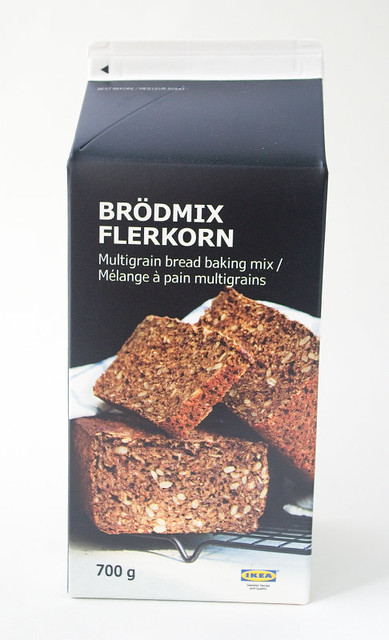
The first thing I found that was new to me was Brödmix Flerkorn multigrain bread baking mix. I had previously made their lemon muffin mix and chocolate muffin mix, which are packaged similarly in a milk-carton-like container. Like the muffins, the bread mix is a “just add water” type, but this time the instructions specify warm water (to activate the yeast). This mix is vegetarian/vegan, which makes sense as it’s easier to keep foods without eggs, dairy, or milk shelf stable.

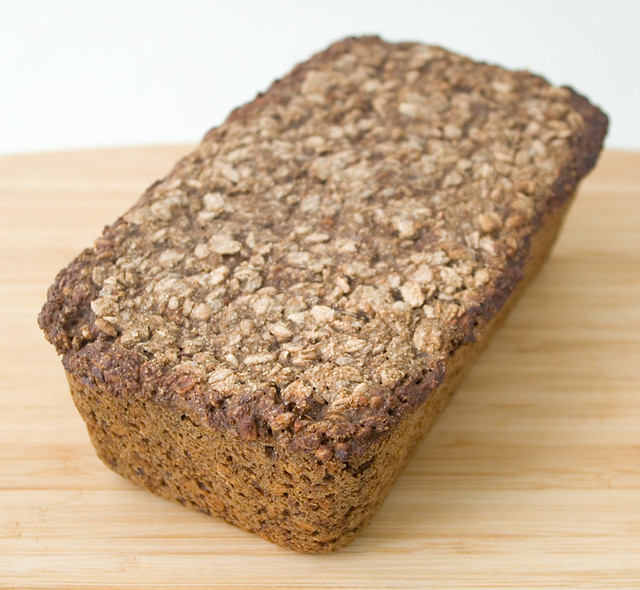
The bread mix turned into a lovely, heavy loaf that pairs well with cheese, sliced meats, and eggs. The bread is very dense as it is filled with sunflower seeds and contains rye flour and barley malt in addition to wheat flour. This was honestly the easiest bread I have ever baked: just add water, shake, pour into a greased pan, allow to rise, and bake. No kneading! Even if you’ve never baked bread before in your life, you’d be able to make this stuff.

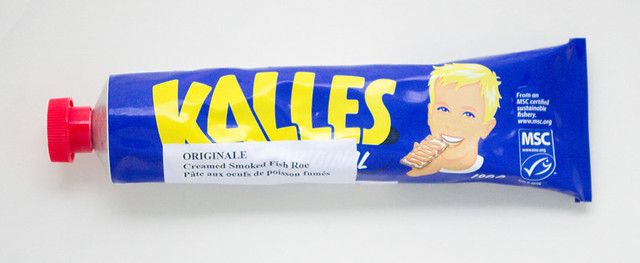
The second item I picked up was Kalles Kaviar, which is a creamed smoked fish roe from Sweden. I’ve seen this in the fridge at IKEA many times, but I’d never gotten around to trying it until now. I like all kinds of fish roe, so I figured that I would like this. And overall it was pretty good, with that lightly fishy taste that I’ve come to expect from fish roe… But it was also really, really salty. Possibly too salty for me.

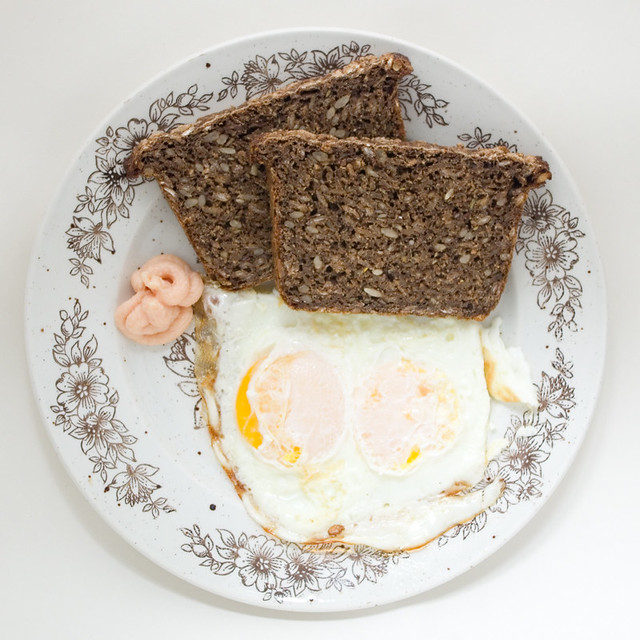
Not to be deterred by a first experience, I Googled to find the typical way that Kalles is eaten. Apparently the most common way to eat it is with dark rye bread with seeds (which I oh-so-conveniently had just made) and eggs for breakfast. Now, I made my eggs sunny side up instead of soft-boiling them, but I figured the flavour would be pretty similar. And do you know what, just a little bit of the kaviar with a mouthful of toast and eggs is a great combination. It’s still awfully salty, though, so if you’re not used to it, I recommend eating it only in small quantities.

Ugly Bread

Ever have one of those days where it doesn’t seem to matter what you do, what you’re working on refuses to turn out quite right? Well, I had one of those days the other day. I made German beer Bread from page 19 of World Breads: From Pain de Campagne to Paratha (Paul Gayler, 2006), which I have made (and adored) many times before and, well…

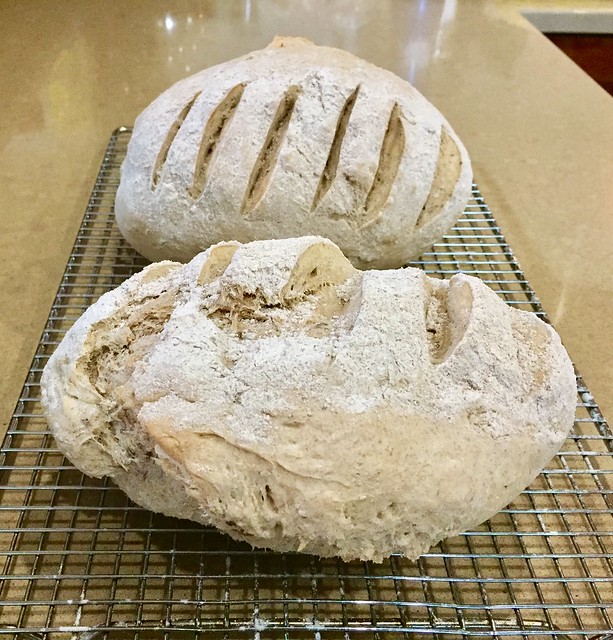
It turned out ugly. I know I didn’t have a loaf pan to bake it in at the in-laws’ cottage, but I didn’t expect it to turn out so unappealing-looking. I mean, the marbled pesto bread turned out just fine. Maybe this kind of bread really needs a mould to keep it from going so weird. Maybe I used too much flour, or the day was too damp. I don’t know. But I have to say that this is the most unattractive bread that I’ve ever baked.

It still smelled heavenly, and it tasted great slathered in butter and served alongside smoked salmon and sautéed veggies for dinner. Looks aren’t everything, after all. If I had to choose between food that looks good or tastes good, I’d take taste any day of the week. But if I’m going to put that much effort into something, I’d also like it to look at least a little appetizing!

The Scone Witch

One of my favourite places ever to eat lunch is The Scone Witch. I started eating there years ago, back when they only had one location on Albert Street. The restaurant/cafe was in easy walking distance on a lunch break when I worked downtown, and I must have popped in at least once a week. Since then, they have moved their flagship restaurant, and they have three locations in total: one on Elgin (near City Hall), one on Beechwood (across from the Metro and adjacent to Books On Beechwood, which is just as tempting to me as The Scone Witch but for totally different reasons), and an express counter on Cyrville (across from Home Depot). Yes, I actually did like this restaurant before it was cool. How hipster of me.


The Scone Witch entrance at 33 Beechwood.

I am happy to say that the quality of their food has not suffered as the company has expanded. Their scones are flaky, their sandwich fillings generous and tasty, and their side dishes remain scrumptious. Service-wise, I think that increased experience only makes things better. At their pilot location, service was sometimes slow and the restaurant was often over-crowded — which, to be sure, was a problem with running a successful restaurant at downtown, where all office-workers seem to take lunch at the same time. I did make a point of trying to come by in non-prime hours when I could, and that did help a lot. But now that there are different (and more spacious) locations, and the staff is more seasoned, I find that things run more smoothly. Mind you, I haven’t braved the Elgin location at noon recently, either. I think that’s for the best.


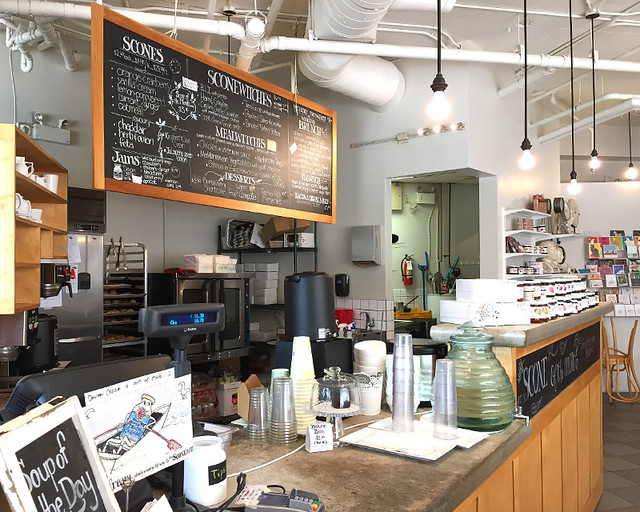
The main counter at the Beechwood location.

I think that, over time, I have come to try everything on The Scone Witch’s main menu, although I may have missed some of the seasonal dishes. My favourite is the poached salmon with cucumber SconeWitch, closely followed by the bacon cheese melt. But honestly, I wouldn’t turn down anything on their menu, it’s all mouth-watering.


Poached salmon with cucumber SconeWitch with mushroom soup.

So if you can, head out to The Scone Witch for breakfast, lunch, or afternoon tea. You will not be disappointed. And hey, if they are super-busy and you can’t find a seat, you can always get their food to go — or, in the case of the Cyrville location, that’s the only way it’s offered. If it’s not pouring rain (and this summer, there’s a good likelihood that it may be), bring your take-out to a nearby park and enjoy a picnic. I believe that there are city parks within easy walking distance of all three locations.

Bread Machine Baking

I’ve been taking the opportunity to play with my bread machine over the last little while, and not only because there have been some stinking hot days (30°C (86°F) with a humidex of 40°C (104°F) this past Sunday) where I don’t feel like baking in the oven. I’ve picked up a few more books about maximizing the potential of a breadmaker, and I think that the new knowledge I’ve gained, and the new recipes, are really making a difference in the results I’m getting.

For this bread I used the Golden Pumpkin Bread recipe on page 167 of Bread Machine: How to Prepare and Bake the Perfect Loaf by Jennie Shapter (2002), omitting the pumpkin seeds. The nearly-fluorescent orange colour was created by using the homemade pumpkin puree that I canned last fall. Some of the pumpkins that I cooked up after Halloween were white-skinned (probably Casper pumpkins), and their flesh was a more brilliant orange than the usual orange-skinned pumpkins you get around here. I also bought a variety of pumpkin that had skin that was a deep reddish orange, with a very intensely-orange flesh. The resulting bread was lovely and moist while still being light, with a slight tang of pumpkin that goes well with hearty dishes like casseroles and soups.

This loaf, although it doesn’t look spectacularly interesting, but it had a lovely, subtly-sweet flavour. It was based on the Apple Butter Bread recipe found on page 172 of The Complete Guide to Bread Machine Baking from Better Homes and Gardens (1999). To take advantage of my recent batch of strawberry-rhubarb butter (which I will share the recipe for soon), I used that instead of apple butter, and omitted the apple pie spice/allspice. This bread isn’t as moist as the pumpkin bread, but is more moist than your average white or brown bread. As per the cookbook’s suggestion, I have tried it with honey for breakfast, which was absolutely divine. I haven’t tried it as part of a grilled cheese sandwich with cheddar cheese due to my issues with dairy, but I predict that the flavour combination would be amazing.

Last but not least, my favourite bread machine experiment so far has been Marbled Pesto Bread from page 142 of Bread Machine: How to Prepare and Bake the Perfect Loaf. For this bread I used the Roadapple Ranch garlic scape pesto that I wrote about previously. The bread recipe required using the machine’s dough cycle, which means that the bread is then baked in the oven. It’s the economical version of using a stand mixer for bread dough, really, except that it also proofs the dough. The dough is rolled up kind of like a jelly roll, but with pesto instead of jelly. The final results were delicious! My husband has not stopped raving about this bread since I made it — and I’m pretty sure he ate most of the loaf. We didn’t serve this bread with anything; it was perfectly good all on its own, even without butter. I’m definitely making this one again once the days cool down a bit so I don’t roast myself by using the oven.

Rhubarb

It’s rhubarb season, and I only just discovered that rhubarb is one of my husband’s favourite “fruits” (I know it’s a petiole (stalk) and not a fruit, but it is cooked like one, so I think of it as being in the same category). We’ve only been married for ten years at this point, and have known each other for more than twenty, you’d think it would have come up in conversation before now. In any case, I do have a rhubarb plant in my old garden, which is an area of the yard where I used to grow things but have had to stop because the fence there desperately needs repair. We’re supposed to get a new fence this summer, so hopefully I’ll be able to plant a secondary garden against the fence next spring. All that being said, my rhubarb plant is under-performing, to say the least.

This plant is three years old and honestly looks like I just planted it this year. The stalks are losing a size competition to the grass. The plant has never been big, so I doubt that it needs to be split. I think it’s probably due to poor soil quality; I mean, I have never fertilized that garden, I just used the soil that was there when we moved in. Next year I’ll be sure to add compost and extra soil and see if that helps at all. With the new fence going in, there’s no point in trying anything before then… My plant may not survive the ordeal anyway.

So that was my total rhubarb harvest: one handful of spindly little stems. Luckily, some friends of mine out in Russell have a plant that is trying its hardest to take over part of their back yard, and they let me harvest more than half of it in exchange for some homemade pickles. I could not have been more thrilled (or thankful)! So I got to cooking.

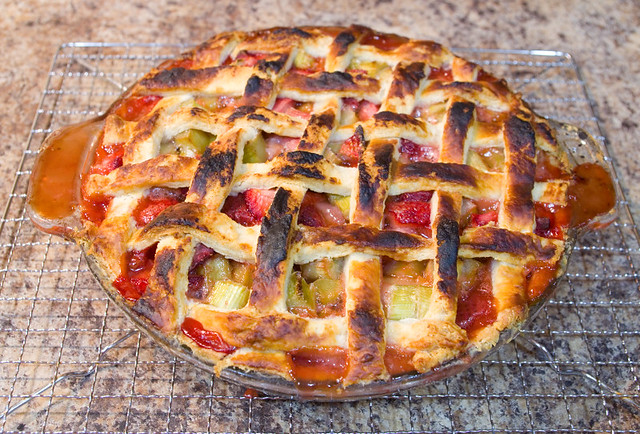
The first thing I tried, at my husband’s request, was strawberry rhubarb pie. I used the pie recipe from page 680 of the Joy of Cooking (2006 edition), but I used the Purity Pastry crust from page 73 of the Purity Cookbook (2001 edition), which is my preferred basic pie crust recipe. This was my very first attempt at a rhubarb pie of any kind, and also my first shot at a lattice crust, which I discovered isn’t terribly difficult, although it’s time-consuming.

The top of the pie came out a little bit darker than I’d have liked, although it didn’t taste burnt. I kept my eye on the baking process, constantly monitoring the oven temperature, and it happened anyway. I am really starting to need a new oven. I can’t keep a bulb lit in there because it burns out within days, the temperature control isn’t accurate (which is why I have a secondary thermometer in there), and it’s so small that I can only cook one thing at once. Ah well, it’ll happen eventually.


Thing 1 holding the pie over my head so I could lay on the floor and get a shot at the bottom.

What surprises me the most is that the pie wasn’t overcooked anywhere else. I would think that the bottom would be the most likely spot, given that I was using a baking setting where only the bottom burner was used. I know that the pie plate protected the bottom of the pie somewhat, but even so… Well, at least it tasted good.

As an aside, you might notice that the rhubarb in my dishes doesn’t look particularly red; that’s because the cultivar that my friends grow is ripe when the stalks are green, although sometimes they do have a slightly red tinge. It tastes just as good, even if the colour of the dishes isn’t nearly as spectacular.

I’ve also been baking up loads of Rhubarb Orange Bread from page 22 of 125 Best Quick Bread Recipes by Donna Washburn & Heather Butt (2002). This book was a thrift store find that I definitely don’t regret! I made a few loaves of the rhubarb orange bread that were devoured by my family before I had a chance to photograph them, then a pile of mini-loaves for the freezer, and then a couple dozen nut-free muffins for the kids to take to school (the original recipe has walnuts). I prefer the taste and texture of the version with nuts, but I understand why it’s something that can’t be brought to school.

As I write this, I am in the middle of making up some slow-cooker strawberry-rhubarb butter. If it turns out, I hope to share the recipe. The one thing that I meant to make that I forgot about was a rhubarb crisp, for which there is a recipe on page 692 of my Joy of Cooking. If none of my other friends have excess rhubarb for which they’re willing to trade, I may have to buy a bundle at a farmers’ market this weekend just so I can make this dish. It’s been many years since I had one, but I remember it being delicious!

Super Rapid Italian Herb Bread

I have been testing out the recipes for my breadmaker recently, because I want to move on from recipes in the instruction manual to the cookbook Canada’s Best Bread Machine Baking Recipes (Donna Washburn & Heather Butt, 1999) that I picked up for a song second-hand. I have a Black & Decker All-In-One Deluxe Horizontal Breadmaker, and I feel it needs to be put through its paces before I start experimenting. To that end, I tried out the recipe for Super-Rapid Basic White bread that can be found on page 21 of the manual.

Physically, it turned out well; it was shaped properly, and it smelled great. However, I wasn’t terribly satisfied with the texture. I found this bread to be very dense, with few pockets created by air bubbles. I think that this is because of the super rapid bake function, which makes a loaf of bread in just over an hour (the regular loaves take about four hours). It just didn’t give the bread the chance to rise and get fluffy like a longer rising period will do. I will have to make a few more of the super rapid bake recipes to see if my theory is correct.

That being said, the bread was definitely edible. It reminded me of the cheap white bread loaves that are available at the grocery store, albeit with more flavour from the herbs. It toasted up nicely and went well in sandwiches and alongside sunny-side-up eggs.

I discovered that the denseness of the bread made for particularly good French toast. It soaked in the eggs without falling apart, which made it much easier to cook up than a lighter loaf. The herbs in the bread also went surprisingly well with butter and syrup, probably because it was only lightly flavoured. I think I would make this recipe again, but only if I had an end dish in mind in which to use the bread, not to eat it on its own. I have a feeling it would also make a lovely grilled cheese.

Breadmaker

Yesterday was a hot one, and today is predicted to be much akin to it, with the addition of thunderstorms. That’s par for the course in the summer in Ottawa: first we get a stiflingly hot, humid day, followed by an impressive deluge and light show, often in the evening of the same day.

Of course, I had run out of bread, but I didn’t want to fire up the oven on such a hot day. I would like to continue making my own throughout the summer, so I dug out my breadmaker, which I’d never used before. Over the winter I purchased a Black & Decker All-In-One Deluxe Horizontal Breadmaker at Value Village for $9.99. There were (and always are) a few on the shelf, so I picked the one that showed the least wear and tear. I also Googled to make sure I could get a user manual.


100% Whole Wheat Bread in the breadmaker.

We didn’t have air conditioning when I was growing up, and one of the best lessons that my parents taught me was to keep the house cool, cook outside whenever possible. The most obvious example of this is barbecuing or grilling, but most countertop appliances work perfectly well outdoors. Breadmakers, toaster ovens, even toasters or kettles fit the bill, and it’s especially convenient to use them if you have a deck/patio or a balcony. They’re not intended for outdoor use, so you have to be very sure that they never get wet and are set on a surface that can’t be damaged by heat, like a concrete step or a glass-top table. If you’re uncomfortable leaving them out in the open, they can be left under a parking shelter or in a garage. Also, you have to make sure that any plugs or extension cords are up to the challenge (I recommend heavy-duty appliance extension cords just in case, you don’t want to start a fire).

So I made a loaf of 100% Whole Wheat Bread (page 24 in the user manual) in the breadmaker, and it turned out deliciously! It was really easy, and although I kind of missed kneading the bread and I don’t like the inflexibility of the recipes that go along with mechanization. But the results were delicious, and I can see why people will set breadmakers on timers so they have fresh bread first thing in the morning. Since I’m used to oven loaves, the bread looked kind of misshapen to me, much too tall and thin. The looks didn’t mar the flavour at all, though. My family devoured the entire loaf in a day (granted, we had grilled cheese sandwiches for dinner). I will have to make another loaf asap.

Morning Glory Pumpkin Muffins

It’s ComicCon costume crunch-time, so I haven’t been spending as much time cooking as I’d like to. Nevertheless, over the weekend I was inspired by the copy of Purely Pumpkin: More Than 100 Seasonal Recipes to Share, Savor, and Warm Your Kitchen by Allison Day (2016) that I have taken out of the library again. I managed to whip up some Morning Glory Pumpkin Muffins (page 81), which were very simple and absolutely delicious. Healthy, too!

For the health-conscious, these muffins are made with spelt flour, bananas, pumpkin puree, apples, pumpkin seeds, raisins, sesame seeds, and poppy seeds. A combination like that is a great way to satisfy hunger cravings and keep you full for a while — perfect to grab when running out the door in the morning. The recipe called for vegetable oil, for which I substituted an equal amount of applesauce, which made the muffins even healthier. These muffins are also very moist and tasty, with just a bit of crunch from the seeds, which is probably why my kids have been noshing on them whenever they get the chance. Would I make this recipe again? Most definitely. Now I’m more eager than ever to try the rest of the recipes in this book!

Simple Suppers

With ComicCon deadlines looming, I’ve been spending every spare moment working on costumes. That means that I have been making meals that can be thrown together out of what is in my fridge, freezer, and pantry. There just isn’t time to run back and forth to different grocery stores and specialty shops! I’ve also been picking meals with a short prep/cook time.


Thing 1 and Thing 2 showing off the mini loaves that they helped me make.

On Saturday I ran out of bread, so I had to make more. Now that I have the hang of the basics, I don’t find that baking bread takes much time at all. I mean, it takes time to proof, but that’s time I can spend on other things. This bread was supposed to be loaves of Nan’s pan rolls, but after I started mixing I discovered that I was at the very end of my all-purpose white flour. No problem, I’ll use half whole wheat, I thought! No luck, I was down to the last dregs of that as well. So I just combined what I had left of both of those flours with some multigrain flour, and promised myself that I’d make a grocery run soon.

I’m happy to say that they bread turned out quite nicely despite my improvisations; it was nice and fluffy, but also quite healthy due to being predominantly whole wheat and multigrain flour. The kids were very pleased with the mini loaves that they shaped in tiny pans that I found at the dollar store. Of course, those were the first bits of bread from this batch that were eaten.

Saturday dinner incorporated that fresh-made bread into a breakfast for dinner kind of meal. Eggs over hard (they were supposed to be over easy, but the cook usually ends up eating the mistakes), pork breakfast sausages, navel orange pieces, and a strawberry banana smoothie.

Last night’s dinner also used the bread, which by this time was a couple of days old, but still toasted up well. I made plain grilled cheese and served it with some quickly-thrown-together soup of turkey broth, carrots, and rice, all served with a side of (slightly-massacred) orange.

Looking back at these dishes, I realize that I need to find an additional go-to fruit or veggie to pair with quick dinners, or my family will soon become heartily sick of oranges.