Spool-Knit Headband Tutorial

I loved to spool knit (also known as corking) as a kid. I would make yards and yards of multicolored I-cord, but I never quite knew what to do with it after that. So I thought I’d figure out a way to use some spool knitting in a useful way — and only a short length of it, too, so that little ones with not much patience could still make something fun.
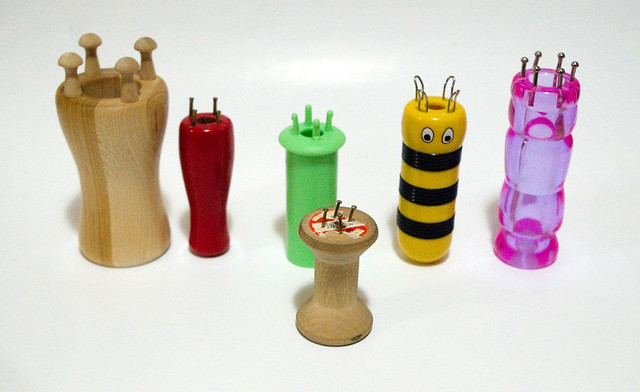
For this craft you will need a spool knitter or knitting spool, which is also known as a french knitter, a knitting dolly, a knitting mushroom, or a small knitting loom. There are probably terms I’ve never heard of as well, but they’re all the same tool! You can buy one commercially; they’re often found at thrift stores as kids tire of them, and sometimes at dollar stores in the craft section. Walmart even carries a few kinds if you don’t have a craft store in your area. But you can always make your own as I did with the one in the front, which is just four nails in an old wooden spool. The one that I’ve chosen to use for this craft is the pink one on the far right, which has six points instead of the more common four, just because I’ll be using a thin sock yarn. But you can use whatever kind you have handy!

Spool-Knit Headband

Materials:

– yarn
– narrow flat elastic
– two shades of green felt
– green thread to match felt

Supplies Needed:

– knitting spool
– crochet hook or spool knitting hook
– scissors
– small needle for sewing
– darning needle
– pencil or marker
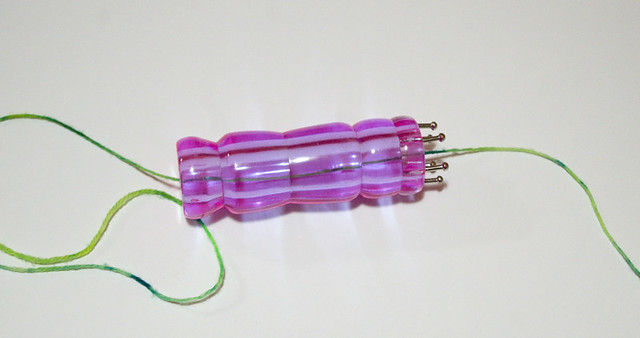
1. Thread your yarn through the knitting spool, leaving a tail of approximately 6″ dangling. The ball of yarn should end up at the end of the tool with the pegs.
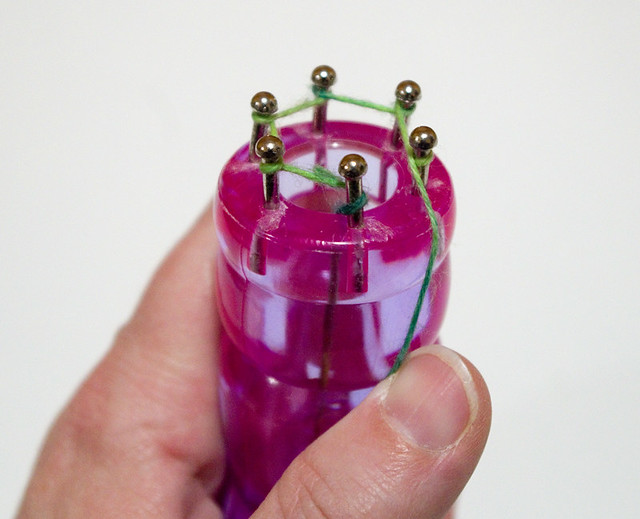
2. Keeping the yarn taut, wrap the yarn counter-clockwise once around your starting peg (all of the pegs are identical, just choose one to start from). Spin the knitting spool counter-clockwise in your hand until the next empty peg is directly in front of you, then wrap the yarn counter-clockwise once around that peg. Continue in this manner until all of the pegs are wrapped.
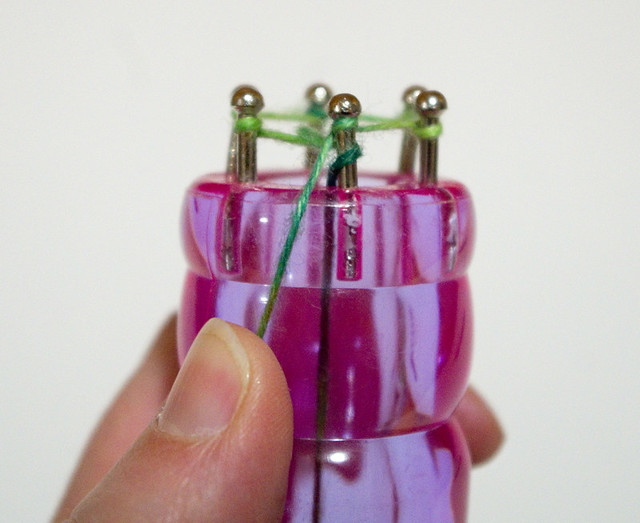
3. Wrap the starting peg a second time.
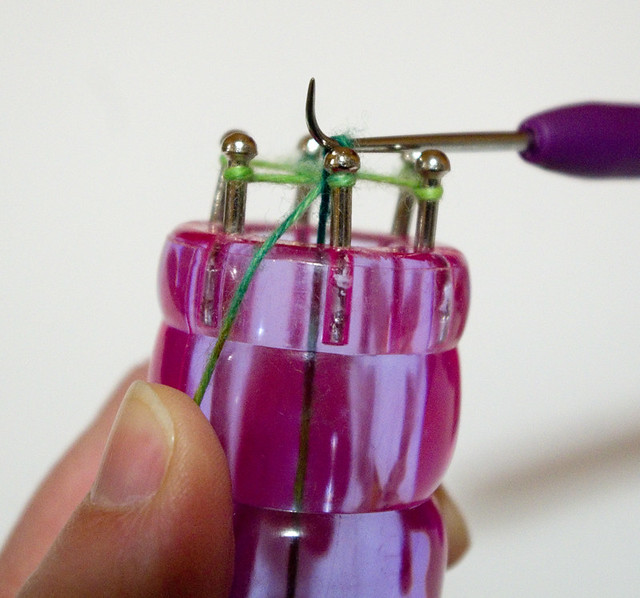
4. Using your hook, flip the first wrap over the second. Give the tail a gentle tug to set the loop.
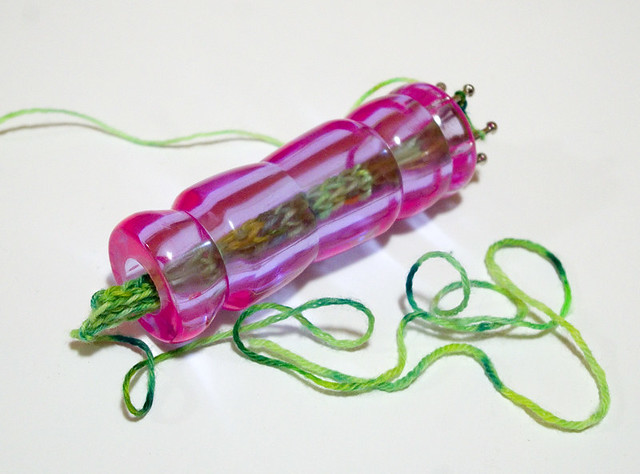
5. Continuing to move counter-clockwise, wrap each peg, flip the oldest wrap over the newest, and then give the tail a gentle tug. This will create a long spiral of spool knitting.
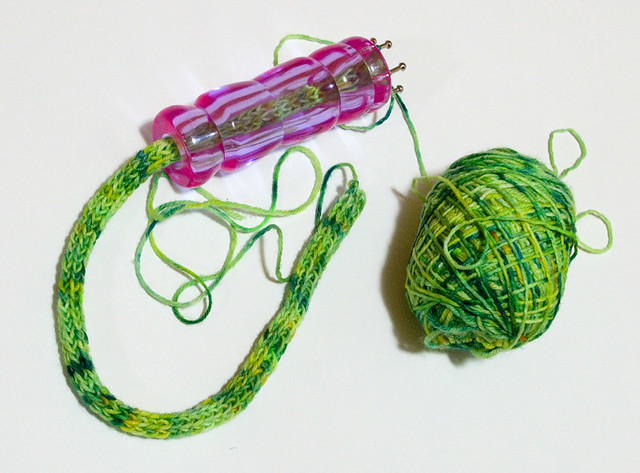
6. Continue in this method until the I-cord you have created is as long as the circumference of the head of the person who will be wearing the headband. Make sure that the measurement is taken without stretching the knitting.
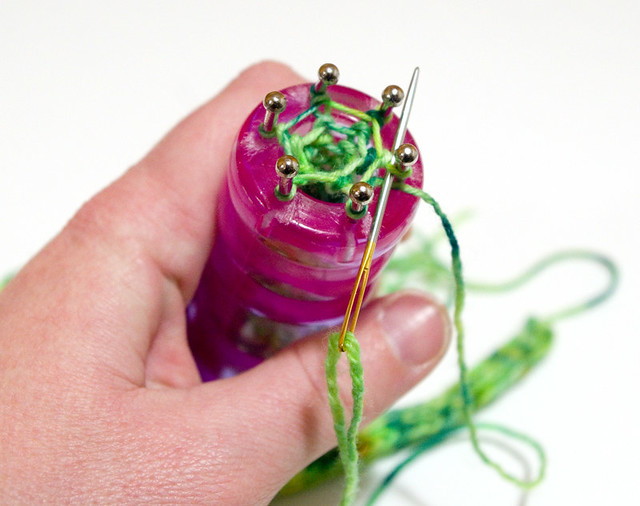
7. Cut the yarn about 6″ away from the peg end of the spool knitting. Thread the end of the yarn through the darning needle. Moving counter-clockwise from the last stitch, use the darning needle to thread the yarn through each loop.
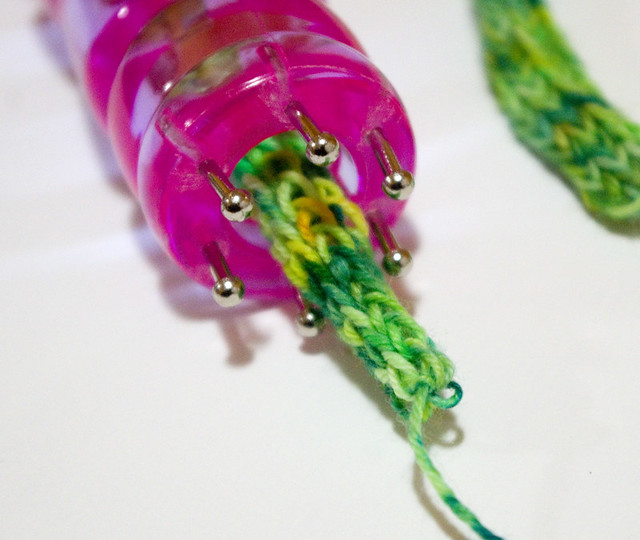
8. Pull the loops off of the pegs, then pull the yarn taut. Tie the yarn securely so that the knitting will not unravel.
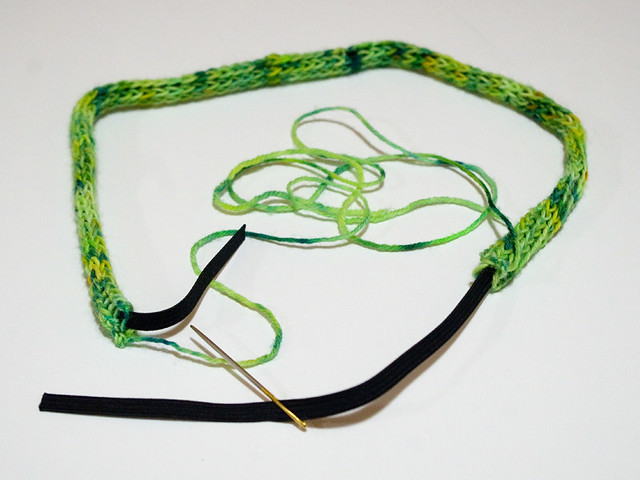
9. Remove the I-cord from the knitting spool. Thread the elastic through the darning needle. Use the darning needle to pull the elastic through the center of the “tube” of the I-cord.

10. Push the I-cord back on the elastic to create a clear working area. Cut the elastic to the circumference of the intended head. Overlap the elastic about 1cm and, keeping it flat, stitch the ends together.
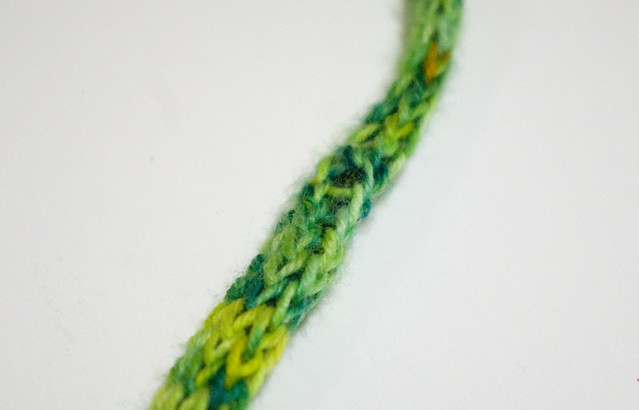
11. Pull the I-cord back so that it covers all of the elastic. Tie the two tails of yarn together tightly, then pass them both through the darning needle and use them to roughly stitch the two ends of the I-cord together.
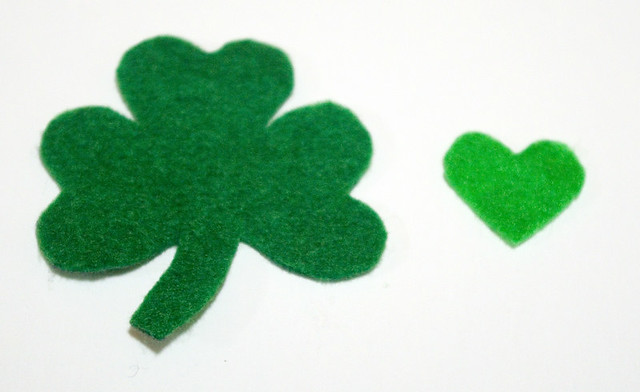
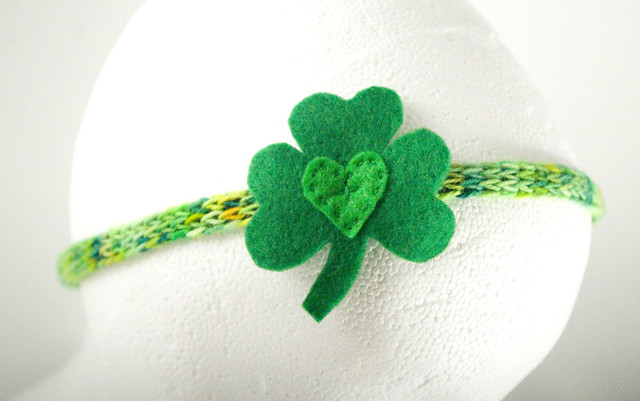
12. Use a pencil or marker to sketch a shamrock and a small heart out of two different shades of felt. Cut the designs out with scissors.

<img src="https://farm8.staticflickr.com/7856/46685216214_0aff433758_z.jpg" width="640" height="544"

13. Making sure that the non-marked side remains up, stitch the heart to the top of the shamrock.
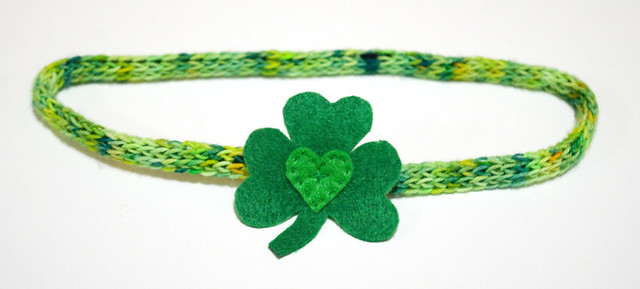
14. Stitch the shamrock over the area on the headband where the two ends of I-cord were joined.
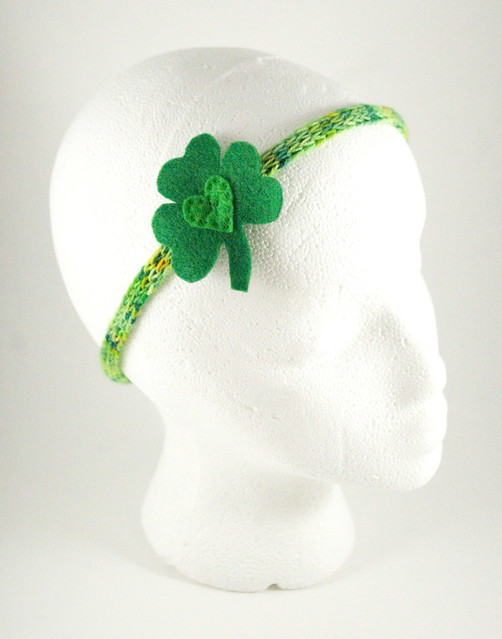
That’s all there is to it! Of course, any colour of yarn and any felt design can be used. I just thought that it would be nice to have something in the theme of Saint Patrick’s Day given that it was coming up on the weekend. But red, white, and pink with a heart design would be lovely for Valentine’s Day; red, white, and green for Christmas; you could make it in the colours of your favorite sports team or even Hogwarts House. Be creative!
Strawberry Pi Pie Cat Toy Tutorial

March Break didn’t really turn out as planned. A tickle in my throat at the flea market on Saturday turned into a full-blown chest cold by Sunday; Monday through Thursday I spent most of my time between decongestant doses with a hot barley bag over my face to decrease the pressure in my sinuses. The rest of the family didn’t fare much better, with my husband missing work and the only reason the kids didn’t miss school being that it was already a holiday. All of our plans for outings and most of the fun things to do at home went straight down the toilet.

However, I had made myself a promise of one thing I was going to do over the break: find a rescue kitty who would fit well into our home. This was not a spontaneous decision, since my husband finally agreed that it was time for a new cat since Christmas (our previous cats passed away of extreme old age over ten years ago). But we also knew that we were going to be in Madrid in February, and we didn’t think it was fair to adopt a cat and then go away for ten days just as it was settling in.

So over the March Break I visited the Humane Society as well as many of their Pet Adoption Locations. While I think I petted and cuddled every cat who was willing (which is honestly a nice way to spend your time anyway), it wasn’t until right before closing on Wednesday night that I found Fizzgig (originally named Violet).

Fizzgig is a female 9-month old brown tabby with green eyes who is very curious about the world around her. She is a little bit shy, but deals well with our boisterous, noisy family.

So, in honour of the new member of our household, I thought that a cat toy craft was in order. Since March 14th is Pi Day, a pie-shaped toy seemed particularly fitting! If you don’t have a cat who would have any use for this toy, it also makes fun play food for a child.

Strawberry Pi Pie Cat Toy

Materials:

– 1 sheet of tan felt
– coordinating tan thread
– red embroidery thread
– polyester stuffing
– OPTIONAL: dried catnip

Supplies Needed:

– sewing needle
– scissors
– circular item (to trace)
– pencil

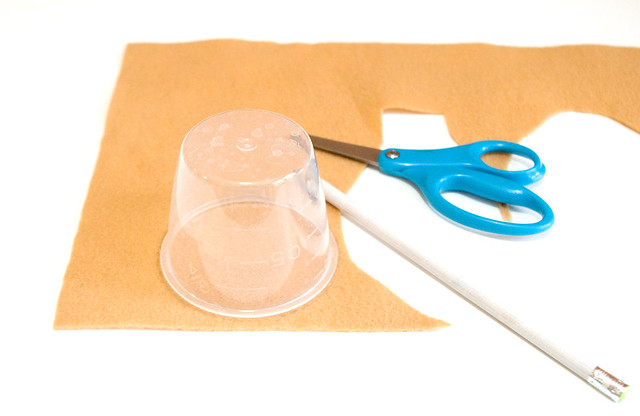
1. Using a circular glass or container about 7cm in diameter, trace a circle on your felt.

2. Cut out the circle and a strip of felt about 2cm wide. The strip should be an inch or two longer than the circumference of the circle. The easiest way to determine the circumference without math is to wrap the felt around the bottom of the glass/container you used to to make the circle.

3. Using coordinating thread, whip stitch the long edge of the strip of fabric to the circumference of the circle.

4. Overlap the ends of the long strip, and then trim off the excess so that they only overlap by about half a centimeter. Whip stitch along the exterior edge to join the strip into a circle.

5. Using your stitched portions as a guide, draw a rough circle about 1cm larger all the way around than the original base. Cut it out.

6. Turn the circle over so that the marked pieces are on the bottom. Draw the symbol for Pi π in pencil at the center of the “top crust” you just cut out.

7. Using red embroidery thread and your favourite stitch (I am a fan of the split stitch, which is #3 in this article), embroider over the pencil markings you have made for the Pi symbol.

8. Using a large whip stitch (which will result in the fabric bunching around the edge to create the “crimped edge” of the top crust), sew the top crust to the rest of the pie. When the crust is about 3/4 of the way attached, stuff the pie with polyester stuffing and, if you so choose, a little bit of dried catnip. Then finish stitching the pie closed.

Your strawberry pi pie cat toy should be ready to go! We didn’t use catnip for ours, but Fizzgig likes it just the same. Her favourite thing to do is bat it down the stairs and then go chase after it. I tried to get a picture of her playing with it, but this was the best that I could do — she’s basically just a motion blur at this age!
Plastic Lace Bracelets Tutorial

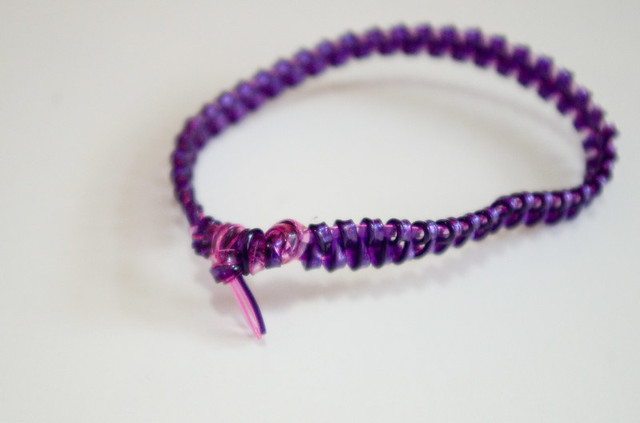
I used to make plastic lace bracelets (and zipper pulls, and all kinds of little geegaws) in the schoolyard with my friends when I was a kid. I learned how from my friends, but I’m not sure where they learned; perhaps the older kids passed it along to the younger ones. This is the simplest style was what we called a “zipper” bracelet, just because it kind of looked like a zipper when it was done. These days, I’ve seen this technique applied to paracord bracelets, which seem to be a recent trend in this kind of craft.

Plastic Lace Bracelets

Materials:

– plastic lace

Supplies Needed:

– scissors

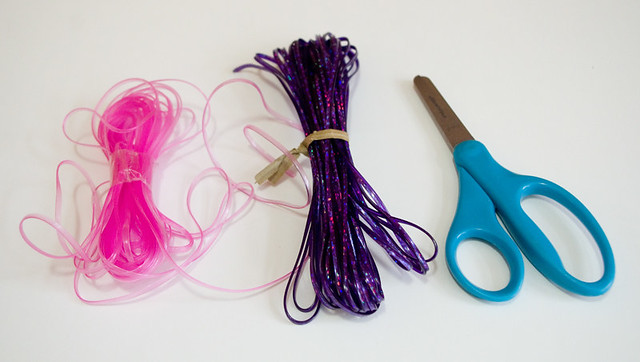
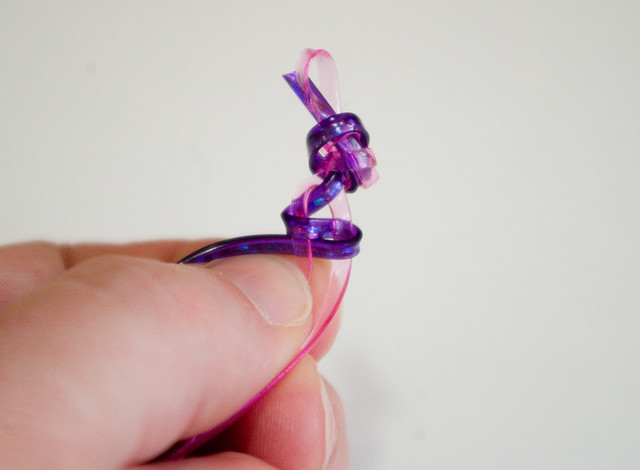
1. Pick your supplies. I generally find it’s easier with two different colours of lace because it’s easier to keep track of which one’s which, but it’s up to you. Cut a piece of your base coloured lace twice as long as the intended bracelet length, plus about 5″.

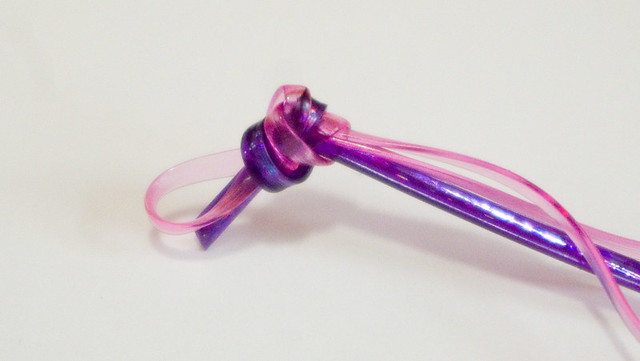
2. Fold the base colour lace in half, and then pair it with the accent colour of lace (don’t bother to cut this one yet). Tie a knot to attach the laces together.

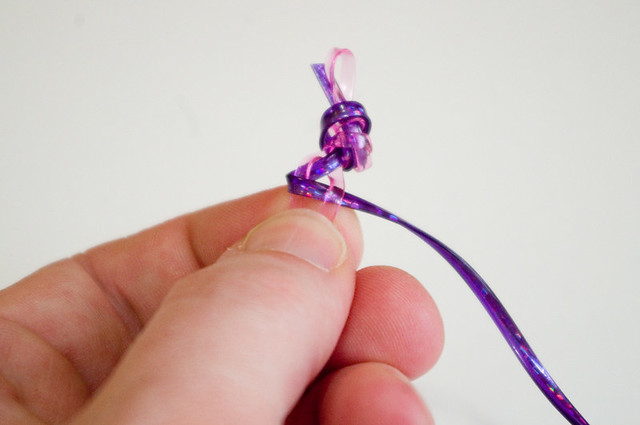
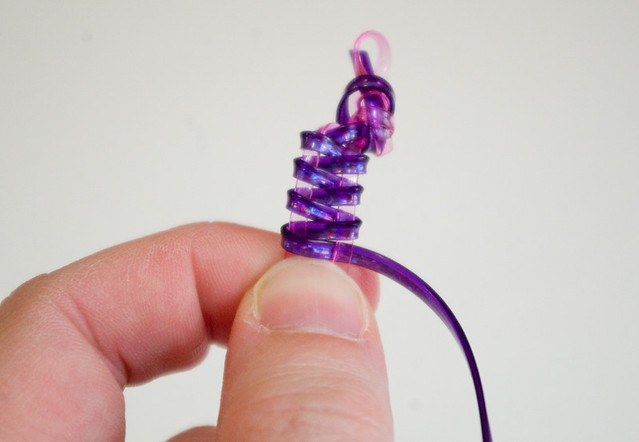
3. Wrap the accent colour lace around the left base lace, then bring it down the middle.

4. Keeping the laces flat and taut, wrap the accent colour around the right base lace, then bring it down the middle.

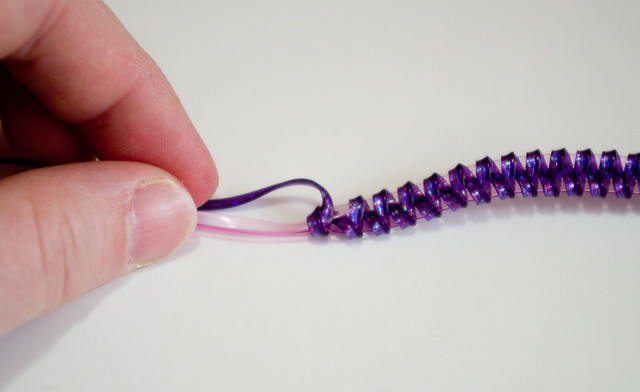
5. Repeat steps 3 and 4, being sure to press firmly up on the lacing from the bottom as you go, to prevent gaps. Keep repeating these steps until the bracelet is as long as desired.

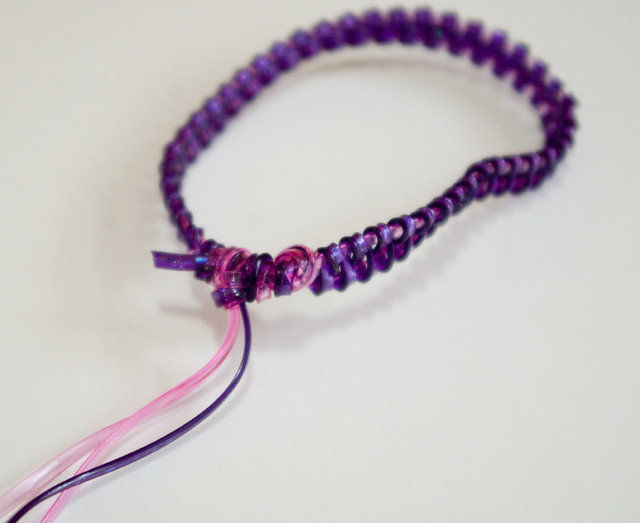
6. Using the accent colour, tie a knot around the base colour laces to keep the lacing from coming out.

7. Thread the leftover lace through the loop created in step 2, and tie both ends of the bracelet together.

8. Trim the excess lace.

9. Wear it!

Yarn Dolls Tutorial

Yarn dolls are something that I used to make all the time as a kid; once again, I believe I learned how to make them in Girl Guides. I realized that I hadn’t made any with my own children yet when Thing 1 came home from Guides the other night with the beginnings of her own yarn doll in the works. Thing 2 hadn’t had a chance to make them yet, so I thought I’d dig out my solid-colour yarns left over from previous projects and let them get at creating.

If you’re not the kind of person who’d have yarn scraps around the house, don’t despair! There are lots of very cheap yarns available, even from the dollar store. But before you head there I might recommend hitting the local thrift shop. There you can usually find orphaned balls of yarn for a fraction of the price of buying new, and it keeps a previously-loved item from going to a landfill.

Yarn Dolls

Materials:

– yarn
– OPTIONAL: googly eyes, beads, buttons, scrap fabric, etc.

Supplies Needed:

– book, binder, folder, or piece of stiff cardboard
– scissors
– OPTIONAL: glue, needle, thread

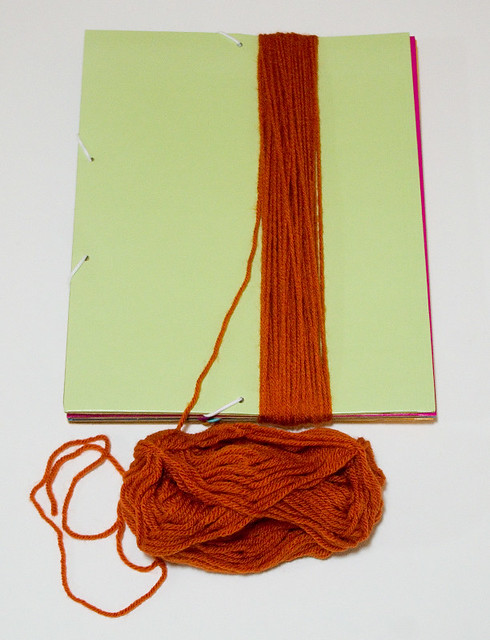
1. Get your yarn, book, and a pair of scissors. I chose a stack of file folders for 8″x10″ pages because they were about the right size for the size of doll that I wanted to make. However, you can really use any size of book or even a piece of cardboard. Since it’s just going to hold the yarn, you don’t have to worry about damaging it.

2. Wrap the yarn around the book until you have created a thick hank. How much yarn you use depends entirely on how big you want the doll to be and what size of book you use. Feel free to experiment! There really isn’t any “right way” to do it. Then cut the yarn off of the ball.

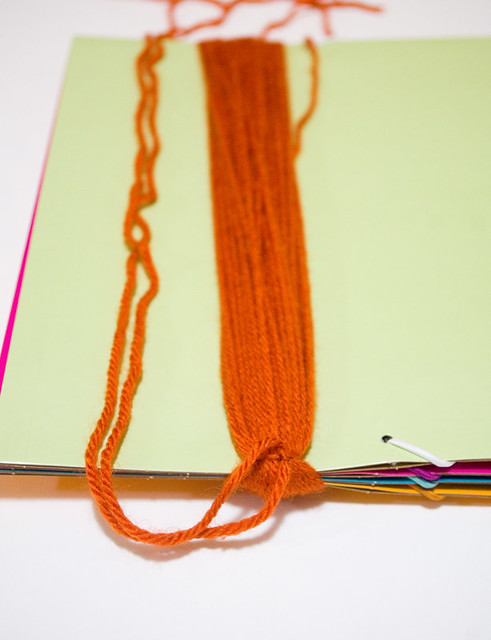
3. Cut a piece of yarn that is a little bit more than twice as long as the book. Thread the piece of yarn under the hank and tie it tightly with a double knot.

4. Slide the hank off of the book. Pass the piece of yarn that you used in step 3 through the center of the hank again and tie another double knot for reinforcement. Turn the hank inside-out so that the knots are on the inside. Smooth the piece of yarn so that it is now part of the hank.

5. Cut another piece of yarn that is a little bit more than twice as long as the book. Wrap this yarn tightly around where you will want the neck of the doll to be, then tie it tightly with a double knot. Wrap the yarn around one more time and tie it again for reinforcement. Smooth the yarn into the hank.

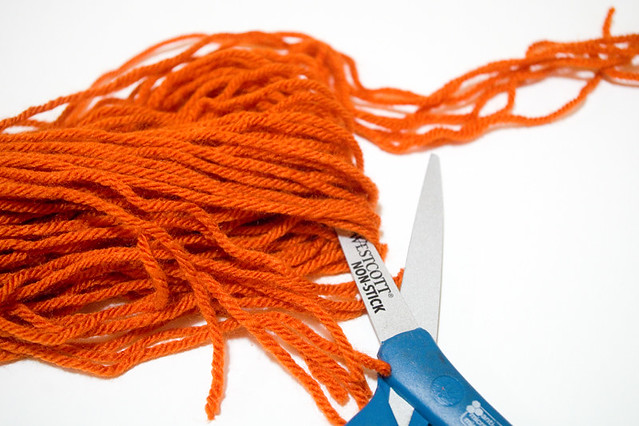
6. Holding the yarn taut, snip the loops at the bottom of the hank (opposite from the head you have created). Trim the excess yarn so that it is roughly the same length.

7. Separate roughly a third of the yarn to create the arms (1/6 of the yarn per arm). For thicker arms, separate a little bit more.

8. Cut another piece of yarn that is a little bit more than twice as long as the book. Tie that yarn to create the waist, using the same technique as at the neck.

9. Braid the arms, double-tying the wrists tightly with scraps of yarn. Divide the bottom of section of yarn in half and braid it to create the legs. Double-tie the yarn tightly around the ankles.

10. Trim off the excess yarn on the hands and feet.

At this point your yarn doll is technically done, but if you feel that it is too plain, that’s where the optional decorations come in! You can:

– add googly eyes or beads or buttons for eyes,
– tie on more yarn as hair,
– sew scrap fabric for clothing,
– tie on artificial butterfly or dragonfly wings to create fairies
– twist a pipe cleaner into a halo and tie on a big lace bow as “wings” to make an angel
– make tiny yarn dolls to hang from earrings or necklaces
– make small yarn dolls in festive colours to use as Christmas ornaments

Exercise your creativity!

There are a couple of basic variations on this kind of doll that are useful to know. The first is the “dress” version, which basically omits braiding the legs to create a skirt. You may note that the arms of this doll are tied instead of braided, which is a much quicker way to do it; this is great for younger children who may have limited patience or braiding skill. It should be noted that this version requires a shorter length of yarn (i.e. a smaller book) due to the lack of braiding.

Also, for a simple snowman, use white yarn and tie it all together at the bottom to create a “snowball” instead of legs.

A great Halloween version of a yarn doll stops at Step 6, and requires only the addition of googly eyes to become a ghost. This is probably the simplest version possible, which is perfect if you want to make a bunch of them and hang them as decorations.

Have fun!

Paper Beads Tutorial

It’s that time of year again: March Break! For the Ontario school board anyway; the Québec schools had theirs last week. My kids were really looking forward to the break, not just because of the days off, but because they loved all of the crafts we did last year. This year we started with a craft that I’m pretty sure I learned in Brownies as a child: paper beads.

Paper Beads

Materials:
– paper (I prefer recycled magazines with glossy photos)
– water-based, non-toxic liquid glue such as Mod Podge or plain white glue
– narrow-width ribbon or cord
– OPTIONAL: coordinating beads

Supplies Needed:
– paper scissors
– bamboo skewers
– ruler
– pencil
– paint brush
– old newspapers (to protect work surface)
– clean, recycled container (to use as glue pot)

1. Spread out your old newspapers to protect your work surface. Remove the piece of paper of your choice from the magazine. (Since we’ve gone paperless for the most part, we bought an old National Geographic magazine for a quarter at a thrift store.)

2. Flip your magazine clipping over so that the back side is showing. Using a ruler and a pencil, draw a long, thin triangle from the base of the paper to the top. The base of our triangles varied from 1cm to 2cm or so; under 1cm they can be a bit too small for little hands, and over 2cm they become very chunky beads.

3. Using the scissors, cut out the triangle.

4. Squirt a small amount of glue into the clean, recycled container. Dab the paint brush lightly in the glue, then spread a thin layer of glue onto the back of the paper, starting about 3cm away from the base. (If you start directly at the base, it will stick to the bamboo skewer.)

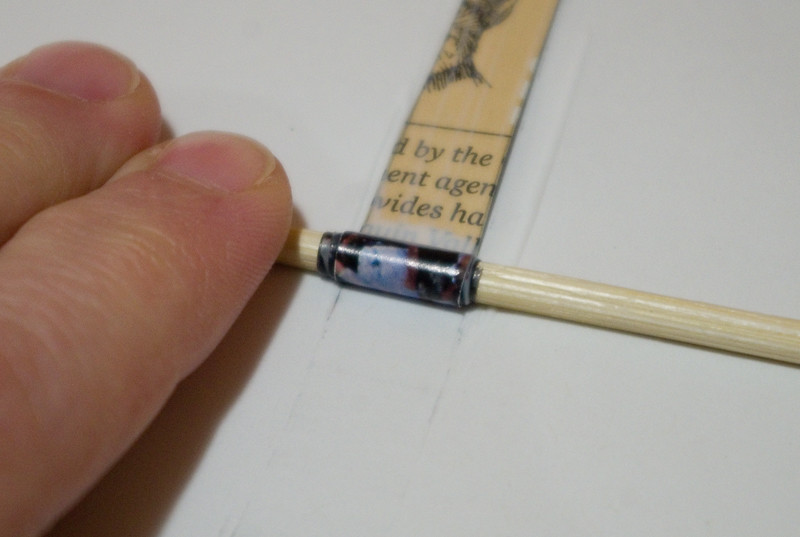
5. Starting at the non-glued end of the triangle and working toward the thinnest point, roll the paper tightly around the bamboo skewer. Once the paper is stuck down, apply a thin coat of glue to the outside of the bead, being careful not to get it on the skewer.

6. Allow the glue to dry, then slide the bead off of the skewer.

7. String the paper beads onto the cord, adding commercially-made beads if desired.

My kids really loved making these beads, especially since they can say that they made them from scratch! As a bonus, it introduced them to National Geographic magazines. Thing 1 insisted that we return to the thrift store and buy a whole bunch more, and at a quarter each I couldn’t exactly object. I have very happy memories of paging through these same magazines as a child and I’m glad that my children are getting as much enjoyment out of them as I did.

613flea Saturday March 9th

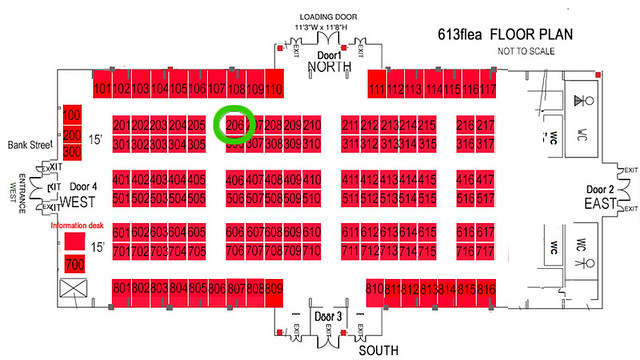
It’s finally that time again! This Saturday will be my first market of the season, and since I haven’t had a show in like three months I have so much new stuff to share. But first, the layout has changed a bit from last year, although I’m happy to say that I have a corner booth (perfect for my preferred layout) that is near where you could find me last year.

I’m still on the northwest side of the building, just a little further from the centre doors.

Since this is the March market and hence the one closest to Saint Patrick’s Day, I thought I’d showcase some of my green pieces.

These stacking Pyrex mixing bowls are from the 1980’s; this style remains a pretty constant favourite.

These Hazel-Atlas bowls have a lovely green ivy print.

This rather large oval casserole dish is from the 1972-1978 Pyrex Spring Blossom Green collection.

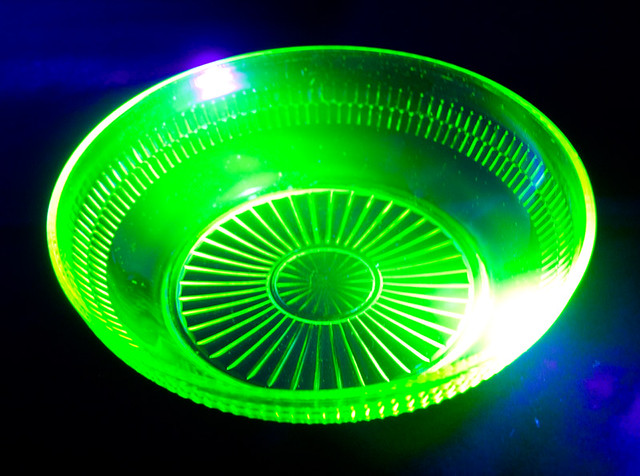
This is my most vibrantly green piece — although it’s only this bright under UV light. Granted, it’s still a lovely green otherwise. It’s Depression glass; this type is also known as uranium glass because a tiny bit of uranium in the mix is what gives it its colour. It’s also known as Vaseline glass in some places, but while all uranium glass may be called Vaseline glass due to its colour, all Vaseline glass may not be called uranium glass because it doesn’t all contain uranium. Don’t worry, there’s not enough uranium there for it to be dangerous; it’s no worse than eating a banana.

Hope to see you at 613flea!

Restaurante Sobrino de Botín

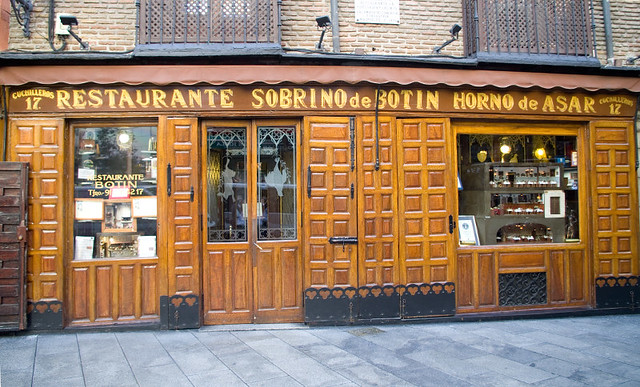
When I was in Madrid last month, one of the places I knew I had to visit was the Restaurante Sobrino de Botín (Botín’s Nephew’s Restaurant). This restaurant, which is very close to Plaza Mayor, is featured on Atlas Obscura, which is where I first learned of it. However, it’s in a lot of guidebooks and can be found on many websites because it has been recognized by Guinness World Records as the oldest restaurant in the world still in operation. A certificate in the front window from Guinness reads, “The oldest restaurant in the world is Restaurante Botín, in Calle Cuchilleros, Madrid, Spain, which opened in 1725 and has been operating ever since; it even retains the original 18th century firewood oven. It is currently run by the González family.”

The restaurant is in what used to be an inn built in the 1500’s; it originally only took up the main floor, but now occupies all four floors. The current exterior dates back to a renovation in the 1800’s, when the large windows were added. Originally they displayed cakes and pastries, but now they showcase photos and articles on the left, and a miniature model of the interior of the restaurant on the right.

The large door to the right of the main entrance is carved with the year 1725, and it was installed at the time of the restoration that transformed the main floor into a restaurant. It would originally have been called an inn, then a tavern, under the name Casa Botín, because at first the proprietors were forbidden by law to sell the food, only to cook it for customers. Eventually the laws changed and they began to provide food as well as prepare it; the restaurant was passed down to Candido Remis, the Botín’s nephew, which is when the name changed (“sobrino” means “nephew”).

The miniatures in the window showcase all four floors, but for some reason I didn’t take a picture of the top one (which was showcased off to one side of the window).

The basement, with its vaulted brick ceilings, used to be the wine cellar.

The ground level is the original restaurant.

The second floor used to be lodgings (I believe the proprietors lived there), but has since been expanded.

On the sidewalk just out front of the building (you can see it roughly at the center bottom of the first photo) is a plaque installed by the City of Madrid. These plaques don’t stand out, but they’re out front of a lot of the city’s culturally important locations.

When my husband and I went for dinner, we were seated on the second floor. It was outside of the main tourist season and we arrived relatively early by Spanish dinner standards, around 8:00pm, so we didn’t end up needing a reservation. Even so, the restaurant was doing a very brisk business and table turnover was steady.

Given the mixed reviews that this place has received for its food (since the recognition by Guinness, a lot of people claim it’s just a tourist trap), I was quite happy with the food. The bread was fresh and tasty, with a crisp, flaky crust, and soft insides.

Since we had to be budget-conscious, we skipped appetizers and went straight for the main meal. It’s probably a good thing we did, because it was really filling! I had the suckling pig roasted in the restaurant’s original wood-fired ovens, served with boiled potatoes. It was plain but delicious, with the crackling skin being the most delectable part. The pork is a traditional regional dish and the pig itself was brought in from Segovia, where we were actually going the next day, and where I also had suckling pig. If I’d realized that these events were going to happen two days in a row I would probably have switched my dinner order in Segovia itself, but we had to decide weeks in advance what we were eating because it was a large group and a tour meal. The restaurant in Segovia was fantastic, and I’d say that the suckling pig at the two locations was comparable.

We declined dessert so that we could take a walk around the area around the main square to find ourselves a separate place for coffee and sweets. I had a lovely meal at the oldest restaurant in the world, and I can see why it has been in business for so long!

Atlas Obscura in Madrid

I absolutely love Atlas Obscura. Not only do they write all about the kinds of weird things that I find interesting, but on a more practical level they help me to find the less-touristy interesting things when I’m travelling. I find when I’m in a new city it can be a bit overwhelming, what with trying to find my way around and looking at all the people and in all of the shop windows. Doing a bit of pre-planning with a traditional guidebook (I’m partial to the Lonely Planet ones) and Atlas Obscura helps keep me from walking by interesting things just because I had my head turned the wrong way at the wrong instant. It kind of turns my trip into a treasure hunt.

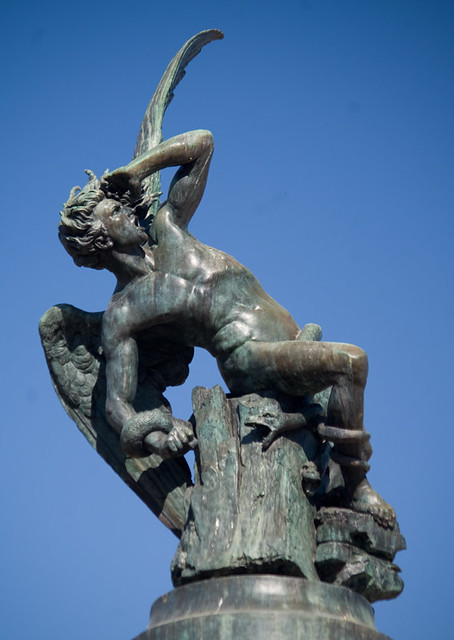
For example, the Fountain of the Fallen Angel (Ángel Caído) in the gorgeous Parque del Buen Retiro is pretty famous for being the only known public monument to the devil. This sculpture was in both guides and was part of the suggested walking tour in the Lonely Planet book…

But Air Crash near Plaza Mayor, which depicts an angel in the middle of plowing into a building, is about four stories up on a rather narrow street, and is easily missed.

I would probably have found the Muslim walls of Madrid, the last remnants of the pre-Christian city walls, with my traditional guide, since they were also part of a suggested walking tour…

And the Temple of Debod, an ancient Egyptian temple gifted to Spain from its home country, is both quite close to the palace and is in a major park that has stunning views of the city…

But I don’t think I would have found the tiny Caños del Peral Archaeological Museum located inside the Opera Metro station without help — although I might have passed by it on the way out of the subway, if I’d come out at that station for other reasons (it’s the closest station to the palace).

With all of the other vendors hanging around the outside of the palace trying to get a piece of the tourist pie, I almost walked by this barquilleros vendor, except that his tiny roulette wheel caught my eye. (You can play the game of chance in hopes of getting more waffles for your money.)

I had a really hard time finding the Kilometre Zero marking, from which all roads in Spain are measured, because it really is just one paving stone among many and people were literally standing on it.

I had a much easier time finding the Bear and the Strawberry Tree (El Oso y el Madroño), even though it was just across the Puerta del Sol square, because I think every tourist and their dog was having their picture taken in front of it. (This bear is the symbol of Madrid and the motif can be found all over the place, including on manhole covers.)

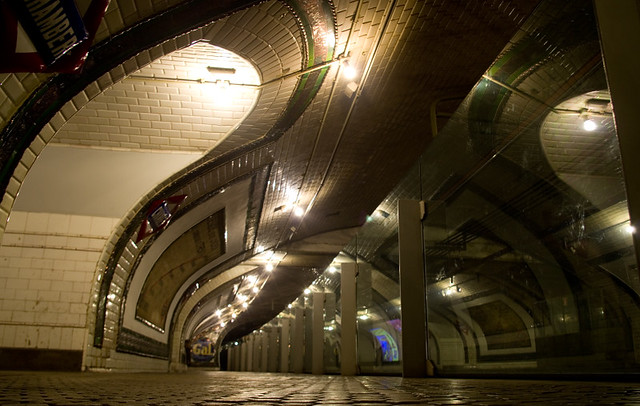
I greatly enjoyed the free tour of the Chamberí Ghost Station, which is a subway station that was closed in 1966 that has now been restored and reopened as a museum.

When we were chatting with our Spanish hosts about where we’d visited, it came up that we’d made a special trip off of the beaten tourist path to check out the Olmec head roundabout. This exact replica of an Olmec head was donated by Mexico in 2007, but its ignominious placement in the middle of a traffic circle at the edge of a housing development means that even most city natives haven’t heard of it.

One place that we visited upon the suggestion of our Lonely Planet guidebook that wasn’t on Atlas Obscura, but I think it should be, was the Pacífico Power Plant. This station powered the metro from the 1920’s to the 1950’s, and also provided power for the city during the Spanish Civil War. It was closed completely in the 1970’s and was restored in 2008 to be turned into a museum. The massive diesel generators are similar to ship’s engines of the era.

Unfortunately I didn’t get to every single Atlas Obscura listing for Madrid, but I think I hit most of the ones I was interested in. There were a couple of museums that appealed to my scientific curiosity and sense of the macabre, but the weather was so sunny and beautiful for my entire trip that I didn’t really have a huge impetus to stay indoors. Especially since I knew how soon I’d be returning to snowy Canada in February!

Shrove Tuesday

I meant to write this post on Wednesday about Tuesday, but unfortunately I was in a minor car accident — a fender bender, really — which, while not severe in any shape or form, did eat away at my day. (Before you ask: I seem to be fine, the car is now in the shop but likely doesn’t require any major repairs, and no it wasn’t my fault (I was rear-ended while stopped in a right-hand turning lane, waiting for a gap in traffic so I could pull out).) So now I’m writing my posts all out of order, but this post will be backdated to Tuesday, which is when I actually made the pancakes.

I’ve written about Shrove Tuesday, also known as Pancake Tuesday before, since it was a yearly tradition in my family growing up. In all of the hustle and bustle with travel (and my remaining jet lag) this year I’d almost forgotten about it, but somebody’s post on Facebook reminded me just in time. Not that pancakes for supper are limited to one day a year, mind. Some days I just feel like pancakes.

This year I went with Basic Pancakes from the Joy of Cooking (Rombauer & Becker, 2006 edition); I’m not sure what page of the hard copy book, though, since this time I used the app (super-convenient, that thing). However, I discovered too late to go to the shops that I was low on eggs and completely out of butter, so I substituted half a mashed banana for an egg and canola oil for the butter. My substitutions seemed to work just fine since these pancakes were very fluffy and mighty tasty! I topped them with a fresh fruit salad of Granny Smith apples, dragon fruit, strawberries and more bananas, along with lots of maple syrup. And, as is pretty much a constant request in this family, I served bacon on the side.

Royal Palace of Madrid

Like many tourists, one of my first stops during my visit to Spain was the Royal Palace of Madrid (“Palacio Real de Madrid” in Spanish). I actually visited twice on consecutive days, because I underestimated how long it would take to properly appreciate all of the exhibits and I wanted to give this beautiful complex the attention it deserved.

The Royal Palace is located right in the middle of the old city; buildings that are commercial on the ground floor and apartments (or sometimes hotels) above are separated only by a road and the public parks such as the Plaza de Oriente and Jardines de Sabatini. This means that you can get a good look at the palace even from outside of the gates. It’s possible to look right inside the Plaza de Armeria (the main courtyard) from the publicly-accessible area between the Catedral de la Almudena and the palace. The throne room is on the second floor right above the central doors, and looks over the courtyard and at the cathedral.

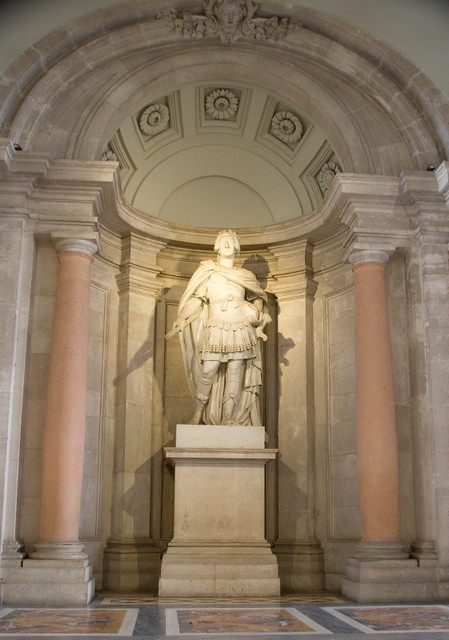
This is the statue of Charles III at the base of the grand staircase.

And this is the grand staircase from above, with a statue of Charles IV at the center. It is, quite simply, awe-inspiring in its grandeur.

On ceiling above the grand staircase (and, indeed, most of the ceilings inside the palace) is a fresco. As this is probably the biggest single room that I saw, I’d venture to guess that it’s also the largest fresco. It is by Corrado Giaquinto and depicts Religion Protected by Spain (although I have to admit I had to look that up after the fact, I was so gobsmacked by the palace that I forgot less-consequential things like artists and titles).

After this, though, I have very few photos of the palace, since there were only a few areas where photos were allowed. Suffice it to say that it is an exercise in opulence and incredible attention to detail. Also on the palace grounds is the armory, which contains fantastic examples of full plate armour (for men, children, and horses) alongside swords, crossbows, and other weapons. Most of the items on display belonged to royalty or upper nobility, so they are beautifully detailed as well. Of course I wasn’t allowed to take photos in there either.

One place that photography was allowed was an extra to the basic tour that I just had to go see: the royal kitchens. They are absolutely huge, which makes sense because they once played host to hundreds of people working at hot, sweaty, tiring jobs that eventually produced all of the food that royalty and nobility at the palace ate. Above is a selection of the kinds of copper and glass molds that were in use.

A wooden work table with the more delicate tools for preparing and decorating the foods prepared in the molds.

The station for washing vegetables.

The pastry station with its marble counter top for keeping the pastry dough cool (much as we still use marble rolling pins or rolling pins filled with cold water for the same purpose today — it keeps the lard or butter from melting, which makes the dough flaky).

Prep table in the room with the main ovens and stoves. The big rack in the background holds all of the different kinds of spits for roasting above the massive fireplace.

The stoves used wood as fuel and the smoke was vented through pipes that ran under the floor, which kept them from having to have overhead chimneys. I’m not sure how they managed to get the chimneys to draw correctly; apparently it was quite the feat of engineering. Notice the high ceilings for air flow; the kitchens were in the basement and the windows that light it and allow for air circulation are at ground level.

Here you can see another of the massive cast-iron stove/ovens, with the fireplace for spit-roasting in the background.

Back when these kitchens were in use, they were often written about by visitors who were impressed by how much work it took to feed the upper classes in the manner to which they were accustomed. They also wrote about how the kitchens ran like a well-oiled machine, or they compared it to a military operation. I personally have a hard time imagining the monumental task it must have been to make these kitchens anything but absolute chaos. My hat is off to the generations of people who worked here.