Carrot Jam

I’ve been looking for creative ways to preserve the carrots from my garden, since there are only so many carrot-based dishes that I can eat in a row. Yes, I could freeze some of them, but my freezer is getting awfully full of soups and sauces and broths (this happens every autumn), so something shelf-stable is what the doctor ordered. I also wanted a recipe that disguised the unusual shapes of my homegrown carrots (which I combined with store-bought orange ones for a bit of visual interest), since I know that ugly food tends to be eaten less enthusiastically than pretty food, even if it tastes identical.

So I browsed through my cookbooks and found a recipe for Carrot Jam on page 206 of Preserving by Pat Crocker (2011). I had never heard of carrot jam before, but there’s a similar recipe for Carrot Orange Marmalade on page 142 of Prizewinning Preserves by Yvonne Tremblay (2001), which apparently earned a red ribbon for best marmalade at the 2000 Royal Agricultural Winter Fair. I guess it can’t be that unheard of. However, the Prizewinning Preserves marmalade was missing the intriguing spices of Preserving‘s carrot jam, which cinched my decision to make the latter recipe.

Preserving suggests letting the jars sit for a few weeks before opening for best flavour, but the cooking jam smelled so darned good that I opened up my first jar the very next day. I am so glad that I did. I baked up a quick batch of Dad’s Biscuits upon which to spread the jam, and then I was in seventh heaven. If these preserves get even better with age, I can’t imagine how delicious they will be. Suggested uses for this jam are as follows (Preserves, page 207):

Carrot jam can be used as any other fruit jam, but I particularly like it on quick bread nut loaves and with savoury meat pies or wraps. Use it as a glaze for cooked vegetables: toss grilled or steamed vegetables in up to 1 cup (250mL) of the jam while hot, just before serving. This is also a flavourful topping for fresh yogurt, or you can add a couple of tablespoons (25mL) to a Vinaigrette Dressing or Salsa Verde.

I can’t wait to try carrot jam in all of these ways! I think it would also make a lovely glaze for roast pork or chicken. I love this recipe so much that I think I will grow carrots again next year specifically to make them into this jam. Maybe I’ll even grow those red and/or purple heirloom carrots just so that the jam is even more visually interesting.

Harvest Garden Bread Recipe

Last week Thing 1 and I tried our hands at making Confetti Bread (page 67 of The Complete Guide to Bread Machine Baking from Better Homes and Gardens (1999)). While in general I really like this book and I have found its recipes to be quite reliable, this loaf did not turn out as planned. It looked like this:


Failed Confetti Bread

The poor, sad thing just didn’t rise. The loaf was much too dense and wasn’t even baked the whole way through. The cookbook even warns that you might have to add additional flour to the dough after the first knead (which I did), and it still fell flat. I think that this is because a bread machine recipe just can’t predict the moisture content of the vegetables, and bread machines need very precise measurements because they just can’t compensate for change on the fly.

However, the loaf smelled absolutely delicious when it was baking, and the flavour of the bread backed up that smell. Well, except for the red pepper part, but that’s probably just my preference (I’m not a real fan of sweet peppers). I was inspired to try to create a similar loaf by hand to get all of those flavours that I liked, but I wanted it to be a nice fluffy loaf with a crisp crust. As a bonus, this recipe includes both zucchini and carrots, which many gardeners have an overabundance of this time of year. (If you don’t garden, these veggies are also cheap in stores in the fall.) I was very happy with the result.


Successful Harvest Garden Bread

So here’s the recipe:

Harvest Garden Bread
Yields one loaf

Line two small bowls with paper towel or clean dish towels.
Grate separately:
3/4 cups carrots
2/3 cups zucchini
Place the carrots into one bowl and the zucchini into the other. Leave them in the bowls so that the towels absorb excess moisture while you perform the next steps.
In a large bowl, mix together:
1 cup warm water
2 Tbsp olive oil
1 egg yolk
1/4 cup finely sliced green onions OR chives
In another large bowl, mix together:
4 cups all-purpose white flour
1 1/2 tsp white sugar
1 tsp salt
3/4 tsp dried thyme OR 2 1/4 tsp minced fresh thyme
2 tsp quick-rise instant yeast
Squeeze the zucchini and the carrots in their towels to remove excess moisture. Add the vegetables to the bowl containing the liquids and stir.
Gradually mix the dry ingredients into the wet ingredients. When mixture becomes too difficult to stir with a spoon, turn it out onto a lightly floured surface and continue to incorporate the ingredients by kneading.

Once all ingredients have been kneaded in, the dough may be too moist, sticking to both your hands and the kneading surface. If so, you may need to gradually add:
up to 1/2 cup all-purpose white flour
This additional flour will compensate for the moisture of your vegetables. If the dough is still too sticky once the additional flour has been kneaded in, continue to add flour one tablespoonful at a time until the desired consistency is reached.

Oil a large mixing bowl. Form the dough into a ball and place it in the bowl. Cover the bowl with a clean, damp tea towel. Place the bowl in a warm, dry area with no drafts. Allow the dough to rise until double, about 2 hours.

Punch down the dough. Grease a 9.5″ X 5.5″ loaf pan. (A slightly smaller loaf pan may be used, but you will end up with a more mushroom-shaped loaf.) Shape the dough into a loaf to fit the bottom of the pan. Cover the pan with a clean, damp tea towel and allow to rise again until double, about 1 hour.

Preheat your oven to 400ºF (204ºC).
While oven is preheating, mix together:
1 egg white
1 Tbsp cold water
Brush the top of the dough evenly with the egg & water mixture to create a glaze.
Bake loaf for 30 to 40 minutes, until top of loaf is lightly browned and the loaf sounds hollow when removed from the pan and tapped on the bottom.

If you try out this recipe, I’d love it if you’d leave a comment and let me know what you think! And if you make any changes or if you find any errors, I’d love to know that too.

Dealing With the Autumn Harvest

Yesterday I spent most of the day and well into the evening trying to use up some of the produce from my garden before it went bad. This time of year can be a real challenge when everything needs to be harvested, cleaned, prepared, and often canned or frozen all at once. And I haven’t even started dealing with my root vegetables, which are starting to pop out of the soil they’re getting so big!

I harvested the four pears that were growing on my tiny little pear tree. The three on the left were of one type, and the one on the right is another. The tree has four different kinds of pears grafted onto the main trunk, but I stupidly removed the labels and now I can’t remember what varieties there were. I’m pretty sure the odd one out on the right is a Bartlett, though. I considered trying to bake something with the pears, but my kids claimed them for their lunches.

My black sweet pepper plants only yielded one black pepper; unfortunately, the others all died or turned out to be green peppers. I really only grew these as an experiment anyway, since I’m not a huge pepper fan, so I gave them to my mother.

My apple tree is starting to drop its fruit; sadly, the poor tree suffers from a nasty case of apple scab despite my care, and a lot of the fruit aren’t good to eat. Apple scab itself is safe (although it’s ugly), but it does mean that the fruit often ends up cracked and rotting on the tree, or creates areas where it’s easier for pests to crawl inside. Even so, I have lots of apples to use up in recipes — this variety is very tart, so it’s best cooked.

I’m still harvesting a lot of tomatoes; although I feared frost a few weeks ago, this past week has been one of summer-like heat, so my tomatoes are actually still flowering! What fruit is on the vine is ripening nicely, so I may not have too many green tomatoes to deal with this year (even though I have a few great recipes for those too). Last night I made up another batch of Blender Salsa from page 92 of Preserving by the Pint: Quick Seasonal Canning for Small Spaces (Marisa McClellan, 2014), since my husband likes that version so much. The above photo was taken immediately after removing the jars from the hot water canner.

The basil plant in my mom’s garden needed to be cut back for the season, so she let me have all of the leaves in exchange for some of the pesto I made with them. Pesto is one of my favourite sauces to make because it’s so darned easy and can be made with so many leafy greens. I’ve made pesto before out of beet leaves, nasturtium leaves, and garlic scapes. The one that I made last night was the most common type: basil, garlic, olive oil, and Parmesan cheese.

Before I made the salsa and the pesto, I set aside two large tomatoes and a tablespoon of basil so that I could bake Fresh Tomato and Basil Loaf. The recipe is found on page 156 of Bread Machine: How to Prepare and Bake the Perfect Loaf (Jennie Shapter, 2002). This bread is started in the bread machine, which mixes, kneads, and proofs the dough. Then the dough is removed from the machine and additional ingredients are kneaded in by hand, the dough is left to rise in a loaf pan, and then the bread is baked in the oven. The addition of the tomatoes made this dough really sticky and unpleasant to knead, and I made an enormous mess, but it was totally worth it since this bread is delicious. I will definitely be using this recipe again.

Mom’s Birthday Dinner

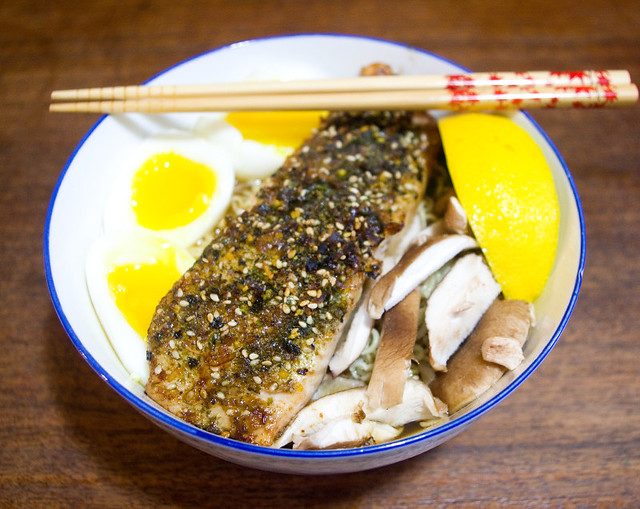
We celebrated my mother’s birthday this past Saturday. At her request, I hosted dinner at my house and made her up some of my ramen — which somehow she had never tried before. The version that I chose to make was Furikake Salmon Ramen (page 82 of Simply Ramen by Amy Kimoto-Kahn (2016)); the recipe is also available online here. This recipe uses a shoyu base (page 8, or online at easypeasyjapanesey.com), which I made up in advance in my slow cooker. I remain rather enamored of this base recipe, but every time I make it I remind myself that sometime I really need to try the tonkotsu base, which is my favourite but appears much more difficult. I used soft-boiled eggs instead of marinated half-cooked eggs, mostly due to time constraints. I also used packaged noodles; one of these days I will make my own, but that really requires a pasta maker, which I don’t own. I didn’t use the kind from the instant soup packages, as I find they get soggy much too quickly, but instead a package of dried noodles on their own for which I unfortunately can’t read most of the label.

The real star of this dish is the salmon. I was lucky enough to find it on special at the grocery store, pre-portioned and ready to go. The furikake topping was delicious even though I used North American mayonnaise instead of Japanese-style. There were some leftovers and I really look forward to having them served over rice in the next few days. I think that this topping is going to become part of my regular dinner roster; it would probably be good on other pink, oily fish like sea trout.

In our family, there’s always dessert with a birthday dinner, even if you’re stuffed from the meal itself — that just means that you take a breather and have the treat later in the evening. This year I made apple pie using fruit that I’d grown on my own tree in the back yard. For the chocolate lovers, Dad made brownies with chocolate icing, which were delicious and, if you know my dad, a very special treat, since he rarely bakes. We served it all up with whipped cream and/or vanilla ice cream (and dairy-free alternatives thereto). Oh, and candles! I was thrilled to find that it’s possible to get the candles that burn with coloured flame at the dollar store these days. I used to have to go downtown to a specialty store to buy them.

So happy birthday to my mom! Love always to the woman who helped shape me into the person that I am (whether that’s a good thing or not is a matter of opinion).

Onion Soup Pork Chops & Baked Panko Zucchini Sticks

In an attempt to use up the zucchini I received this weekend, I made another round of Baked Panko Zucchini Sticks for dinner last night. Enough for my entire family only uses up about a quarter of one of those giant summer squash. Of all of the recipes that I have for zucchini, this one uses the most in one go. It may end up being a contest to see which gives out first, my supply of zucchini or my kids’ ability to consume it. To be fair, the girls were really happy to see the zucchini on their plates last night, and that’s two suppers in a row where I didn’t have to fight with them to get them to eat their vegetables.

However, the real star of dinner wasn’t the zucchini sticks, although my kids may argue otherwise. The best part to me was the pork chops that I baked as the entree. I found these 1″ thick slabs of pork on sale for less than the cheap cuts, so I stocked up and planned on a few for dinner. I greased a broiler pan, lay the chops flat on top, and then covered them with a thick coating of dry onion soup mix. Then I baked them at 275°F (135°C) for about two hours. They were a very fatty cut, but the low, slow bake made them moist, tender, and not too greasy. Honestly, they couldn’t have been much easier. Now, if only I’d planned a meal cooked entirely in the oven for a day that wasn’t 30°C (86°F).

I was inspired to cook the meat this way after reading The I Hate To Cook Book (Peg Bracken, 1960). On page 12, the author writes about Sweep Steak, which is “[s]o-called because a couple of seasons ago this recipe swept the country“. Basically, it’s beef coated with dry onion soup mix and roasted in the oven.

Now, this cookbook predates me, but I distinctly remember dry onion soup mix being a staple of the kitchen when I was growing up. It was used to coat steak, to bread pork chops and chicken, and to season meatloaf. In our house, it was most commonly mixed with sour cream to become chip dip — which is referred to as Classic California Dip on page 84 of The I Hate To Cook Book, so I guess this combination predates me as well. I remember doing groceries with my parents and there was a whole assortment of dried soups along an aisle. But when I went to pick up some mix for this dish, the dried soups took up only part of one tiny shelf, most of which was taken up by Cup-A-Soup. There are probably a hundred or more types of canned and tetra-packed soup, not to mention the refrigerated stuff in the deli section, but apparently the dried kind is no longer popular. I guess that’s to be expected with the popularity of fresh ingredients being back on the rise. I certainly hadn’t bought any dried soup mix in years. Still, it came as quite a surprise to me to see the selection so limited.

Autumn Produce & Baked Panko Zucchini Sticks Recipe

A friend came by this past weekend to hang out and chat, and also to gift me with some of the excessive produce from his family’s garden. Apparently zucchini has really liked this year’s rainy summer, and tomatoes weren’t far behind in the production department.


Zucchinis and tomatoes in cardboard boxes from my friend’s garden; tomatoes and cherry tomatoes from my garden in the green bowls.

I didn’t try to grow zucchinis this year, but my tomatoes are ripening up nicely as well, so I ended up with much more fresh garden produce this weekend than we could eat before it went bad. So I’ve found myself spending the majority of the last few days in the kitchen, cooking as much of these fruits and veggies as I can.

Since my freezer is getting pretty full so I wanted something shelf-stable, and my husband (the main salsa consumer in our house) really likes the Blender Salsa from page 92 of Preserving by the Pint: Quick Seasonal Canning for Small Spaces (Marisa McClellan, 2014), making another big batch was a no-brainer. Once my hubby had snacked on some of the lovely cherry tomatoes, I cooked up the remainder into about four liters of salsa. That’s not nearly enough to get us through the winter, but there are still more tomatoes on the vine to ripen, after all.

I baked a loaf of Chocolate Zucchini Bread (page 104 of 125 Best Quick Bread Recipes by Donna Washburn & Heather Butt (2002)). This is a heavy, rich bread that is satisfying either as a dessert or as a snack. I opted for semi-sweet mini chocolate chips, which makes this dish almost bitter, since it doesn’t include all that much added sugar. You can also use dark chocolate chips for an even deeper flavour, or switch it up with butterscotch, raspberry, or white chocolate chips. I was a little worried about the texture that the grated zucchini might have created, so I used the same technique as when I rebaked the chocolate fudge zucchini cookies and precooked the zucchini, then ran it through the blender. This added a bit of extra moisture to the bread, so I omitted the vegetable oil entirely. I was quite happy with how it turned out, both in flavour and in texture.

For dinner yesterday I also made baked chicken with my usual sprinkling of parsley, sage, rosemary, thyme, garlic powder, summer savoury, and salt as topping. As a side I made baked zucchini sticks, which my kids couldn’t get enough of, so I think I’ll be making them a few more times until I use up all of this zucchini (there’s still lots left). Instead of the more common (around here) seasoned bread crumbs, I went with panko, which is a much lighter style of Japanese bread crumb. I also baked the sticks instead of the more traditional deep-frying, for health reasons and because I just don’t particularly enjoy deep-frying. Here’s the very simple recipe that I used:

Baked Panko Zucchini Sticks
Serves 4 as a side dish

Preheat oven to 425°F (220°C).
Wash and slice into thick sticks, leaving peel on:
400g zucchini
In a small mixing bowl, beat:
1 large egg
In a second small mixing bowl, combine:
3/4 cup panko
1/4 tsp salt
1/8 tsp black pepper
1/4 tsp garlic powder
4 Tbsp Kraft 100% Parmesan grated cheese*
Grease a cookie sheet lightly with olive oil or cooking spray.
Dry the zucchini on paper towel, then dip it into the egg until coated, then into the panko mixture until coated. Place the coated zucchini sticks in a single layer on the greased cookie sheet. Sticks will cook most evenly and be most crunchy if they are not touching.
Bake the zucchini sticks for 15-20 minutes, or until topping is golden brown.
Serve plain, or with ranch dressing or marinara sauce as a dipping sauce.

*Parmesan cheese may be omitted, but if so, double the amount of salt.

Salmon Puff

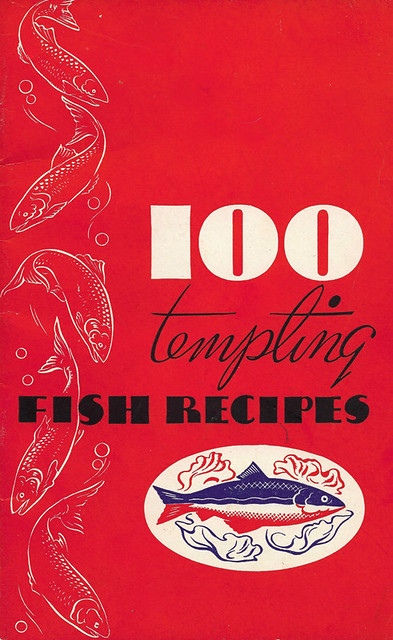
Keeping with this week’s rather unintentional theme of preparing dishes from old cookbooks, last night I tried a dish from 100 Tempting Fish Recipes. This book (well, at 56 pages, it’s more of a pamphlet) was issued by the Department of Fisheries (Ottawa, Canada) in 1939, although I have a 1949 reprint. It’s well out of print now and I haven’t found any copies for sale on the Web, but a digital copy is available online at Early Canadiana Online if you have a membership (which I do not). The site does have a free 18-page preview.

You can get a general idea of the age of this book just by the typography. Another dead giveaway of its age are the sometimes-vague cooking directions. For example, the recipe that I used was the Salmon Puff on page 23, and the baking directions were “Place in a buttered casserole, dot with butter and bake in a moderate oven until brown.” The term “moderate oven” is used a lot in this book and could, I think, denote a number of temperature settings. The timing is also vague; these days, you’d get an instruction along the lines of “Bake in an oven preheated to 350° until brown, about 20 to 30 minutes.” Not that older recipes can’t be precise, but newer ones generally give much more detail. I think that part of this is because the authors expected the reader to have a background of knowledge that would make what the author meant obvious. It’s probably also due to the fact that publication costs went down over time, so it was possible to be wordier (and include photographs of the final product) when every word didn’t carry as much financial weight at printing time. Heck, even between in my 1949 copy 100 Tempting Fish Recipes and the 1960 The I Hate To Cook Book by Peg Bracken (which is still in print), there’s a notable shift toward more precise instructions. The author actually bemoans this in the introduction:

…[T]hey’re always telling you what any chucklehead would know. “Place dough in pan to rise and cover with a clean cloth,” they say. What did they think you’d cover it with?

This terrible explicitness also leads them to say, “Pour mixture into 2 1/2 qt. saucepan.” Well, when you hate to cook, you’ve no idea what size your saucepans are, except big, middle-sized, and little. Indeed, the less attention called to your cooking equipment the better. You buy the minimum, grudgingly, and you use it till it falls apart.

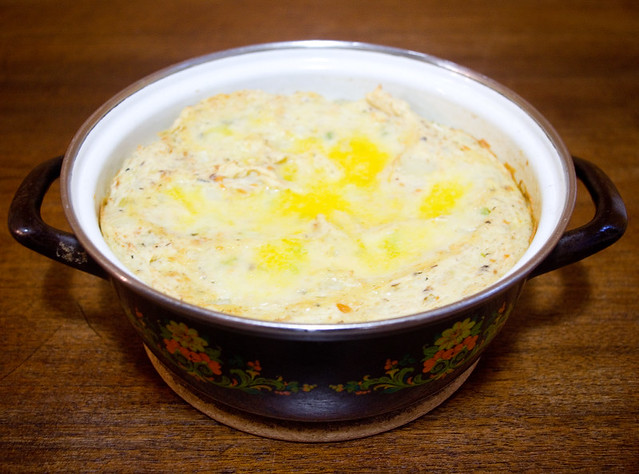
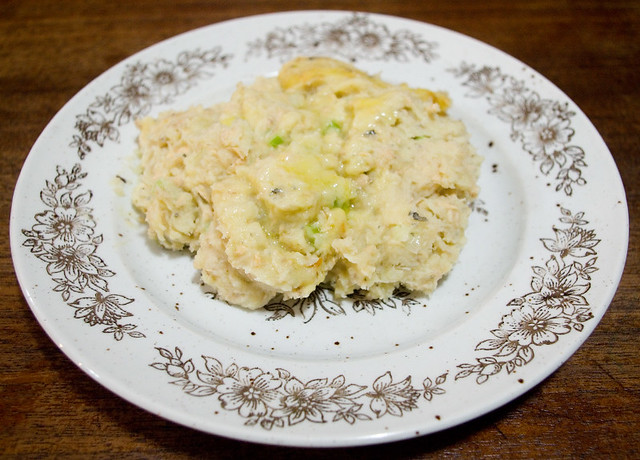
Back to yesterday’s recipe. It’s what I would consider to be a “pantry casserole”, i.e. a dinner that, with a reasonably-stocked Canadian pantry and fridge, one is likely to have all of the ingredients already at home. The salmon, which would normally be the ingredient most easily spoiled, is canned. You’d think that with a pound of salmon in there, the dish would at least have a bit of a pink tinge, but potatoes make up the bulk and leach it of all colour. I think that this is a good metaphor for the dish overall, actually. It’s just very… Beige. Not great, not bad; edible, but uninspired. Even a sprinkling of paprika as garnish would liven it up a little. Peg Bracken has great things to say about garnish on page 15 of The I Hate to Cook Book:

The reason for these little garnishes is that even though you hate to cook, you don’t always want this fact to show, as it so often does with a plateful of nude food. So you put light things on dark things (like Parmesan on spinach) and dark things on light things (like parsley on sole) and sprinkle paprika on practically everything within reach. Sometimes you end up with a dinner in which everything seems to be sprinkled with something, which gives a certain earnest look to the whole performance, but it still shows you’re trying.

(Seriously, though, I highly recommend this book, even if you hate to cook. Especially if you hate to cook. It’s a fun read.)

The salmon puff would have benefited greatly from a side of steamed vegetables or a salad, both to enhance the presentation and the nutritional values. Surprisingly, I think I may use this recipe again in the future specifically because it is an easy pantry casserole. Heaven knows some winter days I just don’t want to brave the roads for more exciting ingredients. Also, it would be a great way to use up leftover mashed potatoes. I mean, everyone in my family ate their dinner, nobody complained, and some even had seconds. Nobody had anything great to say about the dish, but when it comes to feeding kids, a lack of complaints is pretty high praise.

Healthy Veggie Tomato Sauce Recipe

Back in February I made a massive batch of Kerryann’s hidden vegetable pasta sauce, most of which I stuck in the freezer and thawed periodically to make spaghetti, lasagna, and pizza. We ran out near the start of the summer, at which point I decided to try to perfect my own tomato sauce recipe.

Don’t get me wrong, I adored the flavour of Kerryann’s, but I never got over the weird brownish-green that my attempts at the recipe ended up. I think that my previous suspicious were correct and that’s just because the proportions of fruits and vegetables are different here in Canada than they are in Britain, from whence the recipe originates.


Right now my little garden is yielding about 6lbs of tomatoes (mostly cherry tomatoes) every four or five days, so I need to keep up with the harvest.

For example, Kerryann’s recipe calls for eggplants (or rather, aubergines), among other ingredients. In my local grocery store, which does not specialize in particular kinds of produce, I was able to find four kinds of eggplant, all of which are extremely different sizes. So what is considered a “medium aubergine” in Britain? The video helps narrow the criteria down a bit, but I think that the produce here is just bigger. (I know that our leeks are freaking enormous.) Canada is a country that is very driven by agriculture, after all.


Top left — Indian eggplant (max 3″ long); top right — Thai eggplant (max 2″ long); bottom left — Chinese eggplant (about 12″ long); bottom right — American/globe eggplant (14″+ long, very wide at one end)

There were some other problems with importing this recipe. I’ve never found tomato puree in tubes here, although canned tomato paste is commonplace. I’m not sure if substituting the latter for the former would effect the colour or flavour, as I can’t get my hands on the kind in tubes to compare. I also had a hard time finding sieved tomatoes (passata), although it’s possible to find cans with tomatoes that have been crushed, small cut, diced, diced with herbs, left whole, stewed, or preserved without added salt.

So I’ve made my own tomato sauce recipe with added vegetables. I’ve measured everything out by weight, which should mean that this recipe will come out more or less the same no matter how big your local vegetables grow. I’ve left out the leeks and the celery, as well as peeled the eggplant and the zucchini, which should correct the colour of the sauce. Last but not least, I run my sauce through a blender after it is all cooked so that it is all the same consistency, which is perfect for sneaking veggies into the diets of picky eaters (a lot of people have problems with textures more than they do with flavours).


Tomato sauce simmering on the stove.

Healthy Veggie Tomato Sauce
Yields about 5Kg (11lbs), or about 22 cups sauce

In deep, heavy-bottomed skillet or frying pan, preheat:
4 Tbsp olive oil
Add to pan:
225g yellow onion, diced
8 cloves garlic, chopped fine
Cook on medium heat until onions have started to turn clear. Do not brown.
Add to the pan:
550g cremini mushrooms, sliced
400g zucchini*, peeled & chopped
400g globe eggplant, peeled & chopped
400g orange carrots, peeled & diced
Cover and cook on medium heat until carrots are softened. Stir often to avoid browning.
While this mixture is cooking, prepare tomatoes. If using cherry tomatoes, cut each one in half. If using larger tomatoes, remove the piths and quarter them.
Pour cooked mixture into a deep pot, such as a stock pot. A heavy-bottomed pot is best, but if one isn’t available, any large pot will do. If a thinner-bottomed pot is used, it will have to be stirred more frequently to prevent sticking & scorching.
To the pot, add:
1L low-sodium chicken or vegetable broth
2.75Kg fresh tomatoes, cut as per above instructions
2 cans tomato paste, 156mL each
8 Tbsp fresh oregano (or 2 Tbsp dried oregano)
3 tsp salt
1 tsp ground bay leaves
2 Tbsp sugar
Slowly bring mixture up to a boil, then turn the burner down until it is just simmering. Stir frequently to prevent scorching. Sauce is cooked once all of the ingredients are soft, the last of which should be the tomato skins.
Turn off the heat under the pot. Carefully ladle the hot sauce mixture into a blender to at most 3/4 full, put the lid on the blender, put a towel over the lid, and blend until smooth. Be careful, as the mixture is very hot! Pour the blended sauce into a large bowl or pot, then repeat until all of the sauce is blended.
At this point the sauce may be completely done, or it may be a little bit too liquid, depending on the juiciness of the tomatoes used. If the sauce is watery, return it to the deep pot and simmer gently until it has reached the preferred consistency, stirring often.

*Yellow zucchini is preferred to contribute to the colour of the sauce, but green zucchini will taste the same if that is what’s available.


Tomato sauce with ground beef over penne.

Healthy veggie tomato sauce can be served as-is over pasta; spaghetti is most commonly used, although in our house we prefer penne. If you use vegetable broth instead of chicken broth when you make the sauce, this results in a vegetarian/vegan dish. However, I like to freeze it in dinner-sized portions, then thaw it while I fry up and drain a 500g package of lean ground beef, turkey, meatballs, or sausage. I stir the sauce in with the meat and simmer together while the pasta boils for an easy weeknight dinner. This tomato sauce is also great for making homemade lasagna, pizza, or Sloppy Joes.


Tomato sauce with ground beef over penne, sprinkled with Parmesan cheese.

Chocolate Fudge Zucchini Cookies: Rebaked

My kids and I munched our way through my first batch of chocolate fudge zucchini cookies in a matter of days, so I decided to bake some more.

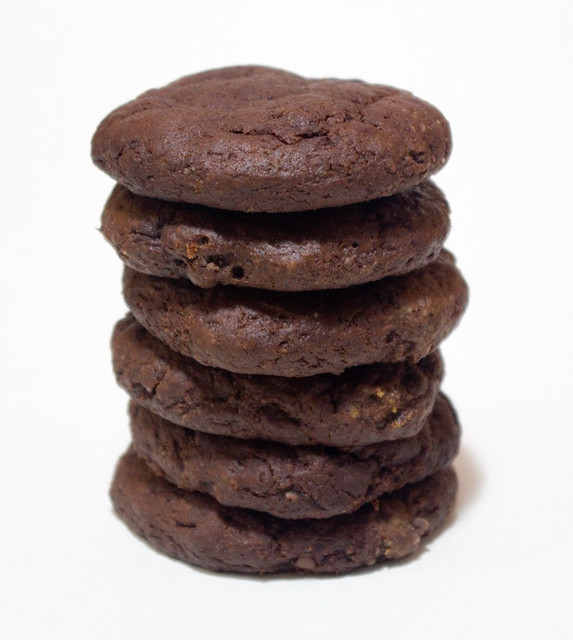
Although I loved the flavour and moist softness of the original recipe, I wasn’t terribly happy with the texture that the grated zucchini gave to the cookies. This time I microwaved the zucchini first, covered, for four minutes, which softened it up nicely. Then I ran the zucchini through my blender until it had the consistency of a smoothie. I followed the rest of the recipe to the letter, and it worked out wonderfully. No stringy bits, just fantastic chocolate flavour and moist texture.

My kids prefer this version too. Thing 1 was quite willing to model the non-stringy inside of the cookie for me so long as she got the broken cookie as payment.

New Cookware

When it comes to garage sale and thrift store shopping, my mother is my role model. Actually, that’s true when it comes to shopping in general. My mom can go into a clothing store and find three pairs of trousers and a shirt, all that fit well, all for 75% off or greater, in less than fifteen minutes. I will go into the same store and come back with maybe one of those pieces. It’s as if she has some kind of supernatural ability to sniff out bargains.

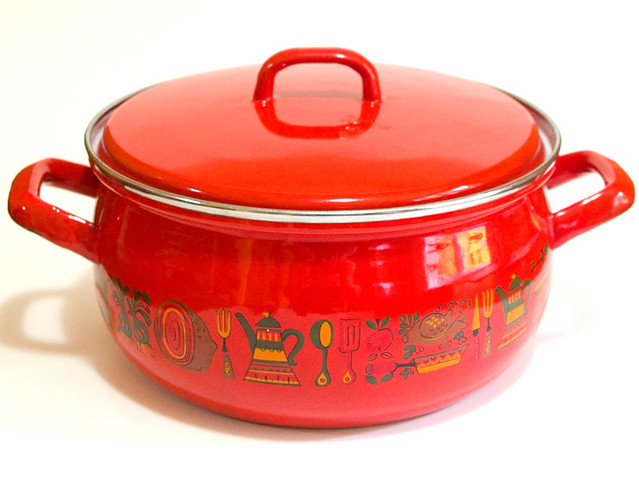
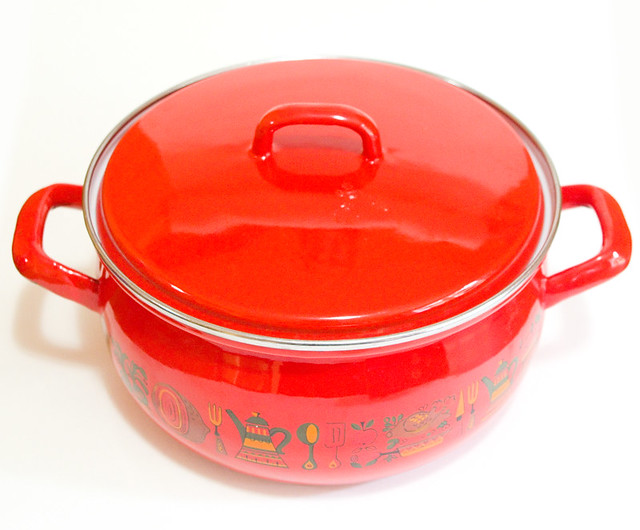
Case in point: my mom bought me some new cookware at garage sales this past month, both for about $2.00 apiece. The first was a pretty vintage 1970’s-ish Dutch oven. I love this style of enameled piece, and although my mom gave me her old one a while back, she was not ashamed to admit that this one was in better shape. As a bonus, it’s also bigger.

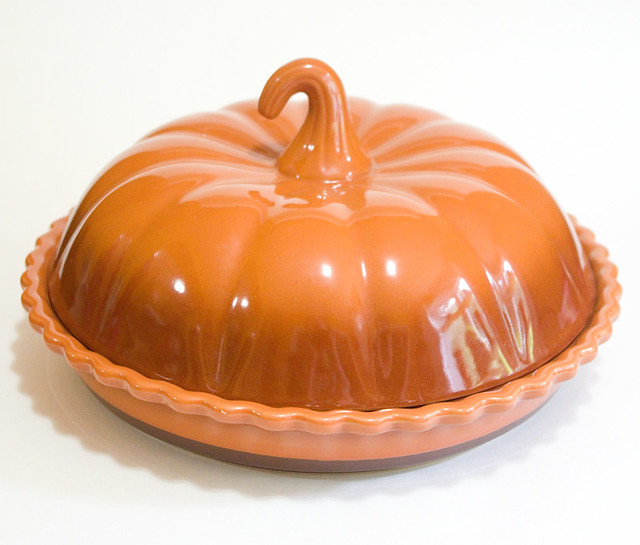
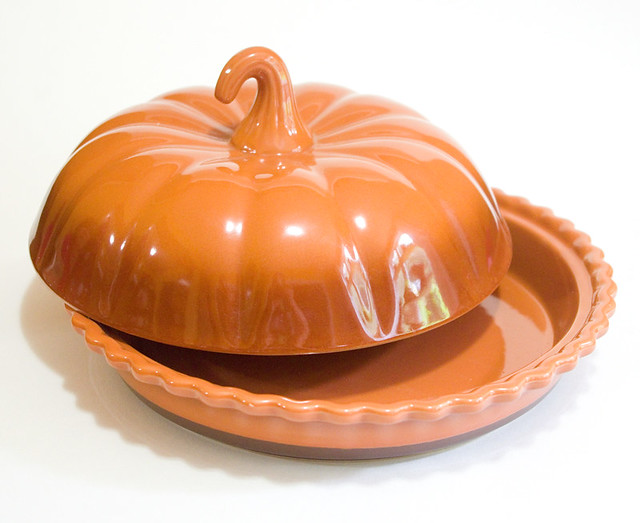
Mom also found me this adorable pumpkin pie plate, virtually brand new; it still had the cardboard insert to protect between the top and bottom parts from each other. I doubt it has ever been used. I think it will be perfect for Thanksgiving and Christmas dinners, when pumpkin pie is often my main contribution to the meal. The temperature at night is telling me that fall isn’t far off, so it won’t be long until I get a chance to use this dish.