Spinach Stroganoff

Just a quick one today! At the suggestion of a friend of mine, I added a bag of baby spinach to my beef stroganoff, and it turned out great! If you’re not really into spinach, the sauce really covers up the bitterness. Now, I actually like the taste of spinach, but I like that it doesn’t overwhelm the flavour of the rest of the dish.

I’m always looking for ways to make my cooking healthier (as well as tastier), and one of the best way to do this is to add vegetables. I know that I definitely don’t get enough leafy greens in my diet. This is just one way to incorporate them!

Pasta Primavera

So I tried cooking a second recipe from Essential Cooking Basics: The New Cook by Mary Berry & Marlena Spieler (1997), and sadly, I wasn’t nearly as happy with the recipe as last time. I’ll say up front that I did make a few changes; instead of string beans, I used asparagus stalks cut small, and instead of dried penne I used dried linguini. But I’m pretty sure that’s not where my issues with this dish lie. At any rate, it still holds true to the dish’s basic composition of “the combination of lightly cooked vegetables and pasta”.

To be clear, it’s the dish, not the recipe, that I had problems with. The recipe was quite clear, concise, and yielded exactly the results that it promised. But I’ve had pasta primavera before, and this just didn’t live up to my (admittedly high) expectations. I’d expected the sauce to be creamy, and while it looked like it should be, it really tasted quite dry. That might have been the fault of the cheese that I chose (Chevrai Original Goat Cheese), but it was soft goat cheese as the recipe dictated. Also, the strong flavour of lemon (which my husband insists tasted more like lime, but as you can see from the above photo was definitely a lemon) was off-putting.

It’s too bad, because I like the concept behind this dish, but I don’t think that this recipe is for me. That’s all right, since a quick perusal of my bookshelves yielded three different pasta primavera recipes for me to try: on page 327 of the Joy of Cooking (Rombauer & Becker, 2006 edition), page 125 of The New Canadian Basics Cookbook (Carol Ferguson, 1999), and page 164 of Gordon Ramsay’s Healthy Appetite (Gordon Ramsay, 2008). I figure that, with a bit of experimentation, I’ll find a recipe that my husband, kids, and I like well enough for it to become a family classic.

Herb-Crusted Fish

Today I was lucky enough to find a copy of Essential Cooking Basics: The New Cook by Mary Berry & Marlena Spieler (1997) for $1.25 at a local charity shop. I’ve just started watching Mary Berry on YouTube, which makes it seem like I’m way behind the curve since she has written more than seventy cookbooks, but honestly she’s not as big of a name here as she is in the UK! I mean, only seven of her books are available in hard copy via Chapters, and in brick-and-mortar stores she’s even harder to spot. It’s a tragedy, actually. My introduction to Mary Berry was via old episodes of The Great British Bake Off where she was the judge.


Preparing the ingredients.

So I was thrilled to find a copy of one of her out-of-print books today. A quick perusal of the recipes within while I waited for the kids to get home made me realize that I had almost all of the ingredients for Herb-Crusted Fish (page 134). (My choice of dinner recipe had absolutely nothing to do with having pulled a muscle in my back when I shoveled the ice berm at the bottom of the driveway the day before, and hence wanting nothing to do with lifting heavy bags of flour or potatoes.) I thought that a quick trip to the grocery store would be all that I needed. Ha! Does it ever work that way? First of all, I couldn’t find bread crumbs that didn’t already have cheese or seasoning mixed in, so I had to go with Panko. Then the store was out of non-frozen haddock (what grocery store runs out of haddock?), so I substituted basa fillets. Then I went on to looks for chervil, which apparently is really hard to get around here, so I bought curly parsley instead, which an Internet search suggested as a reasonable substitution. (The other herbs, tarragon and dill, I already had in the fridge.)


Frying the fish.

I mean, none of that was the recipe’s fault. The book is really intended for a British audience, so it’s not unheard of that some of the ingredients can’t be easily found this side of the pond. I’ve run into this problem with international cookbooks before. It is a frustrating, though.


Herb-crusted basa fillet with sliced avocado and romaine lettuce with Greek dressing.

When all was said and done, I was really happy with the final product. The substitutions worked really well. I mean, I have no idea if it tasted anything like what Mary Berry intended, but it did taste good! The whole family ate theirs and asked me to make it again sometime. The recipe’s instructions were clear and easy to follow, which is exactly what I was looking for in a book with “basics” and “new cook” in the title. The step-by-step photos throughout were great as well. I hope that I’m past the “new cook” stage by now, but it never hurts to brush up. It’s also great to have an illustrated guide when the instructions are from another country, because the terminology sometimes changes. All in all, I look forward to preparing recipes from this book again. I also hope to use it to help my kids learn to cook.

Asparagus, Eggs & French Dressing

I’ve really been enjoying trying out the dishes from the Jamie Oliver 5 Ingredients Quick & Easy Food cookbook (2017). My go-to breakfast for the last week or so has come from this book: Asparagus, Eggs & French Dressing (page 164). The recipe serves two, but it’s easy enough to halve the ingredients to make a single serving for myself. (Hubby is a cereal-for-breakfast kind of guy, and the kids turn up their noses at vegetables for breakfast.)

If you prepare the dressing in advance (the recipe makes enough for a week’s worth of breakfasts for one person), this dish only takes about ten minutes to make. I don’t have a metal colander to put over the eggs in which to steam the asparagus, so I cook it in the microwave using a steamer dish. I also discovered that it takes a little longer than 5 1/2 minutes to make soft-boiled eggs around here; as the above photo attests, my first try was a bit underdone. It’s more like 6 1/2 minutes.

Things I discovered about myself when making this recipe: I’m not a big fan of raw tarragon (it tastes a bit like black licorice to me, which I despise), and I have a limited tolerance for raw red onions in the morning. I just started skipping the tarragon entirely, but I wonder if this dish might be good with a bit of basil instead? And although I like the red onion flavour in the dressing, I had to stop eating it as a garnish. Otherwise, I could taste it on my breath all day, even after brushing my teeth.

Ginger Shakin’ Beef

A NTD Taste Life video for Ginger Shakin’ Beef came across my Facebook feed recently, and the recipe looked both simple and delicious. A bit of digging for the actual recipe (which wasn’t posted with the video) made me realize that the original source was Jamie Oliver’s 5 Ingredients Quick & Easy Food (2017). The recipe itself is available on Jamie Oliver‘s website. I’ve been meaning to pick up a copy of this book, but it’s a recent addition to my list of cookbooks I’d like, and anyway, it’s not a great idea to buy things for yourself before Christmas.

My plating sadly never looks as good as that found in Jamie Oliver’s books, but the taste of the dish was lovely. My kids had their meat over rice instead of bok choy since they’re not a huge fan of this veggie (although I did make them have a bit on the side). I loved the combination of the miso and the honey to make a simple sauce. It was delicious! However, I wasn’t too sold on the ginger and beef fat. I found that the fat, despite frying until crispy, really didn’t have much flavour and didn’t add much to the dish. The ginger, while it looked pretty, was very strong — my kids just picked all of theirs out. I think it would have been better mixed in with the main meat and sauce, maybe lessened in quantity a bit and chopped fine to mix throughout the dish. All that being said, I will definitely make this dinner again in the future (albeit with some slight variations to adjust for my family’s palate). It was both easy and tasty, and it is great for school nights when time is at a premium, so that’s a win in my book.

Last of the Leftovers

I forgot to post about this year’s Halloween costumes, probably because I didn’t make anything new. Thing 1, Thing 2, and I stuck with our Pokémon Go costumes from ComicCon, because I’ll be darned if I put in all that work for us only to wear the costumes once. That’s the deal that I made with my girls when I started making them Con costumes: their costumes have to be based on something that they like well enough to want to wear again almost half a year later. So given that the majority of Halloween activities happen after dark, the best photos of their costumes were taken back in May.


Photo by Richard Dufault Photography.

For Heroes & Villains, which is an annual geeky Halloween party around here, I reused my Femme Joker costume. I added a hat (which is really more purple than blue), a cane, and I took the makeup from almost-jolly Cesar-Romero-like paint, to something a little more sinister, not quite Heath-Ledger-like but closer.

I think I am almost done the Halloween party leftovers, too, except for the cookies. Last night I made grilled cheese for the family dinner, using Light Rye and Caraway Bread (page 75 of Bread Machine: How to Prepare and Bake the Perfect Loaf by Jennie Shapter (2002)) and old Balderson cheddar, with a side of sliced avocado.

For me, since I can’t have the cheese, I made toast out of the bread, and served it alongside Montreal smoked meat and a salad with iceberg lettuce, avocado, and Woolwich Dairy Soft Unripened Goat Cheese Crumbles. It’s a little bit healthier than what we’ve been eating all week, I think! Now if only I can get the temptation of the mini chocolate bars out of the house, things will soon get back to normal.

Birthday Leftovers

I am happy to report that the Furikake Salmon Ramen (page 82 of Simply Ramen by Amy Kimoto-Kahn (2016), or online here) is nearly as delicious as a leftover as it was freshly made for dinner.

In an attempt to cook as little as possible the other night, I served the salmon on some steamed rice topped with eggs sunny-side-up and sliced avocado. Of course, the apple pie and brownies from Mom’s birthday dinner are long gone, devoured by voracious children. Okay, I might have had some too. But the kids are the main culprits, I swear.

How Does Your Garden Grow?

Well, my garden definitely doesn’t grow with silver bells, and cockle shells, and pretty maids all in a row. I mean, outside of the historical explanations, the plants in the “Mary, Mary, Quite Contrary” nursery rhyme were all flowers, and I’m just not that big into flowers. I love to look at a beautiful flower garden, no question, but when it comes to growing my own plants, I prefer something that I can eat. Although last year I did grow a bunch of nasturtiums, which serve both purposes; both the flowers and the leaves are edible, and the leaves make a lovely, slightly-peppery pesto.

This year I skipped the nasturtiums, as well as my usual crop of pumpkins. I usually plant my pumpkins along the fence line, but this year we were supposed to get a new fence installed, and I knew that the installation would kill the delicate vines. Now the installation has been delayed until September (much to my great frustration), but I’m still kind of glad that I didn’t plant any gourds this year. It has been an incredibly wet summer so far (I’ve only had to water the garden once), and with all that water comes earwigs, which will eat all the fruit from a squash vine before it has the chance to grow more than a few centimeters in diameter.

Banana peppers were a late addition to my garden, but they are growing well despite the cooler summer we’re experiencing. Any hot peppers that I grow this summer will be incorporated into hot sauce come fall, which I can and then save to give out at Christmas.

My parsley, even more so than my other herbs, is trying to take over the world — which is why I plant herbs in pots instead of directly in my garden. After my successful attempt at tabbouleh the other day, I have a feeling that this plant will become our main source for this dish this season. I think I’d prefer a higher ratio of parsley to bulgur next time, so the plant will be used up even faster, unless its growth rate increases. Herbs generally fare better with pruning, so it could happen.

My Swiss chard is coming up nicely. I’ve never actually grown this plant before, but I was inspired by my friend’s garden last year. The rainbow colours of the stems are gorgeous. I made pickles of the stems last year, and much to my dismay the colour leached out of the stems into the pickling liquid over time, leaving the stems a pale, flaccid cream colour. What a shame. Maybe this year I will freeze the excess stems instead to saute or steam at a later date.

My tomatoes are coming up nicely, although I think that they, along with the rest of my garden, could use a few more sunny days. Some of the plants are almost as tall as me, although their yield so far seems lower than last year.

Oh, and we’ve already had our first harvest! It was just a small handful of peas, but they were quite delicious according to my children, who were very happy with their haul. The girls really like being able to wander into the yard and pick food directly from the plant. My response when they ask me to do so is invariably yes (so long as the food is ready for harvesting). I really have no complaints if they want to eat more fruits and veggies.

Breadmaker

Yesterday was a hot one, and today is predicted to be much akin to it, with the addition of thunderstorms. That’s par for the course in the summer in Ottawa: first we get a stiflingly hot, humid day, followed by an impressive deluge and light show, often in the evening of the same day.

Of course, I had run out of bread, but I didn’t want to fire up the oven on such a hot day. I would like to continue making my own throughout the summer, so I dug out my breadmaker, which I’d never used before. Over the winter I purchased a Black & Decker All-In-One Deluxe Horizontal Breadmaker at Value Village for $9.99. There were (and always are) a few on the shelf, so I picked the one that showed the least wear and tear. I also Googled to make sure I could get a user manual.


100% Whole Wheat Bread in the breadmaker.

We didn’t have air conditioning when I was growing up, and one of the best lessons that my parents taught me was to keep the house cool, cook outside whenever possible. The most obvious example of this is barbecuing or grilling, but most countertop appliances work perfectly well outdoors. Breadmakers, toaster ovens, even toasters or kettles fit the bill, and it’s especially convenient to use them if you have a deck/patio or a balcony. They’re not intended for outdoor use, so you have to be very sure that they never get wet and are set on a surface that can’t be damaged by heat, like a concrete step or a glass-top table. If you’re uncomfortable leaving them out in the open, they can be left under a parking shelter or in a garage. Also, you have to make sure that any plugs or extension cords are up to the challenge (I recommend heavy-duty appliance extension cords just in case, you don’t want to start a fire).

So I made a loaf of 100% Whole Wheat Bread (page 24 in the user manual) in the breadmaker, and it turned out deliciously! It was really easy, and although I kind of missed kneading the bread and I don’t like the inflexibility of the recipes that go along with mechanization. But the results were delicious, and I can see why people will set breadmakers on timers so they have fresh bread first thing in the morning. Since I’m used to oven loaves, the bread looked kind of misshapen to me, much too tall and thin. The looks didn’t mar the flavour at all, though. My family devoured the entire loaf in a day (granted, we had grilled cheese sandwiches for dinner). I will have to make another loaf asap.

A Healthier Burger Recipe

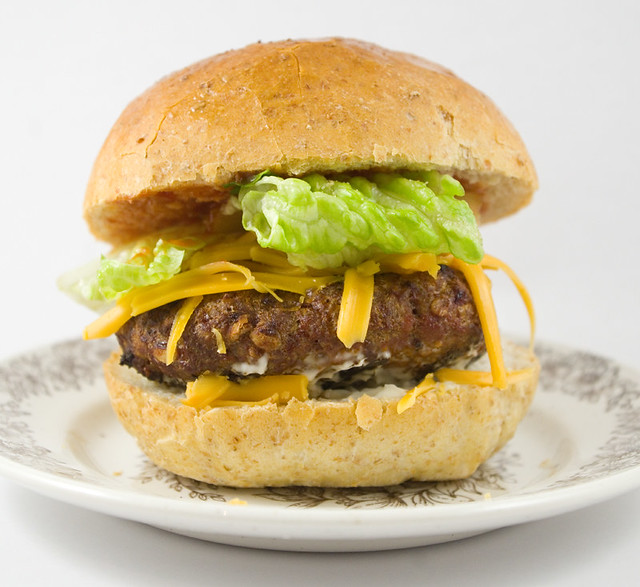
Last night I took advantage of the gap between spring rain storms to make up some burgers on the barbecue for the family dinner. My family absolutely adores burgers, so I’ve been looking for a way to make them healthier. Sure, tonnes of grease tastes good once in a while, but it’s not something that we should be eating regularly. Moderation in all things, including moderation. So I came up with a tasty recipe that combines lean ground beef (for flavour) with ground turkey or chicken (to reduce the fat). I also use oatmeal instead of the more traditional bread crumbs to bulk up the burgers and absorb moisture; oatmeal is full of healthy fiber and, as a bonus, has an incredibly long shelf-life. This means that these burgers are wheat and gluten free, so long as you pick the appropriate brand of sauce.

To add a bit of extra healthiness, I made the buns from scratch using the whole wheat variant of Nan’s Pan Rolls Recipe. To make hamburger buns, shape the buns individually and place them with lots of room between them on greased baking sheets between the first and second rise. The recipe makes about 24 hamburger buns.

Now, even a healthier burger isn’t a hundred percent healthy. If you really want a healthy burger dinner, you’ll have to serve it with a salad.


A healthier burger with ketchup, mayonnaise, shredded cheddar cheese, and romaine lettuce.

A Healthier Burger
Makes 10-12 small burgers

In a large bowl, thoroughly mix together with your hands:
500g (1.1lb) lean ground beef
500g (1.1lb) ground turkey OR chicken
1 egg
3/4 cup plain uncooked oatmeal (not instant)
2 Tbsp Worcestershire sauce OR barbecue sauce of choice
1 tsp garlic powder
1/2 tsp salt
1/4 tsp pepper
Divide the mixture into 10-12 portions*. Roll each portion into a ball, then shape the portion into a patty shape with your hands.
Preheat your grill** to about 400°F (204°C). Cook until browned evenly on both sides (with a bit of char) and until center of burger is no longer pink. (Do not serve these burgers rare because they contain poultry.)
Serve on whole wheat hamburger buns with your choice of toppings such as ketchup, mustard, relish, mayonnaise, pickles, cheese, or avocado.

*Larger burgers may be made, but cooking times should be adjusted.
**Burgers may be fried on a flat top or in a frying pan, but they taste best on a grill.