Warm, Hearty Suppers for Chilly Days

With my backlog of canning to do and a whole lot of events, parties, and decorating happening before Hallowe’en, I haven’t been making too many complicated meals lately. Now that the temperature has finally dropped (last night it dipped below freezing), that means that I’ve been trying to make hearty suppers that don’t take too much advanced preparation.


Sloppy Joes with a side of acorn squash with butter and brown sugar.

Believe it or not, I’d never made Sloppy Joes before. It’s just not something we ever ate as a family. The closest we’d get would be open- or closed-faced sandwiches of chopped up bits of leftover beef, pork, or chicken, smothered in leftover gravy. But I’d taken the Amish Community Cookbook (2017) out of the library, and I wanted to try at least one recipe from it before I had to return it. I didn’t think that Sloppy Joes were a particularly Amish dish, but there was an uncomplicated recipe on page 63, so I gave it a shot. It was really good! I had my parents over for dinner and they liked it too. My mom pointed out that the sauce is actually a lot like the one she uses for slow-cooker pulled pork, and I have to agree (keeping in mind that I love pulled pork too).


Curry butternut soup with Dad’s biscuits.

The other night I needed something I could put together quickly, so I dug through my freezer and thawed out a couple of containers of curry butternut squash soup. I’m pretty sure that my mom made this dish and shared it with me, because I certainly don’t remember making it. The label was dated December 2016, though, so it might just be time making me forget. My husband pointed out that the labels were in his writing and the containers were our own, which indicates that I’d made the soup, but I think it’s just as plausible that I had to return my mom’s original container. Either way, I don’t know what the recipe was for this one (another one of those pre-blog things), but it was perfect for a cold fall evening. The biscuits I served alongside were Dad’s Biscuits, which I whipped up in about the same amount of time it took to thaw the soup on the stove.

Since we already had some steaming fresh biscuits, I cracked open the jar of mirabelle plum jam that my friend made from the fruit of her neighbour’s plum tree. I spread the jam generously on biscuits as dessert. My mouth is watering just thinking about that it. My friend was a little worried about the set, thinking that it would be a little bit too runny, but I thought it was perfect.


Leftover chicken ramen.

Despite the flowers (a hostess gift from my honorary aunt), this dish was anything but fancy. I made up some ramen using turkey broth (made from the bones of the Thanksgiving turkey) flavoured with a dash of Memmi Noodle Soup Base. I topped the noodles with leftover rotisserie chicken, soft-boiled eggs, and steamed carrots. My family added masago (capelin roe) and dried shrimp to their tastes. It was hearty, filling, and good for what ails you — especially if what ails you is the cold that seems to be going around right now. I’ve always found that steamy bowls of soup help clear out the sinuses.

Chichen & Roast Vegetables Curry for Family Guests

Last night I had family guests over for dinner. I find that my guests can be divided into two basic categories: formal and family. Formal visitors are generally people I don’t know very well and with whom I am still trying to make a good impression. When they visit, I stress that my house is not neat and tidy enough, that my decor is not fancy enough, that my food is not tasty enough, and that my children are too noisy (unless they bring their own children along, which mitigates this factor). I spend hours or days making everything as perfectly prepped as possible before they come over, and I still worry that it is not enough.

Family guests include actual family and friends that I’ve known for long enough that they might as well be family. They have seen me at my best and at my worst, and they know that for the most part I am somewhere in between these two extremes. They are the people that would I welcome into my home without advance notice; in fact, I welcome them to drop by any time. So while I may not have a three course meal prepped for them and my house will be cluttered with the day-to-day mess of living, we do end up seeing much more of each other. Formal visitors can transition into family guests over time. It’s part of the process of friendship to me.

Last night’s dinner was one for family guests. The people visiting me were my parents, with whom I have a very close relationship, and a friend of the family who is an honorary aunt. She’s in no way related to me by blood or marriage, but she’s actually closer to me than a number of my actual relatives. This woman has known me since the day I was born; actually, she posed as my mother’s sister in order to visit us in the maternity ward and actually met me before my grandparents did. She changed my diapers and rocked me to sleep when I was colicky as an infant. At six years old, I was literally the only child allowed at her wedding. The idea of being formal with her is kind of absurd.

The seven of us crowded around my kitchen table (which doesn’t seem small when it’s just the four of us, but I am quickly reminded of the true size of my dining area when we have guests). I served a hearty, healthy meal based predominantly on my Thai Coconut Curry recipe, but as usual I changed things up a bit. I didn’t have any bok choy, so that got left out. I traded shrimp for chopped chicken thighs, added chopped garlic, and I served it over rice instead of noodles. Most notably for the flavour, I didn’t use curry paste, I just sprinkled in mild curry powder to taste. My parents don’t have the taste for any spice whatsoever, so the mildest way to go was the best in this situation. So I guess it wasn’t really all that similar to the original recipe, but the technique I used was the same.

I served the curry with some bread machine Whole Wheat Bread (page 15, The Complete Guide to Bread Mahcine Baking, Better Homes and Gardens (1999)). We sat around the kitchen table, stuffed our faces, caught up with the things we’d done since we’d last met, and regaled each other with stories of days gone by. It was a lovely way to spend an evening.

Canadian Thanksgiving

Although today is technically Thanksgiving here in Canada, my family celebrated yesterday. I know that a lot of other people I know hereabouts do the same. Having Thanksgiving dinner on Sunday combines the tradition of a Sunday family dinner with the practical consideration of a stat holiday on the Monday. This means that out-of-town guests can travel in on the Friday night or Saturday, then go back home on the Monday, i.e. no traveling the day of celebrations and no need for most to miss any work.

Here in Canada, Thanksgiving is mostly a secular harvest festival, although some religions do incorporate thanks for a bountiful harvest into their liturgical calendar. Unlike Americans, we don’t have a tradition of the First Thanksgiving (our history is markedly different than our southern neighbours, with our first European settlers being predominantly explorers, hunters, and trappers). We also celebrate this holiday much earlier, i.e. the second Monday in October instead of the fourth Thursday in November. We used to celebrate Thanksgiving later in the season, but the earlier date keeps it from conflicting with Remembrance Day (November 11th) and, on a practical note about climate, is also when the bulk of the harvest has been brought in this far (and farther) north. Heck, the Prairies often see snow as early as September.

I started cooking the dishes that I was going to bring to Thanksgiving dinner on Saturday. I began with pumpkin pie, which was a combination of the Purity Pastry crust from page 73 of the Purity Cookbook (Elizabeth Driver, 2001 edition) and the Pumpkin or Squash Pie filling on page 686 of the Joy of Cooking (Irma S. Rombauer & Marion Rombauer Becker & Ethan Becker, 2006 edition). The filling pulled away from the crust since I had to store the pie in the refrigerator overnight, but it still tasted just fine. Due to food sensitivities in the family, I substituted coconut milk for the heavy cream/evaporated milk specified in the filling recipe. I have done this for years now, and I find that it tastes almost identical to using cow’s milk. That being said, I’ve learned that it takes much longer for the filling to set this way. To compensate, I don’t glaze the crust, as it causes it to burn over the long cooking time. Also, I put the pie plate on a baking sheet when I put it in the oven (something I do when making any type of pie), which both helps protect the bottom crust from burning and keeps any filling overflow from burning onto the bottom of my oven.

I cooked a small pumpkin to make the pumpkin pie instead of using canned (I like the flavour better that way), and I had some leftovers squash puree that needed to be used up, so I made Pumpkin Bread (page 628, Joy of Cooking) as well. I made this quick bread loaf with coarsely chopped pecans and golden raisins, as that’s what I happened to have in the pantry. It’s a rather lovely, dense loaf, as this kind of bread tends to be, and it smells divine. Unfortunately, since there are nuts in it, I won’t be able to send it to school as part of lunch for my girls in the upcoming week.

Since I had the time (which I never seem to when I’m carving Jack-o-lanterns for Halloween), I saved the pumpkin seeds and roasted them in the oven with a bit of olive oil and salt. These are one of my favourite fall snacks, and the smell of them cooking takes me right back to my childhood.

OF course, no family dinner around here would be complete without a batch of Nan’s Pan Rolls. It’s especially fitting this time of year, since Nan passed away four years ago this weekend. Making one of her signature dishes is a fitting way to remember her, I think.

This was Thanksgiving dinner at my parents’ place (bottom to top): Yorkshire pudding, squash & pear casserole, roast turkey, gravy, bread stuffing, pan rolls, Brussels sprouts, mashed potatoes, and steamed asparagus. This may seems like a huge spread, with all of that food for only six of us. However, traditionally you only have a little of each dish at the actual dinner, which is more than enough to feed you to bursting, and then you eat leftovers for the following week. Generally it’s an informal recreation of the dinner on day 2, then (depending on the size of the bird) some kind of casserole on day 3, then hot turkey sandwiches on day 4, then turkey soup or stew on day 5, and so on.

So happy Thanksgiving to all Canadians, and a happy Thanksgiving in advance to our American neighbours!

Last of the Zucchini

One of the biggest challenges about this time of year, at least to me, is to either eat or preserve all of the fresh produce that comes my way before it goes bad. It seems to me like the utmost example of taking what you have for granted to let food — especially fresh, homegrown, delicious food — go bad. Practically speaking, this does mean freezing, drying, or canning a lot of it to eat over the coming winter. But it also means a lot of meals made with just-picked ingredients.

Over the last few days I’ve finally managed to cook my way through all of the zucchini from my friends’ gardens (although I may end up with more in the next little while, not that I’m complaining). Last night for dinner we dug into another loaf of Harvest Garden Bread (which contains zucchini), Baked Panko Zucchini Sticks, and haddock baked under a generous coating of Blender Salsa (page 92 of Preserving by the Pint: Quick Seasonal Canning for Small Spaces (Marisa McClellan, 2014)), which was made almost entirely from produce grown in my garden.

Then it was Double Chocolate Zucchini Muffins for dessert. I had never tried this recipe before, but it was highly recommended to me by a friend, and now I realize why. These muffins are moist, dark, rich, and chocolatey. They also aren’t as unhealthy as other muffins with similar flavour. I mean, it would be a stretch to actually call them health, what with the chocolate chips and the oil in there, but there is more zucchini in the recipe by volume than flour, and that has to count for something, right? 10/10, will definitely bake this one again.

Dad’s Birthday Dinner

This past weekend began with my dad’s birthday on Friday. September is a busy birthday month in my family, with my brother’s birthday near the start of the month, and then my mom’s just over a week later, and then my dad’s about a week after that. Before she passed away, we celebrated my Nan’s birthday right at the end of the month as well. This meant a lot of birthday parties and dinners, although as we got older, more of the latter than the former.

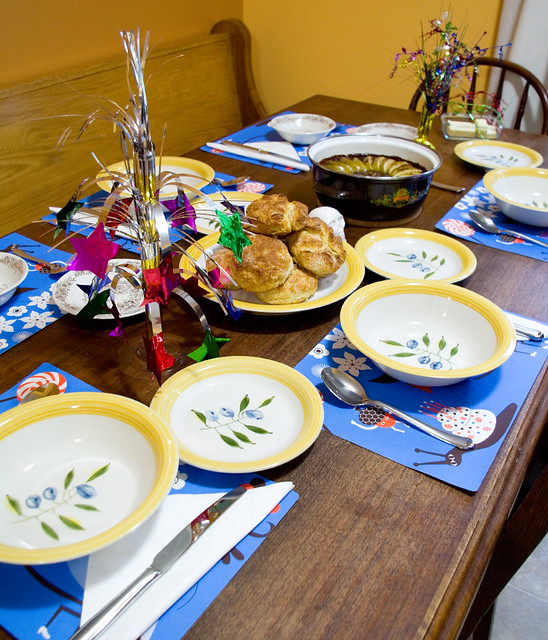
Dad’s request for his birthday dinner was much more traditional for my family than my mom’s, given both the region in which we live and our cultural heritage. Dad requested baked beans and biscuits, followed by butter tarts for dessert. Baked beans are generally considered to be a Québec specialty, but they are extremely popular in Ontario and New Brunswick as well (both provinces have a proportionately large French-Canadian population, especially where they share a border with Québec). My father fondly remembers my grandfather making baked beans for the family; it was probably one of the recipes he learned while working as a lumberjack. The baking soda biscuits are definitely Granddad’s recipe, passed down to me by my father. And butter tarts are a quintessentially English Canadian dish, although it’s not one passed down to me by my grandparents; so far as I know, Granddad wasn’t much for fancy baking, and Nan never mastered the art of pie crusts.

All that being said, I’d never made baked beans by myself before — that had always been Mom’s job! So I needed to look up a recipe. The Maple baked Beans With Apples on page 151 of The Canadian Living Cookbook (Carol Ferguson, 1987). I adapted the recipe to cook predominantly in the crock pot, since I didn’t want to run the oven for hours and hours on such a hot day. I basically tossed all of the ingredients that would have been baked in the first stage in the crock pot for about 16 hours. Then I ladled it all into a Dutch oven, topped with sliced Granny Smith apples, brown sugar, and butter, and baked it all together uncovered for an hour. It turned out absolutely fabulous, enough so that my parents asked me for the recipe!

The biscuits, of course, were Dad’s Biscuits. I rolled out the dough and cut it with a cookie cutter instead of going with the easier drop-off-a-spoon version, since formed biscuits hold up better to dunking or spreading with baked beans. I asked Dad if it was weird to have his own recipe made for him, and although he agreed that it was an odd feeling, he wasn’t complaining.

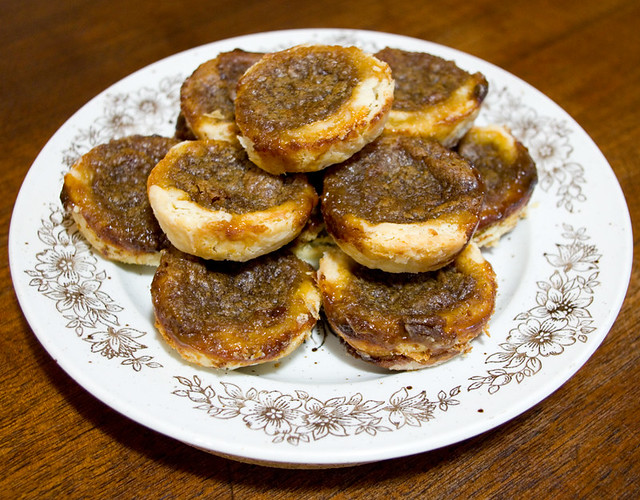
Served last were the raisin butter tarts. I used the same recipe as I did for the potluck dinner a month ago: page 234 of The Canadian Living Cookbook. However, I substituted an equal volume of golden raisins for the walnuts that the recipe called for, which tasted delicious. I kind of overfilled the tarts though, so they boiled over when they baked and hence look a mess. They tasted good anyway, although the stickiness of the overflowed filling meant that they were a pain to remove from the pans.

So happy birthday to my dad! Love always to the man who taught me through his automatic acceptance that people can do whatever they put their mind to, no matter what traditional gender roles in our society may dictate.

Birthday Leftovers

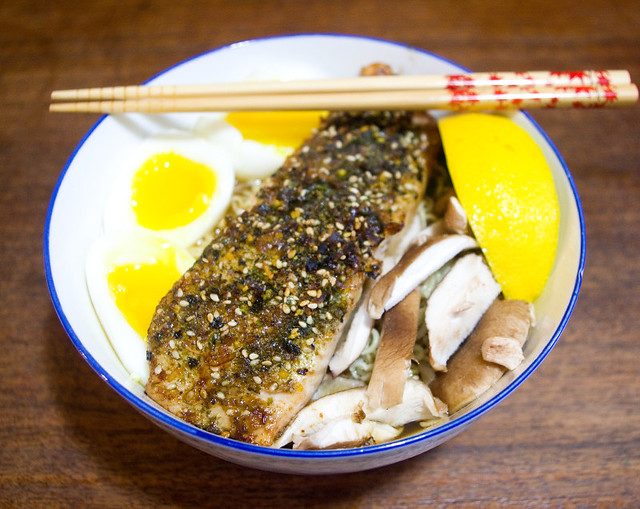
I am happy to report that the Furikake Salmon Ramen (page 82 of Simply Ramen by Amy Kimoto-Kahn (2016), or online here) is nearly as delicious as a leftover as it was freshly made for dinner.

In an attempt to cook as little as possible the other night, I served the salmon on some steamed rice topped with eggs sunny-side-up and sliced avocado. Of course, the apple pie and brownies from Mom’s birthday dinner are long gone, devoured by voracious children. Okay, I might have had some too. But the kids are the main culprits, I swear.

Slow Cooker Chicken Tikka Masala

Yesterday ended up being hot and humid, so I wanted to make a dinner that didn’t require heating up the kitchen all that much. Community Table’s recipe for Slow Cooker Chicken Tikka Masala had come across my feed recently, so I thought I’d give it a try. How does cooking something for eight hours not heat up my house? Well, I put the slow cooker out on a table in the garage.


I wish I owned the pretty dishes that they use to serve it in the video.

I had high hopes for this recipe, because a) true to my heritage, I like making easy food where you just put everything in a pot and we boil it for seventeen and a half hours straight, as Denis Leary put it; and b) this dish smelled absolutely fabulous while it was cooking. My garage has never smelled better, to be honest, and sometimes I use my bread maker in there. But when I actually took a bit, the flavour just didn’t live up to the hype. It was just… Bland. There was no depth.

Now, I’m no expert when it comes to Indian cuisine, but if I ever try this recipe again I would change a few things. Instead of just throwing everything in the pot raw, I would first toast the spices, then brown the onions and the garlic in a bit of olive oil, and then brown the chicken. This would pre-cook some of the ingredients, so it probably wouldn’t be necessary to have it in the slow cooker for as long, maybe 4 hours. Instead of chicken breasts, which have a tendency to be dry (even in sauce), I’d use chicken thighs. I’d use fresh tomatoes run through a blender instead of canned tomato sauce for a fresher taste. I’d add a few more veggies chopped up bite-sized; sweet peppers and mushrooms go well in this kind of dish (cooked first on the stove as well in bit of olive oil), but I could probably throw in anything on hand. It’s not like I’m going for authenticity here.

If nothing else, this recipe is in desperate need of salt, which enhances flavour. I added salt after I served the dish and it really did help, but I think it would be so much better if it was done during the cooking process. However, I’m not sure exactly how much salt is required for the whole potful (which feeds my family twice over, by the way). Salting to taste unsafe to do when the chicken is raw, so I’d really have no choice but to pre-cook the chicken anyway, and if I’m doing that I might as well make use of all of the previously mentioned techniques as well.

Mom’s Birthday Dinner

We celebrated my mother’s birthday this past Saturday. At her request, I hosted dinner at my house and made her up some of my ramen — which somehow she had never tried before. The version that I chose to make was Furikake Salmon Ramen (page 82 of Simply Ramen by Amy Kimoto-Kahn (2016)); the recipe is also available online here. This recipe uses a shoyu base (page 8, or online at easypeasyjapanesey.com), which I made up in advance in my slow cooker. I remain rather enamored of this base recipe, but every time I make it I remind myself that sometime I really need to try the tonkotsu base, which is my favourite but appears much more difficult. I used soft-boiled eggs instead of marinated half-cooked eggs, mostly due to time constraints. I also used packaged noodles; one of these days I will make my own, but that really requires a pasta maker, which I don’t own. I didn’t use the kind from the instant soup packages, as I find they get soggy much too quickly, but instead a package of dried noodles on their own for which I unfortunately can’t read most of the label.

The real star of this dish is the salmon. I was lucky enough to find it on special at the grocery store, pre-portioned and ready to go. The furikake topping was delicious even though I used North American mayonnaise instead of Japanese-style. There were some leftovers and I really look forward to having them served over rice in the next few days. I think that this topping is going to become part of my regular dinner roster; it would probably be good on other pink, oily fish like sea trout.

In our family, there’s always dessert with a birthday dinner, even if you’re stuffed from the meal itself — that just means that you take a breather and have the treat later in the evening. This year I made apple pie using fruit that I’d grown on my own tree in the back yard. For the chocolate lovers, Dad made brownies with chocolate icing, which were delicious and, if you know my dad, a very special treat, since he rarely bakes. We served it all up with whipped cream and/or vanilla ice cream (and dairy-free alternatives thereto). Oh, and candles! I was thrilled to find that it’s possible to get the candles that burn with coloured flame at the dollar store these days. I used to have to go downtown to a specialty store to buy them.

So happy birthday to my mom! Love always to the woman who helped shape me into the person that I am (whether that’s a good thing or not is a matter of opinion).

Onion Soup Pork Chops & Baked Panko Zucchini Sticks

In an attempt to use up the zucchini I received this weekend, I made another round of Baked Panko Zucchini Sticks for dinner last night. Enough for my entire family only uses up about a quarter of one of those giant summer squash. Of all of the recipes that I have for zucchini, this one uses the most in one go. It may end up being a contest to see which gives out first, my supply of zucchini or my kids’ ability to consume it. To be fair, the girls were really happy to see the zucchini on their plates last night, and that’s two suppers in a row where I didn’t have to fight with them to get them to eat their vegetables.

However, the real star of dinner wasn’t the zucchini sticks, although my kids may argue otherwise. The best part to me was the pork chops that I baked as the entree. I found these 1″ thick slabs of pork on sale for less than the cheap cuts, so I stocked up and planned on a few for dinner. I greased a broiler pan, lay the chops flat on top, and then covered them with a thick coating of dry onion soup mix. Then I baked them at 275°F (135°C) for about two hours. They were a very fatty cut, but the low, slow bake made them moist, tender, and not too greasy. Honestly, they couldn’t have been much easier. Now, if only I’d planned a meal cooked entirely in the oven for a day that wasn’t 30°C (86°F).

I was inspired to cook the meat this way after reading The I Hate To Cook Book (Peg Bracken, 1960). On page 12, the author writes about Sweep Steak, which is “[s]o-called because a couple of seasons ago this recipe swept the country“. Basically, it’s beef coated with dry onion soup mix and roasted in the oven.

Now, this cookbook predates me, but I distinctly remember dry onion soup mix being a staple of the kitchen when I was growing up. It was used to coat steak, to bread pork chops and chicken, and to season meatloaf. In our house, it was most commonly mixed with sour cream to become chip dip — which is referred to as Classic California Dip on page 84 of The I Hate To Cook Book, so I guess this combination predates me as well. I remember doing groceries with my parents and there was a whole assortment of dried soups along an aisle. But when I went to pick up some mix for this dish, the dried soups took up only part of one tiny shelf, most of which was taken up by Cup-A-Soup. There are probably a hundred or more types of canned and tetra-packed soup, not to mention the refrigerated stuff in the deli section, but apparently the dried kind is no longer popular. I guess that’s to be expected with the popularity of fresh ingredients being back on the rise. I certainly hadn’t bought any dried soup mix in years. Still, it came as quite a surprise to me to see the selection so limited.

Salmon Puff

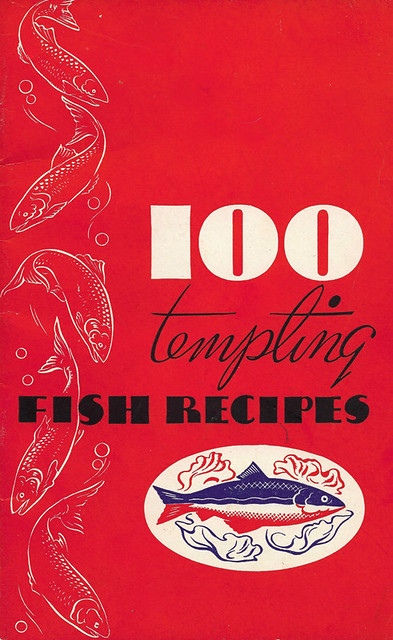
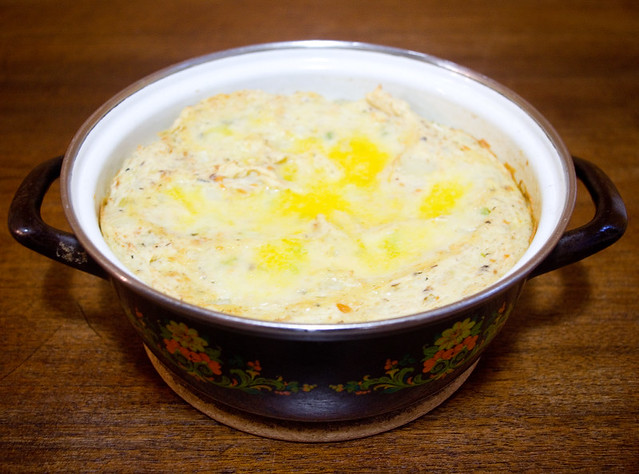
Keeping with this week’s rather unintentional theme of preparing dishes from old cookbooks, last night I tried a dish from 100 Tempting Fish Recipes. This book (well, at 56 pages, it’s more of a pamphlet) was issued by the Department of Fisheries (Ottawa, Canada) in 1939, although I have a 1949 reprint. It’s well out of print now and I haven’t found any copies for sale on the Web, but a digital copy is available online at Early Canadiana Online if you have a membership (which I do not). The site does have a free 18-page preview.

You can get a general idea of the age of this book just by the typography. Another dead giveaway of its age are the sometimes-vague cooking directions. For example, the recipe that I used was the Salmon Puff on page 23, and the baking directions were “Place in a buttered casserole, dot with butter and bake in a moderate oven until brown.” The term “moderate oven” is used a lot in this book and could, I think, denote a number of temperature settings. The timing is also vague; these days, you’d get an instruction along the lines of “Bake in an oven preheated to 350° until brown, about 20 to 30 minutes.” Not that older recipes can’t be precise, but newer ones generally give much more detail. I think that part of this is because the authors expected the reader to have a background of knowledge that would make what the author meant obvious. It’s probably also due to the fact that publication costs went down over time, so it was possible to be wordier (and include photographs of the final product) when every word didn’t carry as much financial weight at printing time. Heck, even between in my 1949 copy 100 Tempting Fish Recipes and the 1960 The I Hate To Cook Book by Peg Bracken (which is still in print), there’s a notable shift toward more precise instructions. The author actually bemoans this in the introduction:

…[T]hey’re always telling you what any chucklehead would know. “Place dough in pan to rise and cover with a clean cloth,” they say. What did they think you’d cover it with?

This terrible explicitness also leads them to say, “Pour mixture into 2 1/2 qt. saucepan.” Well, when you hate to cook, you’ve no idea what size your saucepans are, except big, middle-sized, and little. Indeed, the less attention called to your cooking equipment the better. You buy the minimum, grudgingly, and you use it till it falls apart.

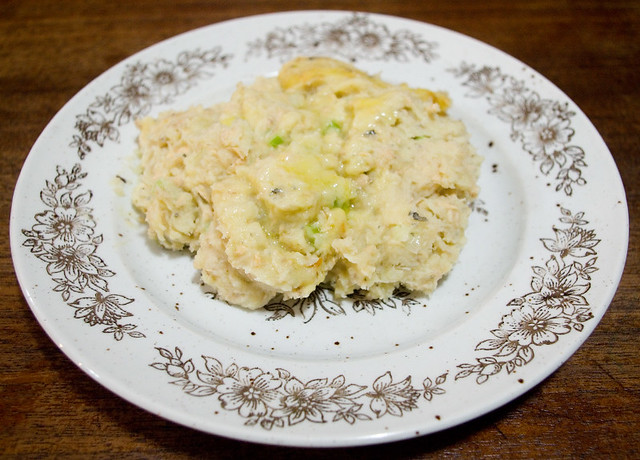
Back to yesterday’s recipe. It’s what I would consider to be a “pantry casserole”, i.e. a dinner that, with a reasonably-stocked Canadian pantry and fridge, one is likely to have all of the ingredients already at home. The salmon, which would normally be the ingredient most easily spoiled, is canned. You’d think that with a pound of salmon in there, the dish would at least have a bit of a pink tinge, but potatoes make up the bulk and leach it of all colour. I think that this is a good metaphor for the dish overall, actually. It’s just very… Beige. Not great, not bad; edible, but uninspired. Even a sprinkling of paprika as garnish would liven it up a little. Peg Bracken has great things to say about garnish on page 15 of The I Hate to Cook Book:

The reason for these little garnishes is that even though you hate to cook, you don’t always want this fact to show, as it so often does with a plateful of nude food. So you put light things on dark things (like Parmesan on spinach) and dark things on light things (like parsley on sole) and sprinkle paprika on practically everything within reach. Sometimes you end up with a dinner in which everything seems to be sprinkled with something, which gives a certain earnest look to the whole performance, but it still shows you’re trying.

(Seriously, though, I highly recommend this book, even if you hate to cook. Especially if you hate to cook. It’s a fun read.)

The salmon puff would have benefited greatly from a side of steamed vegetables or a salad, both to enhance the presentation and the nutritional values. Surprisingly, I think I may use this recipe again in the future specifically because it is an easy pantry casserole. Heaven knows some winter days I just don’t want to brave the roads for more exciting ingredients. Also, it would be a great way to use up leftover mashed potatoes. I mean, everyone in my family ate their dinner, nobody complained, and some even had seconds. Nobody had anything great to say about the dish, but when it comes to feeding kids, a lack of complaints is pretty high praise.