Guinness Pulled Pork

Because I think that trying new things is important, and because I don’t think there’s such thing as ever truly perfecting a dish, I decided to try a new recipe for pulled pork the other day. On freebie day, someone had left a box of books on the side of the road, and one of the ones in there was Cooking With Beer: Quick & Easy from Publications International Ltd. (2010). One of the ingredients in the recipe was stout – there weren’t any brands mentioned (probably due to trademark or copyright issues), but whenever anyone thinks “stout” around here, one of the first beers to come to mind is “Guinness”. So that’s what I used.

Given that it was a beer-based recipe, I also used Bulls-Eye Guinness Barbecue Sauce (recently bought on sale for $0.99 a bottle), and I served it on my bread machine beer bread (you can find the recipe in yesterday’s post). I thought that this would be the perfect combination.

Sadly, I wasn’t terribly thrilled with this pulled pork recipe. It had a nice flavour, but you didn’t really taste even the slightest tang of beer. Also, the sauce didn’t thicken very much; it was more like pulled pork soup than a proper sauce. And, in my case, it took way longer to cook than planned. I mean, the meat was cooked through by the specified time, but it definitely wasn’t soft enough to shred. Now, that might have been the fault of my oven, but overall the recipe just wasn’t up to my (admittedly high) hopes. All that being said, though, everyone ate their fair share, because there’s only so wrong you can go with pulled pulled pork on fresh bread.

Teriyaki Trout Rice Bowls

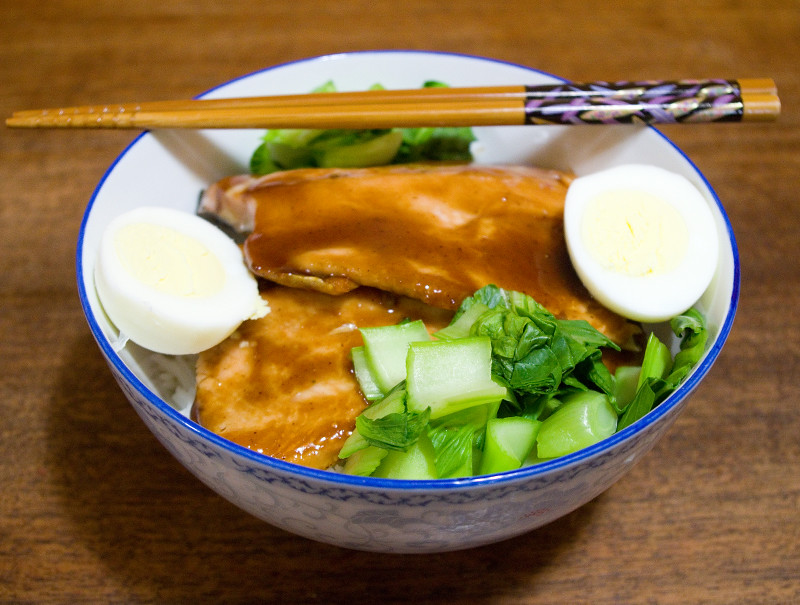
Given all of the feeding (overfeeding?) that goes along with birthdays around here, I thought that a simpler supper was called for last night. Luckily, rice bowls are a family favourite (which you’ve probably noticed if you’ve read through my older posts), and teriyaki trout is something the kids ask for anyway. Well, they ask for teriyaki salmon, but trout is a fraction of the price, and they’re almost as happy with that.

So I cooked up some basmati rice, baked trout fillets with teriyaki sauce, steamed some bok choy in the microwave, and served it all with leftover hard boiled eggs from the fridge that had to be eaten up. That particular batch of eggs had spectacularly pale yolks, by the way, despite tasting nigh on identical to darker-yolked eggs.

Scallop and Bacon Pesto Pasta

Thing 1 told me last week that she’d just realized that she’d never tried scallops before, and that she really wanted to know what they tasted like. Well, this week the little frozen scallops went on sale at the grocery store, and I saw a great chance to let Thing 1 try them without spending a fortune.

I whipped up a quick pasta dish where the scallops took center stage. The green noodles were Catelli SuperGreens Spaghetti, and I tossed them in the last of the basil pesto that I froze last summer. At the same time, I fried the scallops up in a dash of olive oil and a sprinkle of garlic powder. To serve, I laid down the pasta first, then a sprinkle of bacon bits, then the scallops, and then a few sliced grape tomatoes.

And the verdict is: Thing 1 absolutely loved the scallops! Next step, I think, is to invest in some of the larger, pricier scallops and serve them wrapped in bacon. Grilled, maybe? Or in a chowder? There are so many possibilities!

Fish Fillet Sandwich on Beer Bread

I’m still trying to perfect that beer bread recipe, this time experimenting with added flavour. Although the bread is lovely plain, I really liked it with caraway seeds. I think that the recipe is just about ready to be published… Maybe next week, after I’ve tried one more test loaf.

I served the bread as part of a lightly-breaded fish fillet sandwich, and I followed this recipe to whip up some tartar sauce. I really liked the sauce, but that might have been because I am partial to the dill pickles I made last year (and am still working my way through). I served the sandwiches with cubed watermelon and the sour turnip pickles that my friend made for me (of course I didn’t eat the turnip and the watermelon together, because yuck).

Here There Be Spiders

I was lucky enough over the last few days to be able to make a family trip to the cottage my parents are renting — all of us this time! My husband, Thing 1 and Thing 2, Mom and Dad, my younger brother, and his friend B. We could only schedule the eight of us for a single overnight trip, which happened to be the hottest, stickiest time I’ve spent at the lake yet. The kids didn’t mind so much, except that they didn’t sleep very well that night.

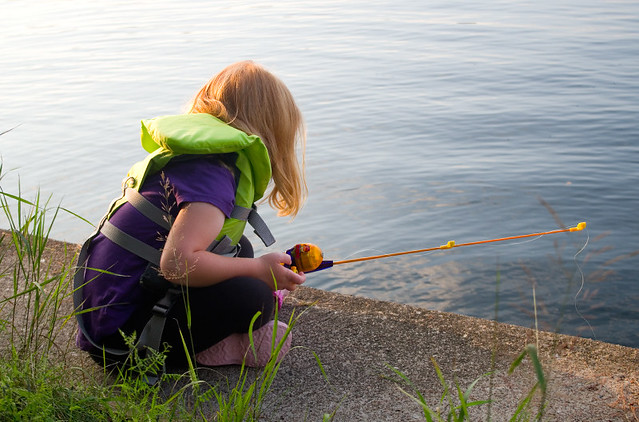
Other than the heat, the first day’s weather was lovely. Thing 1 and Thing 2 spent a lot of time fishing with her Gramps; Thing 2 is finally mastering the patience required to catch little rock bass. And of course, when the kids weren’t fishing or otherwise playing on shore, they were in the lake itself burning off some energy whilst cooling down.

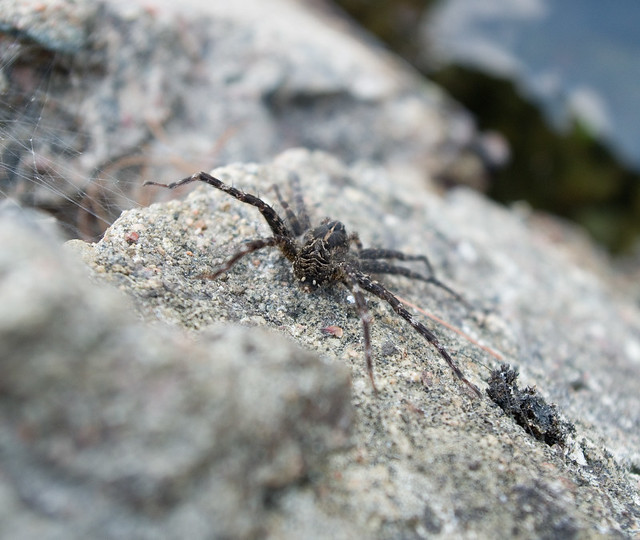
We all kind of avoided one part of the dock/retaining wall for all of these activities, though, because an enormous dock spider had spun a web there. Female dock spiders can get up to about 9cm long, and I think this particular specimen was a good example. It was fascinating enough to peek at and to take pictures — even the kids wanted to see it! But nobody wanted to get too close. Probably a good thing, actually, because according to a bit of research after the fact, dock spiders don’t spin webs to catch prey: they spin them to protect their egg sacks! My best guess is that her egg sack was down inside the crevice she was protecting. I’m glad we didn’t disturb her! (I mean, it’s also possible that the web was from another spider, but she was very assiduously sticking to one spot.)

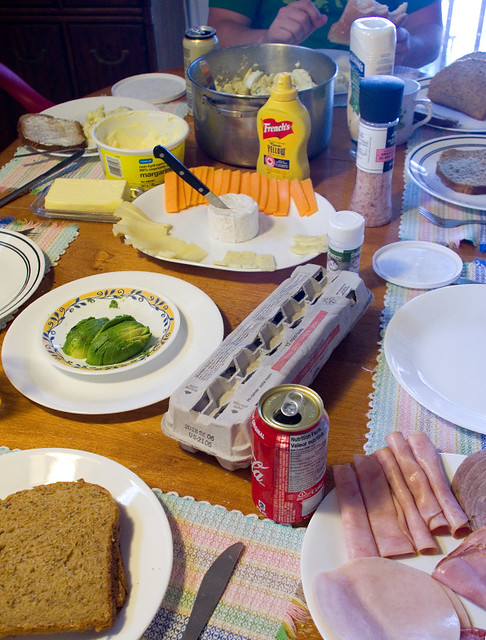
Anyway, after all of the swimming and the fishing and the arachnid discovery, we had a cold supper (because who wants to cook on an evening that hot?). We spread out the breads and cheeses and cold cuts and salads at the table, but it definitely wasn’t a formal affair.

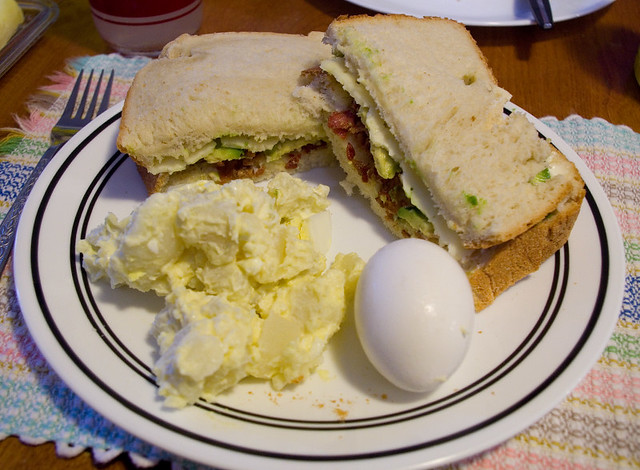
In my case, dinner consisted of a bacon, lactose-free Havarti cheese, and avocado sandwich on freshly-baked beer bread. (Okay, I lied, I cooked one thing, but cooking a loaf of bread in the bread machine on the deck didn’t warm up the cottage.) The bread was a new recipe that I’m currently testing, and everyone seemed to like it. I hope to post the recipe soon. I paired it with Mom’s Potato Salad (without the optional bacon, and actually made by my mom the night before), and a hard-boiled egg.

Slow Cooker Caribbean Lobster Bisque Recipe

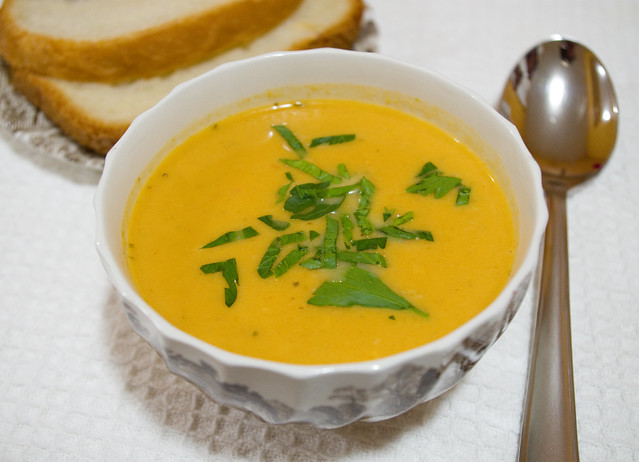
About four years ago I had the opportunity to try PC Jammin’ Jamaican Lobster Bisque, which is a frozen entree that was created by Winslow Taylor of Mississauga, Ontario for the PC Recipe to Riches contest. I loved it! It was creamy and filling with just the right amount of bite. Sadly, this frozen dinner didn’t stay on the shelves long, and it has been years since it’s been in production, I think. So a I did some research and some testing, and I came up with what I consider to be a really nice non-dairy Caribbean-style lobster bisque that you can make in a slow cooker. I originally posted this recipe in my old blog a few years back, but I’ve had the chance to refine it somewhat since then. Enjoy!

Slow Cooker Caribbean Lobster Bisque

In a frying pan, gently heat:
1 Tbsp olive oil
To the oil, add:
1 white onion, chopped
2 cloves of garlic, finely minced
Saute until the onions are clear. Stir often so that they do not brown. Put sauteed items in slow cooker.
Add to slow cooker:
4 cups reduced-sodium chicken broth
3 cups pumpkin* puree**
6 Roma tomatoes, peeled, de-seeded & chopped
1 tsp black pepper
1 tsp salt***
1 tsp paprika****
4 sprigs fresh thyme
1/2 tsp Scotch Bonnet hot pepper sauce*****
With a large sharp knife, cut off the fan part at the bottom of:
4 lobster tails****** (totaling 400g or more)
Reserve the remaining meaty parts of the lobster tails for later.
Add the fan part of the lobster tails to the crock pot. Stir. Cover and cook in the slow cooker for 6 hours on low.
Remove and discard lobster tail ends & thyme. Using a blender or food processor, puree the soup until it has an even, creamy consistency. Put the soup back in the slow cooker, and add the reserved meaty parts of the lobster tail. Stir, cover, and cook for about 45min to 1hr, or until lobster shells are pink and meat is cooked through. Remove remaining lobster from the slow cooker and let it cool until it is comfortable to handle.
While the lobster is cooling, stir into the slow cooker:
1 can (400mL) coconut milk
Remove lobster flesh from the shells. Discard shells. Chop lobster flesh into small bite-sized pieces and add to the slow cooker. Stir.
Optionally, garnish each serving with:
a sprinkle of fresh cilantro or parsley, chopped

This bisque is delicious as an appetizer or as a lunch. It freezes well; I like to freeze it in single-sized portions so that I can take it along with me for work lunches. It goes well with crusty bread and strong cheese.

Notes:
* Equal quantities of winter squash puree such as butternut, calabaza, or Hubbard squash may be substituted.
** When I can my own squash, it comes out much more watery than the commercial canned versions. If you are using a thicker canned squash, add enough water to the mixture in the slow cooker so that it has the consistency of a thinner cream soup. This amount will vary depending on the consistency of the puree.
*** If you use regular chicken broth instead of the reduced-sodium version called for in this recipe, omit the salt. If you use homemade chicken broth with no salt at all, add an extra 1 tsp salt.
**** If you can get it, smoked paprika adds an extra layer of flavour to this recipe. Otherwise, regular paprika will do.
***** I used the Scotch Bonnet hot pepper sauce made by Grace (which is available at most grocery stores around here), but you can use the one of your choice. My original recipe called for 4 tsp of this sauce, but it ended up too hot for anyone in my family except me. If you like your food spicy, add a little more than 2 tsp. If you aren’t that fond of spice, cut it down to 1 tsp for a tiny bit of a bite. If you don’t like spice at all, you can omit the sauce altogether for a mild bisque redolent with coconut – although if you do this, I’d recommend adding more thyme.
****** I have used lobster tails to make this soup, I have also done it with satisfactory results with other (cheaper) parts of the crustacean, like the claws. Just set aside the bigger, meatier parts for the last step of cooking, and use the smaller, mostly-shell parts for the slow-cooking stage to add flavour. Remember to take any parts with shell out before you blend!

Algonquin Park Camping: Day 2

Day 2 of camping at at the Achray Campground on Grand Lake in Algonquin Provincial Park dawned rainy, but the precipitation quickly moved on. This left us with clouds in the morning, a brief rainstorm in the afternoon, and a mix of sun and clouds for the afternoon and evening. Unfortunately, there was never much of a breeze, so nothing we brought with us really dried out, but we had fun anyway.

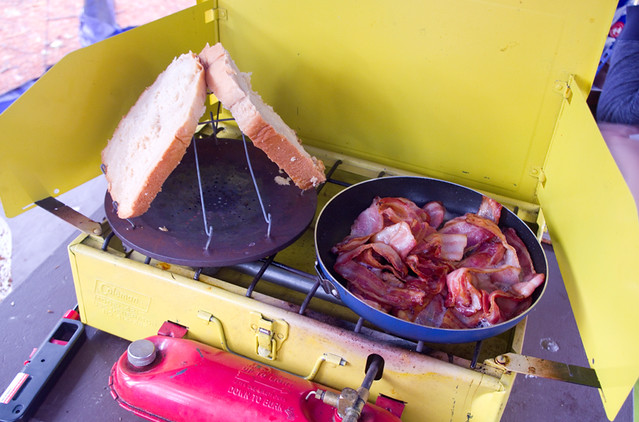
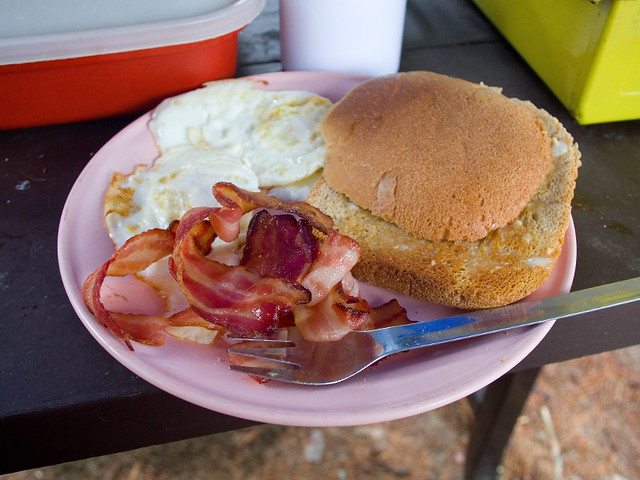
The day began with cooking bacon, eggs, and toast (with bread machine bread baked in advance of our trip) on the old Coleman camp stove. I am particularly fond of the camp toaster, which was always my favourite part of the setup as a child.

It was a hearty and delicious way to start the day!

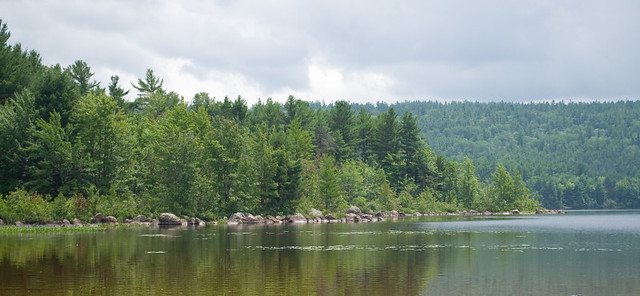
After cleanup we headed out to the lake, which is where we spent the majority of our day.

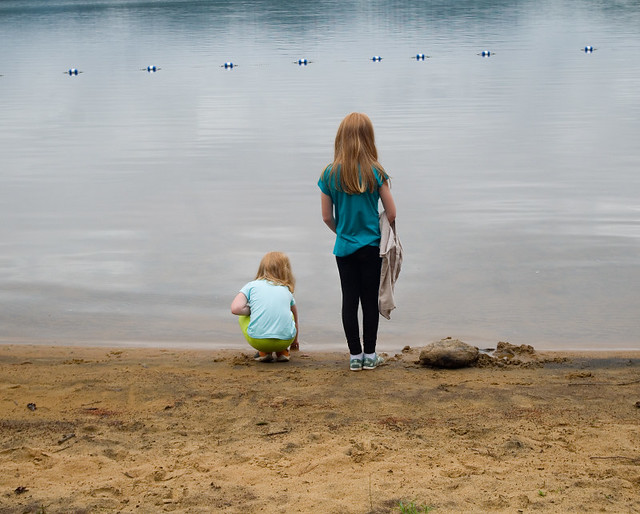
The shallow, sandy beaches meant that the kids were quite content to play and explore for hours.

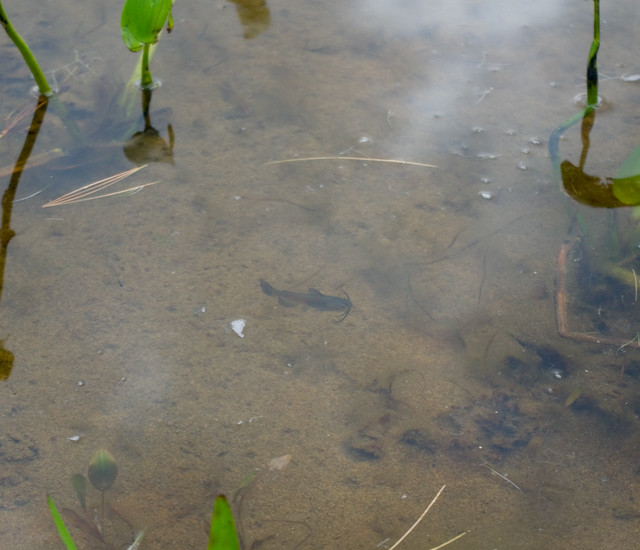
We found teeny tiny catfish (at most an inch and a half long) in the weedy shallows, where they were industriously cleaning the lake bed.

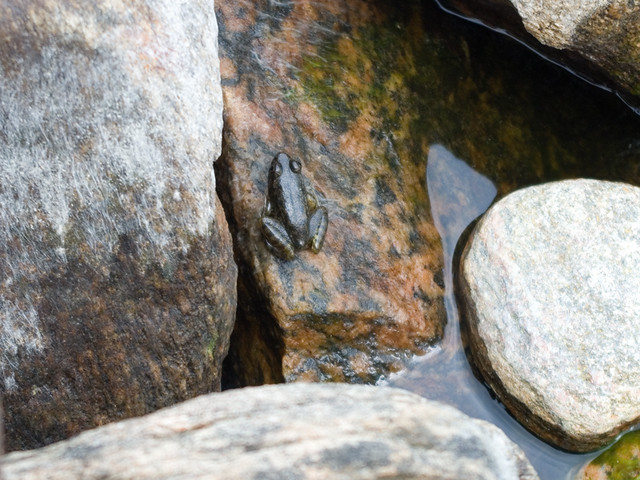
There were also tonnes of tadpoles in every stage of becoming frogs — some had no legs, some had two, some had four, and some were basically frogs with tails — alongside full-grown frogs. A few swam by us while we were swimming, while others stuck to the weedier or rockier areas.

I honestly think that our favourite part of the day was all of the tiny minnows that swam around our feet and nibbled on our toes while we waded in the shallows. Video of that will have to wait until I can get it off of my other camera, but I think it’ll be what the kids remember the most from this trip.

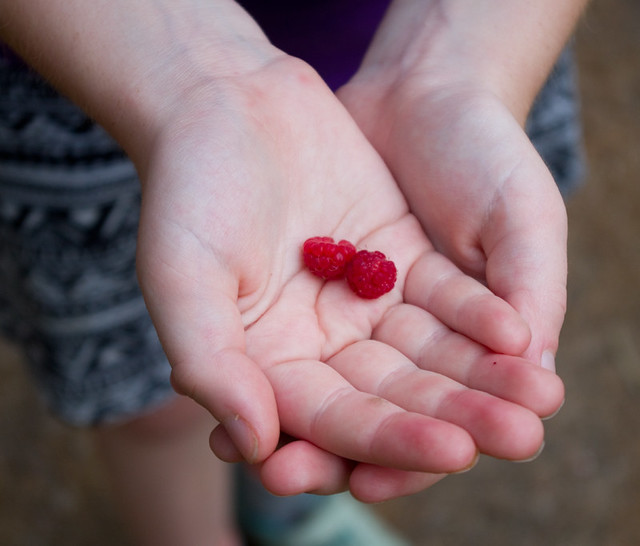
When we headed away from the water we found wild raspberries, which was an unexpected and tasty treat.

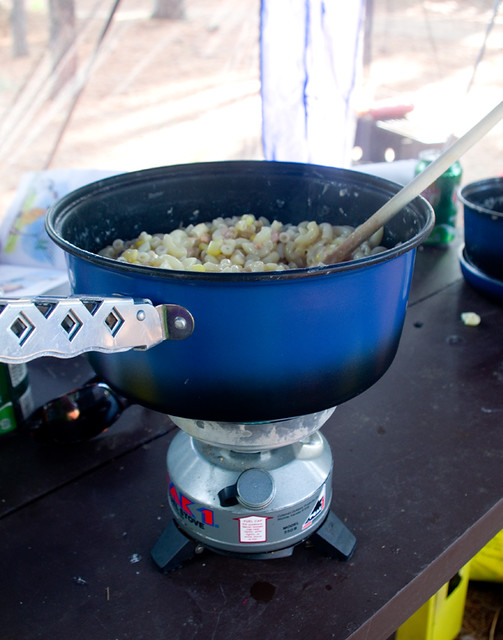
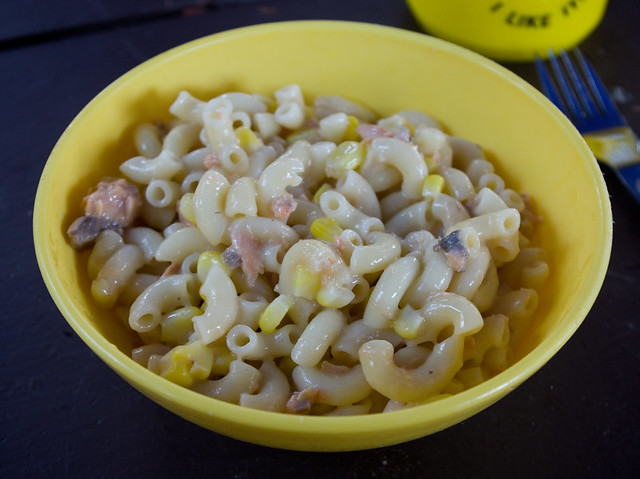
I cooked dinner over the single-burner backpacking stove, since the old Coleman decided to act up for a bit. I basically made tuna noodle casserole, but with frozen corn instead of canned, and canned salmon instead of tuna. Also, having no oven, I couldn’t bake the dish.

I don’t think that my alterations improved the dish any; without the potato chips topping and baking to combine the flavours, it was pretty bland. I should at least have grated some cheese on top, but I didn’t think of it. But it was warm and filling and we were sitting somewhere dry, which sometimes is all you can ask for when camping. As a bonus, the only perishable ingredient was the frozen corn, which in its turn helped keep the other food cold.

Also, did I mention that there were butterflies? Well, there were a lot of butterflies. The monarchs in the area really like the milkweed blossoms, which were just coming out of bloom, and milkweed was everywhere. Apparently these monarchs are endangered, but you’d never know it from how plentiful they were around our little corner of the park.

Algonquin Park Camping: Day 1

Last week I had the pleasure of camping with my family at the Achray Campground on Grand Lake in Algonquin Provincial Park. I’ve been camping most of my life (my first camping trip was when I was only a couple of weeks old, and apparently it was the only time I wasn’t colicky for quite some time), but somehow I’d never been to Algonquin Park, which is one of our most famous. At 7,653km², the park is larger than the entire province of Prince Edward Island (5,660 km²), and it was perhaps made the most famous for being the main inspiration for the Group of Seven. In fact, the Jack Pine Trail, which begins and ends in Achray, takes you to the location where Tom Thomson was inspired to paint The Jack Pine.
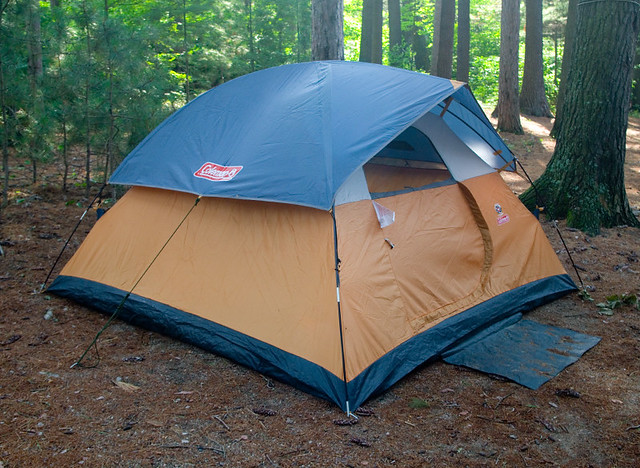
We arrived around 5:00pm the first night, despite every effort to get out earlier. We had originally planned to take my parents’ Sportspal canoe with us, but it really got to vibrating on the top of our car when we hit 100km/hr, despite having it tied down so tight that it actually dented the roof of the car. So before we even got across town we had to head back home and drop off the canoe, putting a bit of a kaibosh on that part of the plan. The Weather Network was predicting one heck of a thunderstorm that night, so we desperately wanted to arrive before it. Luckily we weren’t planning on hiking or canoeing to our campsite (we were just car camping), which shaved off some time. We checked in, got our tent put up…
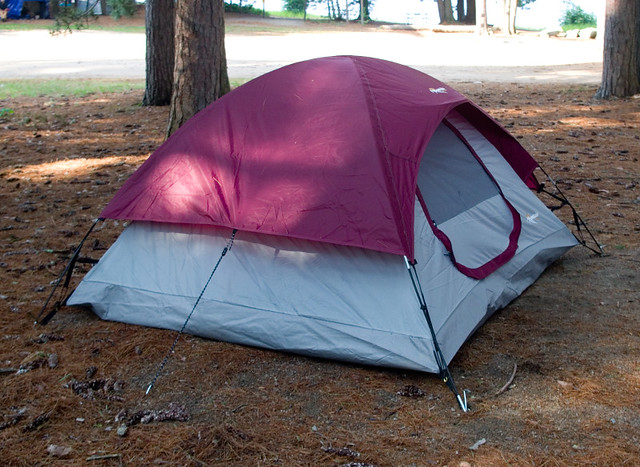
And the kids’ tent put up…
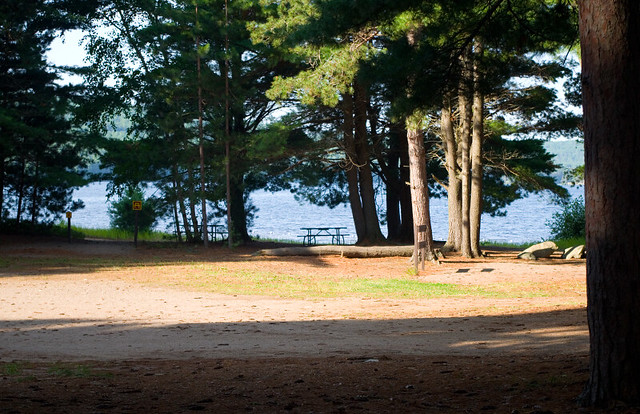

(That’s the view of the lake from our campsite before the clouds rolled in, by the way.)

And the cook tent put up and dinner started, and then with a CRACK-BOOM! the skies opened up. I was so thankful that we managed to get a roof over our heads before the rain started, because there is very little that is more miserable than setting up in the rain. As it was, despite all our rain gear we were all drenched as soon as we stepped out from under cover, and the Coleman tent and the cook tent leaked despite bringing extra tarps to protect them… But at least we slept dry.
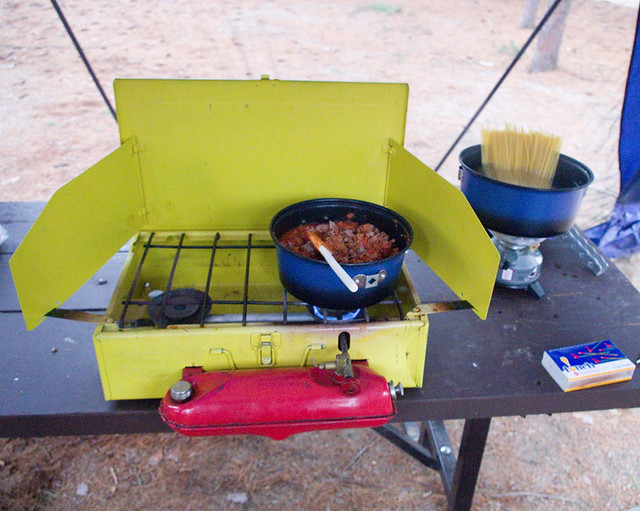
I cooked dinner that night on a combination of camp stoves. If the yellow one looks like an antique, well, it might very well be; it’s from the 1950’s at the very latest. My dad used to pick up old Coleman stoves at garage sales and Frankenstein them together until he had a stove for me, one for my brother, one for my mom and dad, and then I think even a few extras. He also painted mine yellow so I could tell it apart from everyone else’s (this was a bit of an issue back in Pathfinders when every camping group brought their own gear, and things could get mixed up). The little stove on the left is one that my husband used to use when he went canoe camping with his brother and father in the Algonquin interior, and it’s much newer and much more compact. Given how long it had been since either of us had fired up our respective stoves, I think it’s fantastic that they both still worked with no repairs needed. In retrospect, we should have tested them in advance of our trip… Just as we should have tested the waterproofing on our tents beforehand. Hindsight is 20/20.
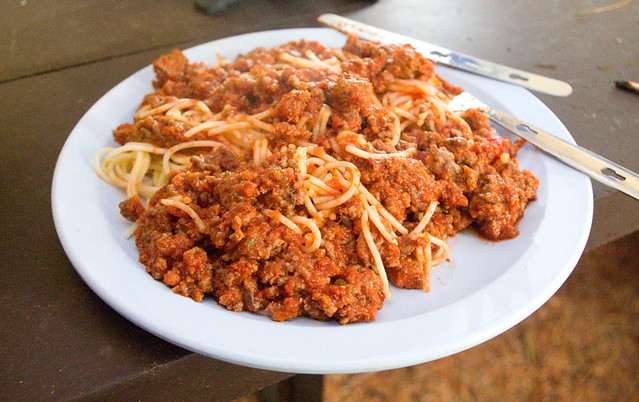
Our first meal while camping was spaghetti. The sauce was canned, and I fried a package of lean ground beef the night before, so once we were on site it was more a matter of reheating than cooking. Even so, Thing 1 declared that it was the best spaghetti she’d ever eaten (although I think hunger and fresh air may have contributed to her opinion).

I would highly recommend pre-cooking any food that you can when camping, by the way. It saves so much time and mess. I mean, sure, if I’d been cooking over the fire I’d have loved to have the juices from the meat to work with, but we knew in advance that there was a total fire ban in place. No campfires, no sparklers, no propane lanterns, no charcoal barbecues, no candles. Nothing but portable stoves/barbecues with a control valve, and only that permitted I think because otherwise nobody would be able to cook their food. Fire is a huge part of camping, at least the way that I was brought up, but we had had so little rain and everything was so darned dry that it just wasn’t safe. As it turned out, there was actually a a small forest fire about 4km away from our campground — of which we were completely unaware until we returned home and checked out the Ontario Forest Fire Info Map.

According to The Weather Network, Over 800 wildfires have been recorded this season, far higher than last year’s 221 fires at this time of year, and well above the 10-year average of 458. Fires this year have consumed more than 180,000 hectares of the province.

Shrimp and Eggs on Rice

I have been terribly busy lately, so I needed another super-easy meal again last night. Once again, I also wanted a dish that helped clean out my freezer, so I grabbed a bag of shrimp and threw together shrimp and eggs on rice.

I pan-fried the shrimp in garlic butter, which my family always loves. I mean, they like anything with garlic butter, I think. I also sprinkled a tiny bit of furikake on top at the time of serving. While the basmati rice was cooking, I soft-boiled some eggs and set them aside to put on the rice at the time of serving as well. Honestly, this was one of the simplest meals I’ve made in a while, but everyone scarfed it up, so I’m not complaining.

Nasturtium Pesto on Cod

We’ve been getting a lot of rain over the past few days, after getting practically none all summer. This means lots of hot, humid days, with really no chance to cook outside. I mean, I’m all for barbecuing in the rain, but I draw the line at thunderstorms.

So I dug through my freezer (which I am trying desperately to free up so I can defrost it) and found a lovely package of cod that I’d been meaning to use. I baked it in the oven with a coating of nasturtium pesto that I’d made last summer. (I learned last year or the year before that nasturtium leaves are totally edible, and they make a lovely, slightly-peppery pesto.) I paired it with mashed potatoes — the last of the bag that had frustrated me so over the weekend — and steamed carrots. It was a deliciously light meal to eat while watching the sky open up outside.