How to Fix Lumpy Gravy

I love gravy and I’ll eat it with just about any meat, steamed vegetable, or starch. It’s to die for on mashed potatoes and it’s fantastic over an open-faced hot turkey sandwich. However, it’s also really easy to get wrong. If it’s too thin, you can always dust in a bit more flour or simmer it for a while to reduce. But if it’s lumpy, it’s absolutely nasty. Those congealed lumps of flour and fat are just… Ew.

I’ve accidentally made lumpy gravy many times over the years — although the stuff pictured above was done on purpose to illustrate the point. I’ve tried pre-mixing the flour with water, I’ve thickened it with a roux instead, I’ve whisked until it feels like my arm is going to fall off. I’ve tried every tip and trick in my cookbooks, but sometimes the gravy still comes up lumpy, and it seems like the only way to salvage it is to strain it (which still can leave some tiny lumps).

When my mother taught me how to make gravy, she insisted that it be perfectly smooth, or it couldn’t be served. Lumps in anything make Mom gag, so potatoes were always mashed or whipped silky smooth, we never ate cream of wheat, and bubble tea was absolutely out. So if I messed up the gravy, we were out of luck even if it was intended to be a part of a major roast meal. Don’t ask me why, but this technique of fixing the problem never came up:

Just run the gravy through the blender. It comes out smooth every time. Not only that, but lumpy gravy tends to get really thick when you finally get it to an even consistency, so this is a great time to thin it out using a bit of the appropriate stock. The one in the photo above was loco moco hamburger gravy, so I thinned it with beef stock. There are probably a bunch of you who were using this technique for years and are agog that I’m thinking it’s revolutionary, but honestly it’s totally new to me. And if my crappy old two-speed General Electric machine from the 70’s with dull blades can do the trick, any blender can.

This works for all kinds of sauces, by the way. White sauce I find is also very prone to lumpiness if you’re not careful, but it does blend nicely. As with blending all hot things, do exert extra care to prevent burns!
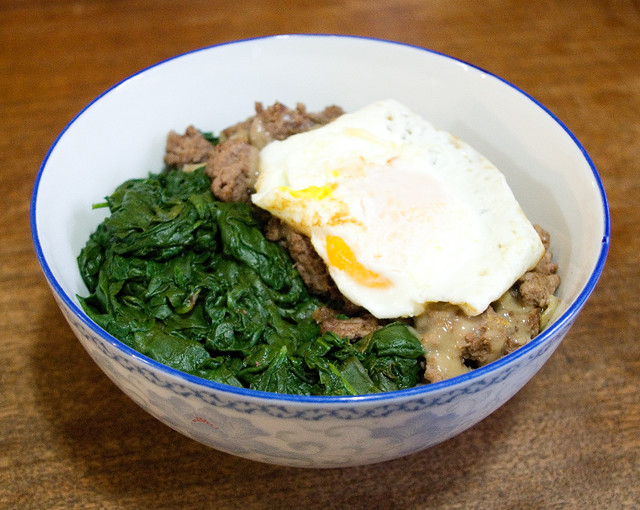
The loco moco turned out great, by the way, even if I didn’t have any parsley or tomatoes for garnish. I find that it pairs rather nicely with steamed spinach, since you can combine it with the gravy and meat for a wonderful, rich flavour.

It Was Supposed to Be a Barbecue

Last night I had planned on barbecuing. It’s not really BBQ* season yet, but the snow has melted from around our barbecues (although without any grass growing yet, the ground around/under them is a morass of clay mud). The grills not being buried or frozen closed is pretty much all a Canadian needs to get started cooking in the back yard.

That being said, the temperature plummeted last night. Heck, it snowed off and on since Tuesday night, but it had hovered around freezing for most of that time. But once yesterday afternoon came around, the wind picked up and it started getting cold fast. By midnight it was -7° (-16° with the wind chill), and by morning it was -11°C and felt like -20°C. As winter temperatures around here go, that’s not too bad, but that’s really cold for April. Not only that, but the wind reached 90Km/hr gusts — you know it’s windy when you’re driving and debris is passing your car. With that wind, the cold just cut right through you… So yeah, I didn’t want to stand outside and cook. Not only that, but winds like that make it very difficult to get an even temperature on the grill!

So dinner wasn’t barbecued steak, it was pan-fried. It was very tasty pan-fried steak, though, cooked medium and tender. I served it up with a heaping side salad, which kind of felt summery if you didn’t look out the window…

* Yes, I am fully aware that what we call “barbecue” around here is what people in the southern USA would call “grilling”. We don’t really have a low-and-slow BBQ tradition around here, although those few times I have had it, it has been mouthwateringly delicious.

Dill Pickle Bread

Last week on Facebook, Delish re-published their dill pickle bread recipe from May 2017. I wasn’t following their feed back then, so it was all new to me! Only days before, I had been having a conversation with a friend of mine about how she stretches the use of the dill pickles that I give her for Christmas by also using the brine. When this recipe popped up, I knew I had to make a loaf of dill pickle bread for her — and one for myself too, of course.

The only changes I made to this recipe were to use lactose-free cheddar and sour cream instead of the regular kind. I was worried that this would mess with the consistency a bit, but from what the instructional video shows it’s a very thick batter that doesn’t rise much anyway. If that’s what was intended, that’s what I got! The end result is a very heavy (heavier than whole-wheat banana bread), very savoury quick bread. I paired it for one breakfast with eggs over easy, but the pickle flavour completely overwhelmed the more delicate eggs. I would suggest eating it by itself, either plain or toasted with salted butter, or with more potent deli meats such as salami, pastrami, or Montreal smoked meat. If you love dill pickles, you’ll love this bread — but if you’re only a little on the fence, there’s a good chance you won’t like it at all. Don’t say I didn’t warn you.

Easter Celebrations

Our family’s Easter celebrations can happen any time over the long weekend, to coordinate with peoples’ schedules. Barring illness (we’ve had a couple of spring bugs work their way through our family over Easter, so those years nobody much cared about chocolate), though, the Easter Bunny visits after the kids go to bed on Easter Eve, so that there are gifts for the children to find first thing on Easter Sunday.

In our family, the Easter Bunny hides chocolate eggs around the main level of the house, but Easter baskets are put together by Mom and Dad. Although it may look like a lot of stuff, it’s generally dollar-store or thrift-store finds (except for the Skip-It-like toys this year). The downside is that sometimes the gifts aren’t of the highest quality, like the Crazy Eggs (Eights) deck from the dollar store that was entirely spades… Hmm, manufacturer’s flaw much? The toy I thought was the coolest was the Sew Science kits, which provided the materials and instructions for the kids to make their own sewn circuits that really light up. Super cool! I think the kids were most enthused about the K’Nex kits, though.

This year Hubby and I got little Easter baskets as well, although this isn’t always the case. Hubby’s basket was filled with his favourites: Farm Boy fresh jujubes, Twizzlers Nibs, Ferrero Rocher chocolates, and Sweet Tarts. I got a big bag of Whopper Robin Eggs, sock yarn, and a cute Peeps lunch box.

Easter afternoon is basically time for everyone to eat chocolate, the kids to play with their new toys, and the adults to prep for dinner. I baked an apple pie using the crust from page 73 of The All-New Purity Cook Book (Elizabeth Driver, 2001), as usual, and the filling from page 678 of the Joy of Cooking (Rombauer & Becker, 2006 edition).

I was actually excited to be able to use my new-to-me Tupperware 12″ Pie Taker for the first time in order to bring the pie to my parents’ place. I was so happy to find this because I usually transport my pies in Ziploc bags, but the top of the bags have a bad habit of getting stuck to the top of the pie. The Tupperware worked much better!

I made hot cross buns again this year (page 37, Baking Bread: Recipes From Around the World for the Complete Home Baker by Audrey Ellison (1995)). I think they turned out much better than last year’s, but I’d forgotten that last year I burned the first batch cooking them at the recommended temperature for the recommended time. I almost made the same mistake again! Luckily, I got them out just in time. I think they should take 12 minutes to bake, max (instead of the recommended 15 to 20 minutes in the book). This year I also used the glaze after baking, and boy was it sweet and sticky! The kids seemed to like it, though.

Mom put on her traditional turkey spread for our family of four, my parents, and their good friends Mrs. and Mr. B. (I guess the more traditional roast would be lamb, but Mom doesn’t like it and since she’s the cook, what she says goes. Mom gave us all the choice between pork and turkey, and we chose turkey.) It was delicious! It included roast turkey, stuffing, mashed potatoes, squash casserole with walnuts, Brussels sprouts, gravy, and… Oh, what am I missing?

That’s right, everybody’s favourite part: Dad’s famous Yorkshire pudding! Dad only used to make this for roast beef meals, and then he’d only make a single batch. In the last few years we’ve managed to persuade him that any roast meat with gravy needs to be paired with Yorkshire pudding, and that a double batch in the bare minimum quantity. They never, ever go to waste.

Of course, my mom set the table with seasonally-appropriate cloth napkins and adorable napkin rings.

I wanted to say thanks again to Mom and Dad for hosting such a delicious meal! And I hope that you all had a lovely Easter — or, for those who don’t celebrate the holiday, a fantastic long weekend!

Happy Easter!

I hope that everyone is having a safe and happy Easter long weekend. It hasn’t been terribly spring-like here yet, with lots of snow still on the ground, but a least we have had lots of chocolate to compensate!

(Those are Whopper Robin Eggs, by the way. The most addictive Easter chocolates known to man, in my personal opinion.)

Happy Easter!

Cheater Chicken Bacon Quesadillas

Basic quesadillas aren’t exactly difficult to make in the first place, but some nights I’m looking for an even quicker, easier meal. Not only that, but a meal that the kids can help me prep (although it’s debatable if they speed anything up, honestly). Truthfully, it’s more like a grilled cheese on tortillas than a true quesadilla, but everyone in the family likes it. It whips up nice and quickly while I make up a salad.


The dressing is for the salad, not the quesadilla… Although ranch and chicken and cheese are a proven taste combination.

It doesn’t really have a recipe per se, since it’s mostly made using leftovers. Each quesadilla starts with a tortilla on a baking sheet, then a layer of grated cheese (the kids like sharp cheddar, while my husband prefers mozzarella and cheddar mixed, and I stick with whatever I can get lactose-free). Next is a handful of leftover chicken — often from a store-bought rotisserie bird, but roasted does well too, and sometimes we’ll substitute whatever other leftover meat is in the fridge. If I’m lucky, I’ll already have some bacon made in advance, but most of the time I have to cook it fresh, which is easy enough in the microwave. Then it’s another tortilla on top. I bake it in a preheated oven at 350°F (175°C), checking every couple of minutes, until it is warmed through and the cheese is nice and melted. If we’re feeling particularly fancy, I’ll serve it with sliced avocado and sour cream (lactose-free again for me), and a salad. That’s all there is to it, really!

I know, I know, people who like genuine Mexican food are probably squirming by now. There aren’t even any onions or peppers or anything in this to give it any spice! And I do agree. This is Kraft Dinner to homemade macaroni and cheese, Wonder Bread to a fresh-baked loaf of rye. But it’s quick, it’s easy, it uses up leftovers, it’s not too unhealthy (especially when paired with veggies of some kind), it’s miles better for you than fast food… And some days that’s exactly what the doctor ordered.

Spinach Stroganoff

Just a quick one today! At the suggestion of a friend of mine, I added a bag of baby spinach to my beef stroganoff, and it turned out great! If you’re not really into spinach, the sauce really covers up the bitterness. Now, I actually like the taste of spinach, but I like that it doesn’t overwhelm the flavour of the rest of the dish.

I’m always looking for ways to make my cooking healthier (as well as tastier), and one of the best way to do this is to add vegetables. I know that I definitely don’t get enough leafy greens in my diet. This is just one way to incorporate them!

Seasonal School Snacks

I mentioned in my last post that since it’s in season, I wanted to do more cooking with maple syrup over the next little while. Well, after reading a book about kids learning to cook, Thing 1 has been bugging me to make fruit leather with her. Since fruit leather is just pureed fruit that has been dried, I figured why not? Also, it’s a great way to use up an overabundance of fresh fruit (not really a problem here in the spring) or the fruit that you’d forgotten about in the freezer (more of an issue of mine right now).

My parents actually used to make fruit leather and dried fruit for my brother and I when we were kids. This was the era of the Fruit Roll-Up, but my brother’s sensitivity to corn (and hence corn syrup) made most versions of this store-bought snack inadvisable. Actually, the dehydrator that I’m using now is exactly the same one we used when I was a kid; my parents let me have it when they realized they hadn’t used it since my brother and I moved out.

The instructions for the dehydrator recommend that if you’re going to use a sweetener when making fruit leather, you should “use corn syrup, honey or fruit juice instead of granulated sugar which tends to crystallize”. We’ve discovered that maple syrup actually makes a great, all-natural sweetener for fruit leather that does not crystallize — and it adds a lovely flavour as well.

As an aside, if you don’t have a dehydrator, you can make fruit leather in the oven by drying it out at 200°F (93°C) for eight hours or so… But a dehydrator is a much smaller machine and uses a lot less electricity, so if you’re going to make fruit leather often, I’d recommend buying a purpose-built machine.

This is also the week leading up to Easter, which in our family means at the very minimum it’s time to dye some eggs! The kids like to take hard-boiled eggs to school in their lunches, so I made up a dozen for the week.

I used food colouring to dye the eggs vibrant, food-safe colours. There are all kinds of kits out there for dyeing and decorating Easter eggs, but a lot of them aren’t intended for consumption afterwards, so I like to stick with food colouring. The kids may decorate more eggs over the long weekend, though, and those will probably be with paint and glitter. They might be old enough to blow out the eggs to create permanent ornaments this year. Well, I know that Thing 1 is, but Thing 2 is not always as gentle as her big sister… And empty eggshells are mighty easy to smash.

The nice thing about blowing out eggs for decorating is that you can save the yolks and whites and make lovely scrambled eggs, or breakfast burritos, or tamagoyaki (either by itself or in sushi), or egg drop soup. This way, no part of the egg would be wasted. I have to admit, wasting food is a pet peeve of mine. Sometimes it can’t be avoided, but all efforts should be made not to, you know?

Weekend Recap

Manning my first stall at Russell Flea was a lot of fun, and it was definitely a learning experience! I learned that the lights that I bought (from Dollarama, since a lot of people have asked) don’t fit through the bottom slats of all of the display crates, so I’ll have to widen a spot for them. I learned that it takes a really long time to pack and unpack a table’s worth of glass and stoneware when you have to unwrap and wrap every single item to prevent damage in transit. I learned that paper is great for wrapping delicate items if you only need to do so once or twice, but it disintegrates really fast (you’re better off using old fabric — blankets and towels are best — if you’re going to do it repeatedly). I learned that an apron with a lot of change in the pockets which ties around your neck can make your neck really sore if you wear it all day. I learned that people have really fond memories of old Tupperware and Pyrex.

Oh yeah, and I learned that I should be careful not to cram all of my tablecloths as tightly as possible into one bag, so that they effectively have the wrinkles pressed into them by the time I arrive at the venue. Whoops.

But I did have a good time. I got to chat with some friends who stopped by, and meet the vendors around me with a great deal more experience than I. I may even have met someone who can teach me how to spin if I ever manage to get my spinning wheel repaired.

One of the nice things about working for myself is that I can knit and mind a stall at the same time, once it’s all set up. That’s not something you’re generally allowed to do in a traditional retail setup. I find that it’s a great conversation starter. I managed to get about a third of a sock done that day.

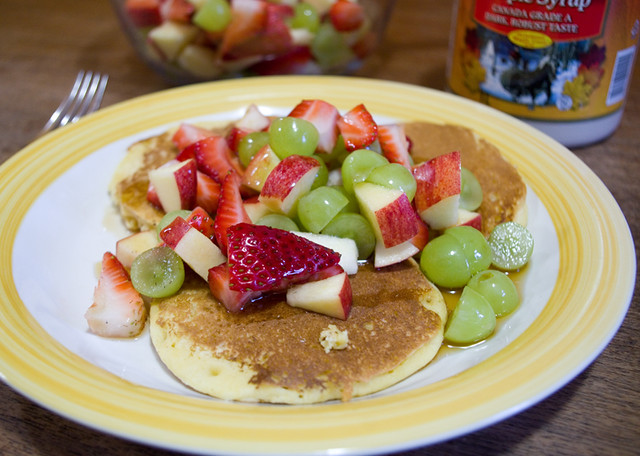
Since I was away all day working, my husband did have to make dinner which was, at the request of the kiddos, pancakes! Hubby had never actually made pancakes before, although I was sure that that was a basic thing that everyone around here knows how to make if they cook at all. My husband is an unenthusiastic cook at best, but he has learned the necessary skills. His pancakes turned out really lovely! Fluffy and delicious, and smothered with fruit and maple syrup.

Speaking of syrup, apparently the sap has been running since that weird warm spell back in February, so the local tree farms should be getting a great harvest this year. Note to self: I need to pick up some more local maple syrup when I’m at Russell Flea again two weeks from now. I’m pretty sure it’s McCannell Craftwork was the farm that brought the syrup on Saturday, and I hope they’ll be back again.

Excellent Potato Bread Recipe

I finally had a chance to try out one of the recipes from the 1877 The Home Cook Book that I was so happy to find on Saint Patrick’s Day! It was a very interesting exercise to try to recreate such an old recipe. Here’s the original text:

EXCELLENT BREAD
Mrs. Geo. W. Pitkin.

Four potatoes mashed fine, four teaspoons of salt, two quarts of lukewarm milk, one-half cake compressed yeast dissolved in one-half cup of warm water, flour enough to make a pliable dough ; mould with hands well greased with lard ; place in pans, and when sufficiently light, it is ready for baking.

You’ll notice that it gives no cooking time or temperature, no approximate yield, no idea the volume of mashed potatoes, how big a cake of yeast measures (and what kind of yeast — the book gives multiple recipes for how to make your own), or how much flour to use. I’m really glad this wasn’t the first loaf of bread I’d ever made! Although I guess part of the point of these recipes is that they assume that all readers will have a certain breadth of knowledge base.

As it turns out, this recipe makes 4-5 loaves, depending on the size of your loaf pan. I honestly didn’t even have a bowl big enough to mix all of the ingredients, so I had to stir everything in shifts. It all turned out quite well, though, so I thought I’d share my interpretation of the recipe. Hopefully it’s a little more easily-repeatable than the original; I’ve also halved the quantities in my version for ease of cooking in a modern kitchen. The end result is a white bread that is still a little heavier and more filling, due to the potatoes. It also stays moist much longer than a straight white loaf.

Excellent Potato Bread
Yields 2 large loaves

In a small bowl, mix together:
2 packages (14g) quick-rise instant yeast
1/4 cup warm water
Wait for yeast to activate; if it foams up, it is good to use.
While waiting for yeast, peel and chop:
2 potatoes
Peeled, this should yield about 265g of uncooked potato.
Place potatoes in a stove-safe pot, cover with water, and bring to a boil. Reduce heat to a simmer and cook until the potatoes are easily pierced with a fork. Alternately, you can cook the potatoes in a microwave-safe casserole: place potatoes in the dish, cover with water, and cook on high until they can be easily pierced by a fork, about 12 minutes. No matter how you prepare the potatoes, drain them once cooked and mash them until they are no longer lumpy. Set aside to cool somewhat.
In a very large bowl, combine:
4 cups warm milk
2 tsp salt
Stir. Add the yeast mixture and the potatoes to the mixture, stir well.
While stirring with a sturdy wooden spoon, gradually add:
8 cups flour
As the end of adding the flour nears, the mixture may become too stiff to stir with a spoon. If it does, it can be stirred with floured hands in the bowl.

Flour a flat surface and hands generously. Turn the dough out of the bowl, scraping if necessary. Knead the bread for about 10 minutes, until it is springy. If the dough is too sticky on the hands or flat surface, add a bit more flour, but add it gradually and only add as much as absolutely necessary. The dough should be moist but not sticky.

Oil or use cooking spray on a large mixing bowl. Form the dough into a ball and place it in the bowl. Cover the bowl with a clean, damp tea towel. Place the bowl in a warm, dry area with no drafts. Allow the dough to rise until double, about 1 hour.

Grease two loaf pans. If you use smaller loaf pans (8.5″x4.5″), they will end up with a “mushroom top” loaf like the one pictured. If you use larger 9.5″x5.5″ pans, the bread will be a more uniform shape.
Divide the dough into two even portions, form each into a loaf shape and put each one into its own loaf pan. Cover with a damp towel and allow to rise again in a warm, draft-free area until double, about one hour.

Near the end of the rising time, preheat your oven to 350°F (175°F). Bake for about 30 minutes, checking often near the end of that time to make sure that they do not overcook. Verify that the bread is done by removing them from the pan and tapping them on the bottom. When cooked through, the loaf should make a hollow sound. Remove the loaves from the pans immediately and place them on a wire cooling rack.

As with all bread, this kind is best served immediately. To keep it at its freshest, slice it only when it is about to be eaten. This bread will keep for four or five days if wrapped in a clean plastic bag. Make sure it is wrapped up only after totally cool, or it will go soggy.